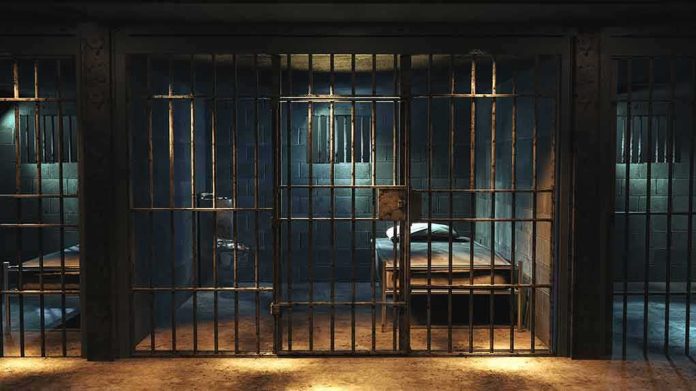
Twenty-five people died inside a packed Sri Lankan prison where guns somehow ended up in inmates’ hands, and the system’s worst fears finally came true.
Story Snapshot
- 25 killed and about 100 injured in violent clashes at Negombo Prison on Sri Lanka’s west coast
- Fight between rival inmate groups turned lethal after prisoners seized firearms from inside the facility
- At least five prison officers are reported among the dead, exposing a total collapse of control
- Negombo Prison was holding more than triple its designed capacity, part of a nationwide overcrowding crisis
How a prison fight turned into a battlefield
Negombo Prison sits near Sri Lanka’s western coast, built for a few hundred people but crammed with thousands. Reports say it held about 2,417 inmates in a space meant for around 650, a crushing level of overcrowding that turns every argument into a potential riot. On a Sunday, clashes broke out between two groups tied to drug gangs, mixing convicted criminals with detainees still waiting for trial, in tight blocks where tempers never cool. In that chaos, inmates managed to seize guns, shifting the balance from fists and makeshift weapons to live fire inside concrete walls. Once guns appeared, guards lost the advantage, and the prison became a closed war zone where escape was impossible and cover was scarce.
Authorities and local media soon reported that at least 25 people were dead and around 100 injured, with hospitals admitting streams of wounded inmates from Negombo’s blocks. Conflicting early numbers showed how fast the situation changed: first reports spoke of only a few deaths and several dozen injuries, but counts rose through the day as more bodies were found and more wounded arrived. The dead reportedly include both prisoners and staff, with several accounts naming at least five prison officers among those killed. That detail matters, because when officers die inside their own facility, it signals not just violence but a full breakdown of command and control. This was not one rogue inmate; it was a system failure playing out in real time.
Overcrowding and neglect built the fuse years before the clash
Negombo’s disaster fits a clear pattern inside Sri Lanka’s prisons: violent unrest rises as occupancy passes double capacity and living standards fall below basic norms. A performance audit and a prison overcrowding report from Sri Lanka’s own authorities show nationwide occupancy soaring past 200 percent in recent years, with one analysis citing 248 percent overcrowding in 2020. Cells became dormitories, beds vanished, and inmates slept shoulder to shoulder on thin mattresses, with poor ventilation and limited sanitation. Under those conditions, rival gangs are not separated; they are stacked. Drug networks can recruit, threaten, and settle scores inside the same overcrowded hall. The Human Rights Commission of Sri Lanka warned earlier that treatment and detention conditions fell far below acceptable living standards, and that crowding fed tension and violence. When the state ignores those warnings, outcomes like Negombo are not random; they are predictable.
The legal and moral duty of any government is clear: if the state locks people up, it must keep them safe from avoidable harm. That duty does not depend on whether inmates are saints or hardened criminals. From a conservative, common-sense view, this is about basic order: if a prison cannot keep weapons from inmates or prevent gang warfare in its own halls, it is failing one of the core tasks of government. Sri Lanka’s prison administration has long promised overcrowding “overcome plans,” and international bodies like the International Committee of the Red Cross have helped set up task forces to address the crisis. Yet Negombo shows those plans have not reached the ground in time. Keeping people jammed at more than double capacity while gangs organize and guards stretch thin is not toughness on crime; it is reckless mismanagement that endangers everyone inside, including staff.
Missing answers, destroyed cameras, and the fight over the narrative
As death counts mounted, one glaring gap remained: no clear official explanation of what sparked the initial clash. Reports mention rival drug gangs and tension between convicted inmates and remand prisoners, but authorities have not released a detailed timeline or root-cause report. Social media posts and some political voices now claim that security cameras inside the prison were destroyed during or before the violence, raising the stakes on evidence loss. If closed-circuit television footage is gone, it removes one of the few unbiased witnesses that could show who fired first, how inmates got guns, and whether any abuse or cover-up happened. That vacuum invites speculation, rumors, and agenda-driven narratives. For now, though, there is no structured counter-story that disputes the basic facts of 25 dead, about 100 injured, and firearms in inmates’ hands; the adversarial “Side B” is silence, not evidence.
They Destroyed All the CCTV Systems,Minister After Sri Lanka Prison Clashes Kill 25 0607026
Sri Lanka is investigating its deadliest prison violence in years after clashes between rival inmate groups at Negombo Prison left 25 people dead and around 100 injured. pic.twitter.com/xATcXlpUMC— john l (@Johnl1465045L) July 6, 2026
Independent audits, autopsy reports, and sworn testimony from surviving inmates and guards will be the real test of whether Sri Lanka takes Negombo seriously. A special committee under the Commissioner General of Prisons can dig into weapons inventories, chain of command, and whether overcrowding and gang control were ignored in daily management. International handbooks on reducing overcrowding make simple, practical points: cut pre-trial detention when possible, expand non-custodial sentences, and separate high-risk offenders from others. Those are not soft-on-crime ideas; they are ways to keep prisons from turning into uncontrolled battlegrounds. For older readers who have seen “law and order” promised for decades, Negombo is a harsh reminder: order is not a slogan, it is a system. When that system allows 2,000 extra bodies into one small prison and lets guns slip behind bars, the result is not justice getting tougher. The result is 25 body bags dragged out of a building the state was supposed to control.
Sources:
aa.com.tr, facebook.com, youtube.com, ndtv.com, auditorgeneral.gov.lk, hrcsl.lk, icrc.org, gov.uk, prisonstudies.org, en.wikipedia.org