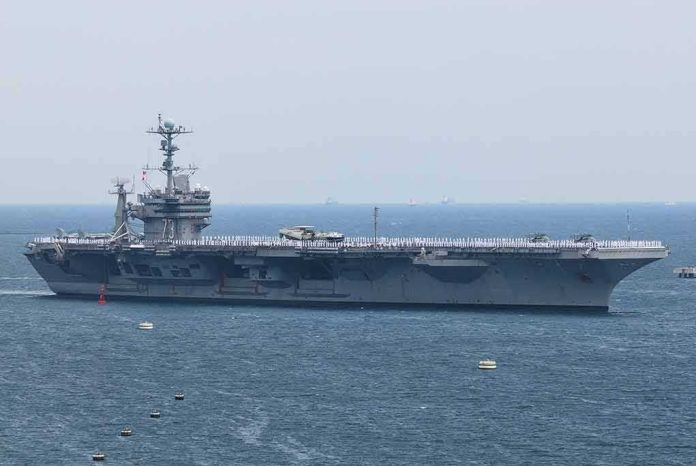
The enduring lesson of the Samuel B. Roberts mine strike is not merely that a cheap weapon can maim an expensive warship; it is that naval history often turns on attribution as much as damage. In this case, the physical event is well established, the Iranian connection is strongly supported by contemporaneous U.S. records, and the dramatic cost-ratio framing is directionally true even when some later retellings simplify the evidentiary trail.
Key Points
- The USS Samuel B. Roberts struck a mine in the Persian Gulf on 14 April 1988 and was nearly lost.
- Official U.S. Navy and White House sources attributed the strike to an Iranian minefield and later identified the weapon as an M-08/Sadaf 02 type.
- The damage was severe enough to break the keel, flood major spaces, and leave the ship with what were effectively survival odds, not routine battle damage.
- The famous “cheap mine versus expensive warship” ratio captures the strategic asymmetry, but the underlying forensic record is less visible in public retellings than the headline number.
The Mine Strike Was Real, Immediate, and Militarily Severe
The Roberts case begins with a straightforward fact pattern: while participating in Operation Earnest Will, the frigate entered a minefield and struck a mine in international waters of the Persian Gulf. The Navy’s own history says the blast broke her keel, blew a 21-foot hole in the port side, flooded about 2,000 tons of water, and injured ten sailors. The same institutional record emphasizes that the crew’s damage control saved the ship from what should have been a fatal structural failure. This is not folklore or retrospective exaggeration; it is the settled core of the event. A modern guided-missile frigate was nearly lost to a single underwater detonation.
That much matters because mine warfare is one of the few forms of naval combat in which an older, simpler weapon can still impose catastrophic risk on a far more sophisticated platform. Mines do not need speed, guidance, or a signature silhouette on the horizon. They wait. In the Roberts case, the mine detonated beneath the hull and transferred its energy into the ship’s structure, producing the kind of keel damage and flooding that can kill a vessel faster than firepower can. Contemporary reporting and later Navy history agree on the broad damage picture, even if the exact dimensions are summarized differently in different accounts.
Why the 1908 Mine Matters More Than the Slogan
The famous detail that the mine was based on a 1908 Russian design is not trivia; it explains the entire economics of the event. The weapon was old, simple, and cheap relative to the ship it threatened. Later analyses and retrospective reporting place the mine’s cost at roughly $1,500 to $2,000, while repair costs for the Roberts came to about $90 million. That gap is the cleanest expression of asymmetric maritime warfare: the attacker spends little, but the defender absorbs a massive repair bill, lost readiness, and operational disruption. The headline cost ratio is real enough to be meaningful, even if it is often repeated more for rhetorical punch than for technical precision.
The deeper point is that the mine’s age did not make it obsolete. Sea mines are brutally effective because they exploit geography, not glamour. In a narrow waterway such as the Persian Gulf, a moored contact mine can force a warship to choose between caution and exposure. The Roberts was doing exactly what escort ships are supposed to do—protecting shipping lanes—when a hidden weapon turned routine movement into a near-loss event. That is why the incident still functions as a textbook case in naval strategy: it shows how cheap ordnance can shape great-power behavior when placed in the right choke point.
How the U.S. Attributed the Attack to Iran
The strongest contemporaneous attribution did not come from later commentary; it came from U.S. officials in April 1988. A White House letter from President Reagan to congressional leaders stated that the Roberts struck a mine, that recovered mines were M-08s, and that the mines bore markings matching mines previously associated with Iran Ajr, the Iranian minelayer seized the previous year. UPI reported that the Navy found and destroyed two mines linked to Iran near the strike site and quoted a Pentagon official saying it was “highly likely” mines caused the accident. The New York Times likewise reported that Pentagon officials said a mine was the most probable trigger.
That said, the public record in the material provided here shows an important distinction: strong attribution is not the same thing as a fully reproduced forensic dossier. The Reagan letter is the most specific official statement, but the packet does not include the underlying ordnance report, recovery photographs, chain-of-custody records, or analyst worksheets that would let an outside reviewer independently audit the mine identification. So the historical conclusion is robust, but the documentation available to the public in these excerpts is summarized rather than exhaustively technical. That is a limitation of access, not a serious challenge to the core finding.
The Counterpoint Is About Evidentiary Granularity, Not the Event Itself
The best counter-reading does not deny that the ship hit a mine or that Iran was the source of the minefield. It argues that contemporaneous public statements were initially cautious and that later retellings flattened a more complex evidentiary trail. The New York Times report from 15 April 1988 said Pentagon officials called a mine the “most probable trigger” and noted that no immediate direct evidence had been presented. UPI similarly framed the attribution as inference from nearby mines, fresh paint, and the similarity to mines linked to Iran Ajr rather than as publication of the underlying forensic file.
That is a legitimate distinction, but it does not overturn the main historical account. On the contrary, it is exactly how attribution usually hardens in naval incidents: first comes physical damage, then proximity evidence, then ordnance comparison, then formal institutional statement. The available record here shows that progression clearly. By the time Reagan wrote to Congress, the U.S. government was stating that recovered mines were M-08s matching Iranian-laid mines, and the Navy’s later public history presents the strike as an Iranian mine incident without hedging. The debate is about how the conclusion was proven, not whether the conclusion existed.
What the Roberts Case Still Teaches About Naval Warfare
The Roberts strike remains useful because it compresses several enduring truths into one episode. First, maritime security is inseparable from mine countermeasures; if you neglect mine warfare, you invite exactly the kind of near-catastrophe Roberts experienced. Second, attribution in the Gulf has always been strategically consequential, because mine attacks are designed to preserve deniability while forcing an adversary to infer responsibility from fragments of evidence. Third, the technical weakness of a weapon says almost nothing about its operational value. A weapon designed before World War I can still drive strategic escalation in the modern era.
It also explains why the case persists in naval memory. The ship did not merely survive; it survived because the crew’s damage-control performance was extraordinary. That survival allowed the United States to answer Iran with Operation Praying Mantis four days later, turning one mine strike into a much larger naval engagement. In other words, the Roberts incident was not just a story about damage; it was a hinge event. A single mine, laid in a narrow waterway, nearly sank a warship, forced a retaliatory campaign, and became one of the clearest demonstrations ever recorded of asymmetric power at sea.
Sources:
19fortyfive.com, en.wikipedia.org, navybook.com, nytimes.com, washingtonpost.com, upi.com, youtube.com, military.com, facebook.com, nps.edu