The bust that broke up a Southern California catalytic-converter ring this past week wasn’t a fluke or a one-off headline grab — it was the predictable end point of a five-year crime wave that state regulators, insurers, and legislators have been tracking, and mostly failing to outrun, since 2019.
Key Points
- Orange County and Los Angeles County law enforcement seized roughly 2,400 stolen catalytic converters, valued at an estimated $4.3 million, and arrested five suspects during coordinated raids.
- The Orange County Sheriff’s Department led a multi-agency operation, serving search warrants after what industry reporting describes as a three-month investigation.
- Catalytic-converter theft in California has grown explosively since 2019 — the National Insurance Crime Bureau tracked a four-fold increase in monthly thefts nationally, while LAPD reported over 300% growth in a single year.
- California has already passed multiple laws — VIN etching, recycler reporting rules, traceable-payment requirements — aimed at cutting off the resale market that makes this theft profitable.
- This bust illustrates both the scale of organized converter theft and the limits of legislative fixes that rely on recyclers and buyers to police a black market.
What Investigators Found
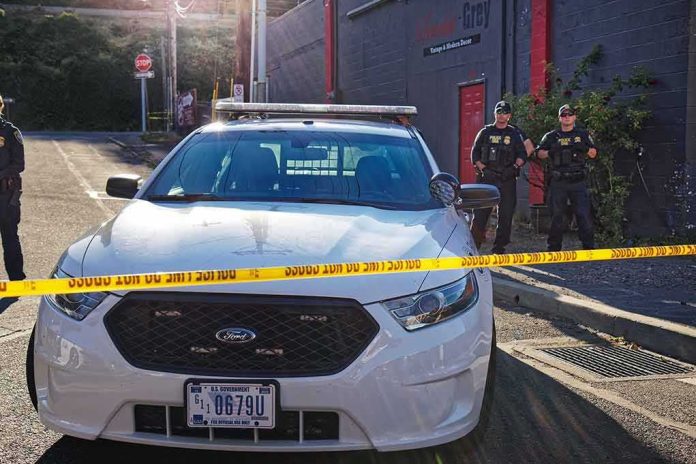
On Thursday, deputies from the Orange County Sheriff’s Department, working alongside assisting agencies from Los Angeles County, served search warrants tied to a suspected catalytic-converter theft ring operating across both counties. The result: approximately 2,400 stolen catalytic converters recovered and five people arrested. The Orange County Sheriff’s Department formally announced the operation the following day, crediting a coordinated, multi-jurisdictional effort rather than a single department acting alone. Industry-facing coverage places the origin of the case further back, describing a three-month investigation that built toward Thursday’s warrants — consistent with how converter-theft rings are typically dismantled, through patient tracing of resale networks rather than catching thieves in the act.
The headline figure — $4.3 million — reflects the estimated resale value of the recovered parts, not their replacement cost to victims, which runs far higher once labor and vehicle downtime are factored in. Converters are stolen for the palladium, platinum, and rhodium packed into their honeycomb cores; scrap prices for those metals have made a five-minute job under a parked car more lucrative, pound for pound, than almost any other form of street-level theft. That economics-first mechanism is why a bust of this size, spanning two counties and requiring simultaneous warrants, counts as a meaningful disruption rather than a routine arrest report.
Why This Crime Exploded in the First Place
To understand why 2,400 converters could accumulate in one ring’s pipeline, it helps to look at the trajectory that got California here. The National Insurance Crime Bureau recorded just 1,298 reported catalytic-converter thefts nationwide in 2018; by 2020, that figure had jumped to 14,433. California’s own Air Resources Board fact sheet cites a four-fold increase in monthly thefts nationally and notes LAPD alone saw more than a 300% spike from 2019 to 2020. A peer-reviewed study analyzing eight California cities found a 1,788% increase in thefts between 2019 and 2022, correlating the surge directly with rising precious-metal prices. By the National Insurance Crime Bureau’s count, California accounted for more than a third of the roughly 64,000 converter thefts reported nationwide between 2020 and 2022.
That concentration in California is not incidental. The state’s dense freeway corridors, high volume of older Toyota Priuses and trucks (models with converters that carry an outsized ratio of precious metal to labor difficulty), and proximity to major scrap and export markets combine to make Los Angeles and Orange counties a persistent hot spot. Sacramento lawmakers have quantified the toll in dollar terms as well: one legislative analysis put 2021 losses at roughly 1,600 converters stolen per month statewide, translating to $23 million in repair costs to vehicle owners in a single year.
The Policy Response — And Its Limits
California has not been passive. Governor Newsom signed Senate Bill 1087 and Assembly Bill 1740, which require core recyclers to log detailed seller and vehicle information — make, model, year, and a traceable payment trail — before purchasing a detached converter. Companion measures require dealerships to engrave VINs onto new converters before sale, and a related bill, AB 2407, obligates recyclers to report theft data to local police and plug into statewide theft-alert notification systems. Three additional laws targeting the crime took effect at the start of this year, tightening the documentation recyclers must keep on every transaction.
The logic behind all of this is straightforward: a stolen converter is only valuable if someone will buy it, so choke off the anonymous cash resale market and the incentive to steal collapses. It’s the same theory that underpins pawnshop reporting laws and scrap-metal registries used against copper theft rings. The friction it introduces — mandatory ID checks, VIN traceability, delayed or traceable payment — has measurably slowed some opportunistic theft, but rings capable of moving 2,400 units clearly found channels that either predate full enforcement of these rules or route around them entirely, likely through out-of-state or export buyers less exposed to California’s paperwork requirements.
What a Bust of This Size Actually Signals
A single seizure worth $4.3 million doesn’t dismantle a black market that the NICB estimates has generated tens of thousands of thefts across just three years. What it does demonstrate is that the recycler-reporting and traceability framework California built over the past several legislative sessions is capable of generating the kind of paper trail that makes a three-month, cross-county investigation possible in the first place — an outcome unlikely under the largely unregulated cash-scrap system that prevailed before 2022. Multi-agency raids of this scope require exactly the kind of transaction records the newer laws mandate; without them, tracing 2,400 converters back to a single ring would be far harder.
The more durable lesson is about incentive structures. As long as palladium and rhodium command scrap prices that make a car part worth more than most jewelry, converter theft will track metal markets more closely than it tracks any single law-enforcement action. Busts like this one matter — they recover real property, disrupt real networks, and put real defendants in front of real charges — but the underlying commodity economics haven’t changed, which is why insurers, regulators, and sheriffs’ departments across the state continue treating this as a standing enforcement priority rather than a solved problem.
The Bottom Line
Two counties, five arrests, 2,400 recovered parts, and a $4.3 million tally make this one of the larger publicly reported converter-theft busts in recent California memory, and it lands squarely within a five-year pattern of explosive growth in this specific crime category. The state’s response — traceability laws, recycler reporting, VIN etching — gave investigators the tools to build this case; whether it’s enough to outpace the metal-price incentives driving the theft in the first place remains the open question the next bust will help answer.
Sources:
zerohedge.com, ktla.com, latimes.com, cbsnews.com, piawest.com