A dog attack rarely stays contained to the animal involved; it exposes, almost immediately, how much control a community actually has over the animals living in it — and this July, on a quiet beach in Bimini, that gap became a matter of international emergency response rather than local incident.
Key Points
- A 9-year-old American boy was attacked by several dogs on a beach in Alice Town, South Bimini, around 10:30 a.m. on July 28, 2026, suffering bite wounds to his face, head, arm, and legs.
- A bystander intervened to drive the dogs off; the child was first treated at Bimini Community Clinic before doctors deemed his injuries serious and potentially life-threatening.
- The U.S. Coast Guard flew an HC-144 Ocean Sentry crew to Bimini and evacuated the boy to Air Station Miami, where he was transferred to the Ryder Trauma Center at Jackson Memorial Hospital.
- Royal Bahamas Police say they have identified the dogs’ owner, who is cooperating in efforts to locate, secure, and remove the animals — though no named statement or filed record has yet been made public.
- The case sits inside a recognizable pattern of animal-attack reporting: fast, consistent coverage of the core event, paired with a slower, less visible process of institutional follow-up.
What Happened on the Beach
The basic chronology is not in dispute anywhere in the public record. Shortly after 10:26 a.m. on Tuesday, July 28, a caller reached Alice Town police to report that a nine-year-old American boy was being attacked by several dogs near a beach in South Bimini. Multiple outlets, drawing on the same police account, describe bite wounds to his face, head, right arm, right thigh, and left leg — an injury pattern consistent with a multi-dog assault rather than a single defensive nip. A male bystander intervened and drove the animals away, almost certainly preventing far worse injury. Paramedics took the boy to Bimini Community Clinic, where physicians assessed his condition as serious and potentially life-threatening.
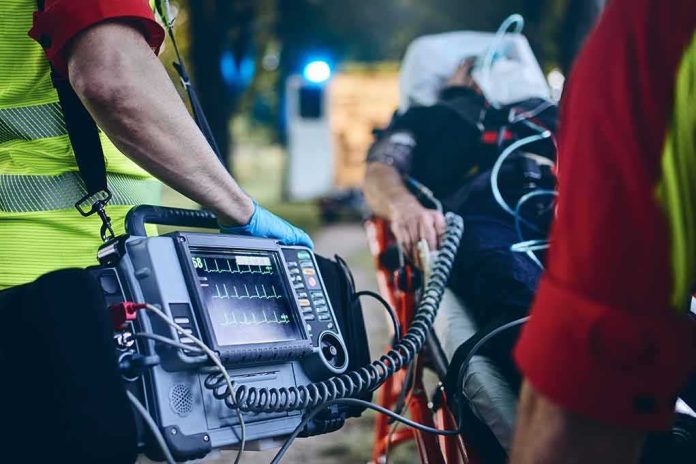
What happened next is the part that elevates this from a local incident report to a story with institutional weight. A U.S. Coast Guard aircrew from Air Station Miami deployed an HC-144 Ocean Sentry to the Bahamas, flew the boy back to Miami, and handed him off to an ambulance crew that took him to the Ryder Trauma Center at Jackson Memorial Hospital — one of the busiest and most capable trauma centers in the country. That an international medevac was mobilized for a beach dog attack tells you something about how seriously the treating physicians in Bimini judged the wounds; Coast Guard medevacs are not dispatched casually, and the agency’s involvement is itself a strong secondary confirmation of the severity claim, independent of the police language alone.
Why the Owner and the Dogs Matter More Than the Headline Suggests
Royal Bahamas Police say they have identified the owner of the dogs involved and that this person is assisting officers in locating, securing, and removing the animals. This detail matters enormously for how the incident resolves, because it separates two very different categories of risk: a genuinely feral or stray-dog problem, which implicates public safety infrastructure and animal control policy, versus an owned-animal failure, which implicates leash laws, containment, and individual liability. Some accounts describe “several dogs,” others a “pack,” and at least one report characterizes them as stray animals mauling the boy on a public beach — a variance that hasn’t been resolved in the public record and that matters for exactly this reason.
No named statement from the owner, no filed police affidavit, and no animal-control seizure record has been made public as of this writing. That absence doesn’t undercut the core facts of the attack — nothing in the available reporting disputes that the boy was bitten, evacuated, or treated as a serious trauma case — but it does mean the “cooperating owner” detail remains, for now, an assertion relayed through police rather than a verified, documented fact. Readers should hold that distinction loosely rather than dismiss it; institutional statements of this kind are usually accurate but are rarely the last word until a formal report or charging decision follows.
How This Compares to Other Serious Dog-Attack Cases
The Bimini incident fits a pattern familiar to anyone who has followed serious dog-attack cases closely: rapid, largely consistent early reporting built almost entirely on police and first-responder statements, followed by a much slower trickle of documentation — incident reports, veterinary records, ownership files — that either confirms or quietly revises the initial account. A useful comparison is a recent fatal mauling in Las Vegas, where authorities moved quickly to identify the family dog responsible and euthanized the animal within a day, a far swifter resolution than a comparable case four years earlier. That case shows how enforcement speed and transparency vary widely even within a single jurisdiction, let alone across international lines — which is relevant here, since a Bahamian police investigation and a U.S. trauma admission now sit on two separate legal and administrative tracks.
Dog-bite litigation more broadly tends to turn on a narrow legal question that has nothing to do with the animal’s temperament and everything to do with control: did the owner exercise reasonable restraint given what they knew, or should have known, about the animal’s tendencies? That question — control, not culpability of the dog itself — is precisely what remains unanswered in Bimini. Whether the animals were confined, leashed, vaccinated, or simply roaming loose on a public beach will determine whether this becomes a matter of civil liability, criminal negligence, or an unfortunate accident involving genuinely stray animals nobody legally controlled.
A 9-year-old American boy was airlifted from the Bahamas after he was seriously injured in a dog attack on a beach in Bimini, according to the Royal Bahamas Police Force. https://t.co/L0cFIDZ25U
— NBC10 Boston (@NBC10Boston) July 30, 2026
What Remains Unverified, and Why That’s Normal at This Stage
Every account of this attack currently traces back to the same handful of sources: police statements relayed by Bahamian outlets, and Coast Guard confirmation relayed by U.S. outlets. That is not a weakness unique to this story — it is simply the normal evidentiary state of any fast-moving cross-border incident in its first days. The underlying police occurrence report, the Coast Guard mission log, and the hospital’s clinical documentation have not been publicly released, which is standard practice, particularly given that the victim is a minor. Privacy protections around a child’s medical details will likely keep the fuller clinical picture — the actual extent of his injuries, whether he required surgery, his recovery trajectory — out of public view even as the broader case moves forward.
None of that absence amounts to a challenge to the core facts. No competing account disputes that the boy was attacked, that a bystander intervened, that he was treated first in Bimini and then flown to Miami, or that police have identified the dogs’ owner. The open questions are narrower and more procedural: exactly how many dogs, whether they were owned or stray, what enforcement follows, and how the boy’s recovery ultimately unfolds. Those are the details worth watching as the investigation matures — not because the attack itself is in doubt, but because they will determine what accountability, if any, follows it.
Sources:
nypost.com, facebook.com, uk.news.yahoo.com