The substantive issue here is not whether Ro Khanna staged a political performance; it is whether an American member of Congress was actually stopped, surrounded, and held for over an hour by armed settlers in the West Bank, with the Israeli military arriving in a way Khanna says reinforced—not resolved—the confrontation. The available record supports the core incident itself, while leaving some of the sharper surrounding claims dependent on Khanna’s own account.
Intro Header
- Khanna’s account is anchored by Reuters and multiple video summaries: he says armed Israeli settlers blocked the road, detained his group, and later drew in Israeli forces.
- The strongest-supported fact is the detention event; the more inflammatory interpretations—about systemic impunity, IDF complicity, and first-ever status—are Khanna’s conclusions, not independently established facts.
- The episode fits a wider West Bank pattern that U.S. government reporting and policy analysis have described as rising settler violence and intimidation.
- The main factual gap is evidentiary depth: there is little independent public documentation in the provided material from settlers, the IDF, or Palestinian witnesses specifically about this incident.
What Happened, and What the Record Actually Supports
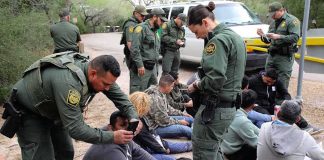
At the center of the story is a narrow factual claim: Khanna says he and his delegation were detained during a West Bank visit by Israeli settlers armed with U.S.-made M4 rifles, and Reuters reported that he described being held in that encounter before police intervened. The Reuters account also says the settlers blocked the road near a Palestinian hamlet and that an aide appealed to the U.S. Embassy for assistance. That is enough to treat the detention itself as a documented event, not a social-media rumor. The deeper dispute is not over whether something happened, but over how much of Khanna’s interpretation can be verified from the available record.
The primary video record strengthens the basic chronology. In the AC1G interview, Khanna says the settlers were “21 and 22 year olds with guns,” that they were laughing while his group was detained, and that the IDF sided with the settlers rather than with the Americans. Reuters’ write-up matches the broad outline: armed settlers, road blockage, detention, embassy contact, and eventual release after police response. Times of Israel likewise reported that Khanna said he had been held by armed settlers during the visit. Taken together, those sources make clear that this was not a vague political metaphor but a real field confrontation in the West Bank.
Why the Weapons Detail Matters More Than the Sound Bite
Khanna’s repeated emphasis on “American-made M4 rifles” is not rhetorical ornament; it is the mechanism by which he links a local encounter to the larger architecture of U.S.-Israeli military support. If settlers were in fact carrying American-origin rifles, then the episode becomes a small, visible expression of a much larger supply chain relationship, one that has long made U.S. weapons part of the West Bank landscape. But in the provided material, that detail comes from Khanna’s testimony and media repetition of it, not from an independent weapons audit, serial-number verification, or official incident report. In other words, the claim is plausible in context, but not independently proven in the research package.
The same caution applies to Khanna’s statement that the village he visited had been destroyed by settlers, including the school. That is a serious allegation, and one that would normally invite corroboration from residents, NGOs, satellite imagery, or official documentation. The supplied material does not include that corroboration. So the responsible reading is simple: the delegation says it visited a site already scarred by settler destruction, and the surrounding regional context makes such destruction credible; but the precise attribution and scope of damage are not established here with the kind of documentary thickness that would end debate.
The Broader West Bank Context Is Not in Doubt
Even if the finer points of this incident need fuller documentary backing, the broader framework is well established. The U.S. State Department’s 2023 human rights report on Israel, the West Bank, and Gaza describes unlawful killings, physical abuses, and other violence by Israeli civilians against Palestinian civilians in the West Bank. Independent policy analysis from the IMEU Policy Project states that settler violence has sharply escalated amid the Gaza war, and it highlights the scale of military support that can flow into the ecosystem around civilian settlers. Brookings, too, has treated settler violence as a durable American foreign-policy problem rather than a sporadic disturbance.
That context matters because Khanna’s statement is not merely about his own inconvenience; it is an argument that foreign observers briefly experienced what Palestinians endure as routine vulnerability. That argument is political, but it is not invented out of thin air. The West Bank has long been a place where civilian movement, land access, and physical security are shaped by overlapping forces: armed settlers, military patrols, checkpoints, and a legal regime that Palestinians and many outside observers describe as fundamentally unequal. Khanna’s account plugs into that structure, which is why the episode resonated so widely.
Where the Evidence Stops and Khanna’s Interpretation Begins
The important line is between event and interpretation. The event is that Khanna says he was detained, and mainstream reporting relayed that claim as a live, on-the-ground incident. The interpretation is that the IDF “sided with the settlers,” that the episode revealed a “toxic culture of oppression,” and that this was proof of “total impunity”. Those are not empty words; they are Khanna’s political diagnosis. But the research package does not supply an IDF statement, a settler response, a formal military report, or independent eyewitness footage that would settle the question decisively one way or the other.
That evidentiary asymmetry matters. When only one side’s account is available on the record, the public conversation tends to collapse the distinction between reporting and verification. Reuters is careful: it reports what Khanna said and notes the official responses or lack of them where available. The video interviews are more expansive and more opinionated, which is natural for advocacy media. But a serious reader should resist the temptation to convert a documented detention into a fully adjudicated indictment unless the underlying proof is actually there.
Hey is this any good or is it stupid?
This is satire
JERUSALEM — In a stunning display of American exceptionalism, U.S. Rep. Ro Khanna (D-Calif.) was reportedly “horrified” this week after armed Israeli settlers and IDF soldiers briefly detained his Palestinian-led tour bus in…
— Dr. Dingus (@DrDingus2025) July 11, 2026
Why the Political Reaction Was Predictable
Khanna’s language was designed to do more than describe an incident. By invoking “genocide in Gaza” and “apartheid in the West Bank,” he placed the detention inside a moral framework that leaves little room for moderation. That is why the story traveled beyond foreign-policy circles. It touches three sensitivities at once: the treatment of Palestinians, the role of U.S. weapons in the region, and the increasingly open rift inside American politics over Israel. Reuters noted that Khanna said the experience strengthened his considerations about a presidential run and highlighted a sharp decline in Israel’s favorability among Democrats.
What makes the episode durable, then, is not just the dramatic image of a congressman held on a West Bank road. It is that the image crystallizes a larger argument already moving through U.S. politics: that settlement expansion, settler violence, and the absence of meaningful accountability have become inseparable from the way the conflict is experienced on the ground. Congressional action such as H.Res.1092, which condemns Israeli settlement expansion, shows that this concern has a legislative footprint. Khanna’s detention story lands because it makes that footprint visceral.
What Should Be Watched Next
The next serious questions are documentary ones. Was there an IDF incident report? Did the U.S. Embassy produce any contemporaneous security assessment? Can the roadblock and detention be corroborated by video, satellite timing, or local testimony? Were the settlers armed with the rifles Khanna described? Was the destroyed school in the village documented independently? Those are not academic niceties; they are the difference between a powerful political narrative and a fully substantiated historical record.
For now, the cleanest reading is also the most disciplined one: Khanna was detained in a West Bank confrontation with armed settlers, the incident was significant enough to draw Reuters coverage and a run of broadcast discussion, and his account sits inside a broader, well-documented pattern of settler violence and Palestinian dispossession. The broader pattern is real. The precise interpretive claims around IDF complicity and the full details of the village destruction remain less securely evidenced in the material provided.
Sources:
cbsnews.com, facebook.com, timesofindia.indiatimes.com, internazionale.it, x.com, news18.com, news.az