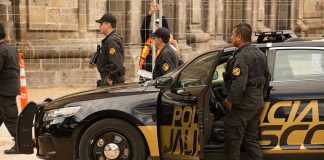
When gunfire erupted at a youth hockey game in Rhode Island, an unnamed civilian rushed toward the danger and stopped a mass shooting that could have claimed far more than five victims.
Story Snapshot
- An unidentified good Samaritan intervened during an active shooting at Dennis M. Lynch Arena in Pawtucket, subduing the gunman and preventing additional casualties
- The shooter killed two adults and critically wounded three others during a high school Senior Night hockey celebration before dying from a self-inflicted gunshot wound
- Police Chief Tina Goncalves credited the civilian’s swift action as the decisive factor in ending the attack
- The incident marked Rhode Island’s second mass shooting in two months, prompting expanded mental health resources statewide
- Investigators determined the shooting was a targeted event involving a possible family dispute, with the shooter attending to watch a family member play
When Celebration Turned to Chaos
The Dennis M. Lynch Arena should have been filled with pride and applause Monday afternoon around 2:30 PM. Senior Night for the Blackstone Valley Schools cooperative hockey team brought dozens of families together to honor graduating players facing Coventry-Johnston in a routine high school matchup. Instead, Robert Dorgan, born in 1969 and also known as Roberta Esposito, opened fire on the crowd. The shooter had come to watch a family member play, but something triggered a violent eruption that authorities later characterized as a targeted attack stemming from a family dispute. Two adults died at the scene. Three others suffered critical injuries requiring immediate hospitalization. Then someone did what most people never imagine they could do.
The Intervention That Changed Everything
Police Chief Tina Goncalves stood before cameras Monday evening with a message that defied the usual narrative of mass shooting helplessness. An unnamed good Samaritan had physically intervened during the attack, attempting to subdue Dorgan and bringing what she called “a swift end” to the tragedy. The chief declined to specify exactly how the intervention unfolded, citing the ongoing investigation, but confirmed the individual confronted the active shooter directly. Whether through physical force, verbal engagement, or tactical positioning remains unclear, but the outcome speaks volumes. The shooting stopped. Dorgan died from a self-inflicted gunshot wound. Nearly 100 witnesses who thought they might die that afternoon went home to their families instead of becoming additional casualties.
A Community Grieving Again
Governor Dan McKee’s statement carried the weight of recent history when he said, “Our state is grieving again.” Just two months earlier, Rhode Island absorbed the shock of a Brown University shooting that killed two students and wounded nine others plus an MIT professor. That gunman, Claudio Neves Valente, also ended his rampage with suicide, found dead at a New Hampshire storage facility. Now Pawtucket joined Providence in the club no community wants to enter. Mayor Donald Grebien characterized his city as being “in mourning,” while simultaneously emphasizing Pawtucket’s strength and resilience. The Blackstone Valley Visitor’s Center opened its doors Tuesday for grief counseling from noon to 7 PM, with extended hours beginning Wednesday for as long as needed. The governor urged anyone struggling to call 988, the mental health crisis line, while announcing expanded resources for students and families across the state.
Questions Without Complete Answers
Investigators spent Monday evening interviewing witnesses, piecing together fragments of terror into a coherent timeline. The family connection between Dorgan and someone at the game provided a potential motive thread, but authorities admitted they couldn’t yet explain what precipitated the violence, who specifically was targeted, or why a celebratory evening dissolved into carnage. The identities of the two deceased and three critically injured victims remained undisclosed as of Monday night, limiting public understanding of the relationships and dynamics at play. The good Samaritan’s identity also stayed protected, though their actions earned official law enforcement recognition as the critical factor preventing additional deaths. This wasn’t random violence by a stranger. This was something darker and more personal, erupting in a space filled with children and families.
The Hero We Need to Discuss
American culture celebrates the sheepdog mentality, the willingness to stand between evil and the innocent when violence erupts. The unnamed good Samaritan at Dennis M. Lynch Arena embodied that principle in the most literal and dangerous way possible. While others fled or froze, this individual moved toward gunfire to protect strangers. Law enforcement training emphasizes that active shooter situations demand immediate action, that waiting for police arrival can mean the difference between survivable casualties and massacre. This civilian understood that calculus instinctively or through prior training. Their intervention validates what security experts have long advocated: prepared, courageous individuals can decisively alter mass casualty events. The reluctance of authorities to detail the intervention method may stem from legitimate investigative concerns, but it also raises questions about whether the good Samaritan was armed, trained in crisis response, or simply extraordinarily brave. Rhode Island residents deserve to know more about this person’s background and preparation, not to sensationalize their actions but to understand what enabled such effectiveness under unimaginable pressure.
What Comes Next for Pawtucket
The investigation continues with authorities working to establish definitive timelines, motivations, and circumstances. Three victims fight for their lives in critical condition, their families enduring an agonizing wait. The hockey teams, school administrators, and youth sports organizations face uncomfortable conversations about security protocols at community events. How do you balance the open, welcoming atmosphere that defines small-town athletics with the reality that targeted violence can erupt anywhere? The incident will likely prompt venue security assessments across Rhode Island and beyond. But the deeper question involves family dispute intervention and threat assessment before violence occurs. If Dorgan harbored grievances serious enough to justify mass murder in his mind, were there warning signs that family members, friends, or authorities missed? These questions demand answers even as Pawtucket mourns and heals, drawing on the resilience Mayor Grebien insists defines the community.
Sources:
Police credit a good Samaritan for ending a deadly shooting at a Rhode Island ice rink – KSAT
Shooting at Pawtucket, Rhode Island hockey rink – CBS News