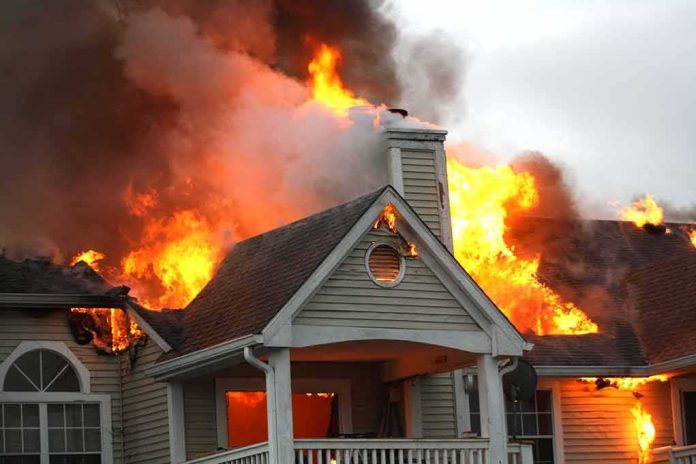
When fire survivors say the system burned them twice, they are really talking about a rigged‑feeling alliance between giant insurers, cautious regulators, and a political class that always seems to show up late and leave early.
Story Snapshot
- California’s insurance regulator accuses State Farm of widespread mishandling of Los Angeles wildfire claims, citing hundreds of violations.
- Wildfire survivors say both insurers and state officials ignored their pleas, leaving families stuck in toxic debris and financial limbo.
- State Farm denies intentional wrongdoing and says it has paid billions, blaming problems on “administrative and procedural” issues.
- The fight has triggered a new push for insurance reform, with consumer groups warning lawmakers not to strip away survivors’ legal rights.
Regulator slams State Farm as survivors describe “second disaster”
California’s Department of Insurance says its investigation into State Farm’s handling of Los Angeles wildfire claims uncovered “a pattern of unlawful behavior in more than half of the claims reviewed,” including delays, underpayments, and burying policyholders in red tape at “the worst moment of their lives.” The market conduct examination pulled 220 claims from roughly 11,300 residential wildfire files and documented nearly 400 violations, leading to a major enforcement action against the company earlier this year.[2]
Wildfire survivors echo that picture from the ground. A survey of Los Angeles fire victims found that about 70 percent of insured Eaton and Palisades survivors reported claim delays and denials serious enough to impede their recovery. Separate research found nearly eight in ten insured survivors statewide reporting serious claim problems after the Los Angeles fires, from lowball estimates to disputes over what had to be replaced or cleaned. For families already traumatized by fire, paperwork battles became a grinding “second disaster.”
Insurers and state officials share blame in survivors’ eyes
Survivors and advocates say their frustration extends beyond one company to the state itself. Many complained for months that regulators brushed off or slow‑walked their grievances about stalled checks, shrinking estimates, and adjusters changing stories. Commentators have accused the Department of Insurance of acting only after political pressure mounted, fueling a perception of “regulatory capture” where watchdogs protect big insurers until public outrage forces their hand.[1] That narrative fits a broader American fear that powerful corporations and agencies shield each other while ordinary people fend for themselves.
Governor Gavin Newsom now publicly warns insurers that survivors’ ability to access coverage is “foundational” to recovery and urges companies to quickly and fairly process pending claims. His office frames the enforcement case against State Farm as a way to push faster, fairer payments rather than scare insurers out of the state. But for many families still living in rentals or next to contaminated debris, those promises sound late. The gap between tough talk in Sacramento and slow relief on the ground is exactly what convinces both conservatives and liberals that government mainly reacts to headlines, not to citizens.
State Farm’s defense: billions paid, problems called “procedural”
State Farm rejects the regulator’s characterization and “any suggestion” that it engaged in a general practice of mishandling or intentionally underpaying wildfire claims. The company says it has paid more than 5.7 billion dollars on over 13,700 auto and homeowners claims related to the fires and argues that the enforcement action focuses largely on administrative and procedural errors rather than a deliberate effort to cheat survivors. It emphasizes that it will defend itself through the formal administrative process where evidence can be tested.[2]
The insurer also says it is already fixing problems, reviewing claims, issuing supplemental payments where appropriate, updating forms and letters, and adding training and oversight, including creating a new vice president for California customer relations. What State Farm does not provide publicly is a claim‑by‑claim rebuttal to the nearly 400 violations regulators say they found, or data showing how many underpayments were corrected and how quickly.[2] That missing detail leaves many observers wondering whether “procedural” is just corporate shorthand for systemic friction that shifts costs and stress onto families.
Legal rights, reform bills, and the risk of “help” that hurts survivors
As anger has grown, California lawmakers have floated new insurance reform bills that could reshape wildfire coverage across the state. Survivors, consumer groups, and local governments are now banding together at the Capitol to oppose measures they say would quietly limit victims’ rights to recover full losses from insurers and the California Earthquake Authority.[1] They argue that some proposals marketed as “stabilizing the market” would actually cap damages or narrow legal remedies, effectively protecting company balance sheets at survivors’ expense.[1]
California wildfire survivor rips insurers, state government for failing victims’ recovery About 70% of insured Los Angeles fire survivors are having delays, denials and underpayments derailing their recovery. https://t.co/VPBjLTnNUS pic.twitter.com/NLA9btdfQD
— UnfilteredAmerica (@NahBabyNahNah) May 13, 2026
Advocates warn legislators that almost every time there is a big disaster, lobbyists use the crisis to push liability limits in the name of keeping premiums affordable.[1] That dynamic taps into a bipartisan worry: whether you call it “disaster capitalism” or “corporate welfare,” the pattern looks familiar. Costs from fires, utility failures, and rebuilding get socialized onto ratepayers and taxpayers while powerful players negotiate carve‑outs in hearing rooms the public rarely sees. Wildfire survivors are urging lawmakers not to repeat that playbook.
A deeper test of whether the system still serves citizens
The insurance fight sits inside a larger California struggle over who ultimately pays for megafire losses: utilities, insurers, the state, or homeowners themselves.[2] Regulators try to keep utilities solvent, insurers writing policies, and victims compensated, yet each compromise can shift billions in losses from one group to another. That “cost‑shifting” tension is not unique to California, but the state’s scale and fire risk make the stakes unusually high for both markets and families.[2]
For Americans watching from other states, the Los Angeles wildfire story is about more than claims and statutes. It is a stress test of whether complex systems built by technocrats, lawyers, and corporate lobbyists can still deliver on the basic promise that if you play by the rules, the institutions you fund will be there when disaster strikes. When survivors say insurers and the state have failed their recovery, they are really asking the same question many voters now ask about Washington: if the system does not protect ordinary people in their worst hour, who is it really built for?
Sources:
[1] Web – Wildfire Survivors, Consumer Groups, Insurers, Public Entities …
[2] Web – California takes legal action against State Farm after investigation …