Taxpayers foot $30-35 million yearly for secretive Pentagon monkey labs subjecting hundreds of primates to cruel experiments, as a new lawsuit demands transparency from the Trump administration.
Story Snapshot
- White Coat Waste sues DOD over unreleased records on U.S. military primate labs in Thailand, Peru, and domestic sites like Fort Detrick.
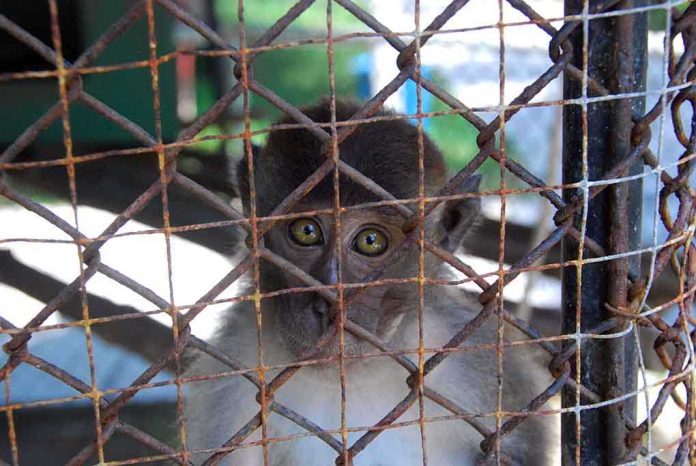
- Labs house ~550 monkeys enduring sleep deprivation, surgical mutilation, and infections with diseases like malaria, Zika, and Ebola—without pain relief in some cases.
- Annual cost hits $30-35M for Thailand’s WRAIR-AFRIMS alone, amid expansions like $568K Envigo monkey shipments.
- Follows DOD’s cuts to dog/cat testing under Pete Hegseth; WCW calls for similar monkey reforms to curb waste.
- FOIA violations by DOD in 2025 triggered March 26, 2026 lawsuit, highlighting government secrecy and overspending.
Lawsuit Exposes Taxpayer-Funded Cruelty
White Coat Waste filed a Freedom of Information Act lawsuit against the Department of Defense on March 26, 2026. The suit compels release of photos, videos, and records from primate labs in Thailand, Peru, Fort Detrick, and Uniformed Services University. DOD ignored WCW’s June-December 2025 FOIA requests, violating federal law. Experiments involve sleep deprivation, surgical mutilation, and deliberate infections with malaria, Zika, dengue, typhus, shigella, and SHIV on hundreds of monkeys. This wasteful spending burdens American taxpayers already strained by past fiscal mismanagement.
Thailand’s WRAIR-AFRIMS: DOD’s Largest Primate Operation
WRAIR-AFRIMS, established in 1980 by the U.S. Army and Royal Thai Army, breeds rhesus and cynomolgus macaques at a 550-monkey facility. It produces 30-45 offspring annually for infectious disease research funded by Pentagon appropriations, DOD contracts, and NIH awards. Monkeys face mosquito feedings, forced drug ingestion, and virus exposures. Pentagon paid Envigo $568,510 in 2025 to ship 18 monkeys there, while Army bought marmosets and cages signaling expansion. Annual costs reach $30-35 million, demanding scrutiny for efficiency and necessity.
Domestic and Overseas Abuses Demand Accountability
Fort Detrick conducts bioweapons and Ebola tests on hundreds of monkeys without pain relief. Peru’s Navy lab abuses at-risk primates, as revealed by WCW’s 2025 investigation. These operations evade oversight, especially abroad, contrasting with Hegseth’s successful end to DOD dog and cat experiments. WCW urges the Trump administration to extend reforms, redirecting funds from cruel, secretive programs. Taxpayers deserve transparency on every dollar, aligning with conservative calls for limited government and fiscal responsibility over endless, questionable spending.
International ties with Thailand and Peru complicate accountability, yet public pressure via FOIA holds promise for change. Internal reports note colony strains amid funding pressures, underscoring waste in biodefense research.
Implications for Reforms and Taxpayer Savings
Short-term, the lawsuit could force DOD record releases, exposing details and pressuring cuts like prior animal testing reductions. Long-term, labs may close or shift to alternatives, saving millions yearly. Affected parties include taxpayers, Thai and Peruvian locals near facilities, and animal welfare advocates. Politically, it tests Hegseth’s reform record in Trump’s second term, where MAGA priorities demand ending government overreach and wasteful foreign entanglements. Redirected funds could ease high energy costs and inflation burdens from past policies.
WCW’s action boosts transparency efforts, paralleling precedents like ending dog/cat tests. Broader primate research faces scrutiny, impacting breeders like disgraced Envigo.
Sources:
Lawsuit: WCW Sues Over Secretive US Military Monkey Labs in Thailand, Peru, and U.S.
Primate Research Center in Oregon Leads Nation in Violations