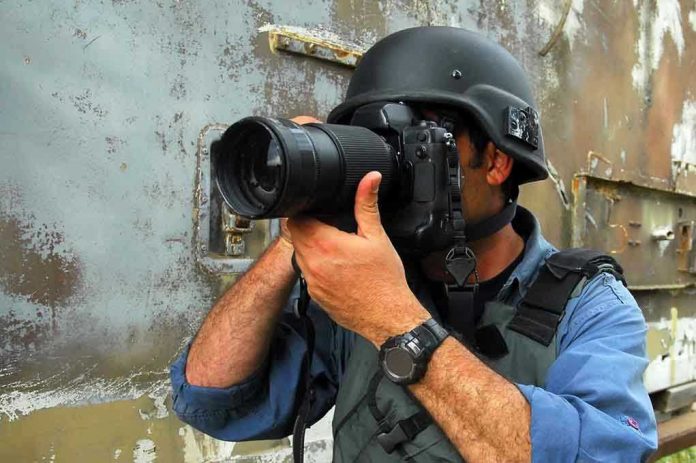
A local news photographer documenting anti-ICE riots in downtown Los Angeles found himself trapped as violent protesters surrounded his vehicle, smashed his windows, and left his car vandalized while police struggled to maintain control during the second consecutive night of escalating chaos.
Story Snapshot
- News photographer targeted and surrounded by rioters who vandalized his car and smashed windows during June 7, 2025 anti-ICE protests in Los Angeles
- Second night of violence included Molotov cocktails, rocks thrown at police and ICE vehicles, graffiti spray-painted on storefronts, and tactical alerts issued by LAPD
- Unrest sparked by ICE raids at Westlake Home Depot and Fashion District businesses resulted in 118 arrests and injuries to law enforcement and protesters
- Federal deployment of 4,000 National Guard troops and 700 Marines escalated tensions between Trump administration and California state leadership
- Media crews faced unprecedented risks with CNN reporters detained and journalists becoming direct targets of mob violence
When Documenting the News Becomes the Story
The photographer’s ordeal unfolded near Alameda and Temple Streets around 9 p.m. on June 7, 2025, as what began as immigration protests devolved into targeted lawlessness. While attempting to record the evening’s events, the journalist became encircled by protesters who proceeded to vandalize his vehicle and shatter his windows. This direct assault on press freedom occurred simultaneously with graffiti attacks on nearby storefronts bearing “No ICE” messages and the issuance of LAPD tactical alerts. The incident exemplified how quickly supposedly righteous protests morphed into criminal acts that endangered those simply trying to report the truth.
The Powder Keg That Ignited Downtown Los Angeles
The violence erupted after ICE conducted enforcement operations at multiple locations throughout the Westlake neighborhood and Fashion District on June 6, 2025. Federal agents arrested 118 individuals at businesses including Home Depot, clothing stores, and apparel manufacturing facilities. By 7 p.m. that evening, LAPD declared an unlawful assembly near the Metropolitan Detention Center as crowds swelled and confrontations intensified. These operations represented the enforcement arm of President Trump’s mass deportation initiative, which tripled monthly detention rates to approximately 20,000 individuals compared to 2024 figures. The heavy-handed federal presence in immigrant-heavy neighborhoods provided the spark, but protesters chose to answer with gasoline.
Weapons of Chaos and Symbols of Anarchy
June 7 brought an alarming escalation in violence. At 2:30 p.m., LAPD issued dispersal orders as tear gas deployment became necessary. A rock hurled at an ICE vehicle injured a federal agent. By 8 p.m., arrests included individuals wielding Molotov cocktails, a weapon designed for one purpose: destruction. The progression from peaceful demonstration to projectile weapons and incendiary devices crosses every line of legitimate protest. When CNN’s crew found themselves detained and local journalists faced mob intimidation, the message became clear: this was no longer about immigration policy but rather an excuse for violence masquerading as activism. The contrast with peaceful protests elsewhere in the nation exposed these riots for what they were.
Federal Response Meets California Resistance
President Trump deployed 4,000 National Guard personnel and 700 Marines from the 2nd Battalion, 7th Marines, characterizing the situation as lawlessness requiring military intervention. Los Angeles Mayor Karen Bass objected to the military presence while imposing downtown curfews expected to last multiple days. Governor Gavin Newsom deployed California Highway Patrol but condemned Trump’s actions as “theatrics” designed to escalate volatility. This federal-state showdown illustrated the broader conflict over immigration enforcement, with Trump calling local leaders “incompetent” while Bass and Newsom prioritized de-escalation over cooperation. The political posturing did nothing to protect the photographer whose car windows lay shattered on the pavement or the businesses whose storefronts bore the scars of vandalism.
The rioting extended beyond June 7, with continued protests on June 9 resulting in additional unlawful assembly declarations, followed by June 14 clashes at Grand Park and the Federal Building where tear gas and rubber bullets injured demonstrators. Pico Rivera’s Walmart became another flashpoint on June 17, and by June 24, street vendor arrests near East 9th and Spring Streets triggered protests at LAPD headquarters. Throughout this timeline, legitimate concerns about immigration policy became hijacked by elements more interested in destruction than dialogue. Freeway blockages, vehicle fires, and assaults on law enforcement transformed downtown Los Angeles into a war zone where journalists covering events faced the same dangers as those enforcing the law.
The Real Victims of Performative Rage
Immigrant communities endured the fear of detentions. Downtown businesses absorbed vandalism costs and cleanup expenses. Citizens navigated freeway closures and curfew restrictions. Journalists risked their safety to document events, only to become targets themselves. The ICE agent struck by a rock and the deputies injured by Molotov cocktails paid a physical price for enforcing federal law. Meanwhile, protesters with head wounds discovered that violent confrontations produce casualties on all sides. When activism transforms into assault, when political statements require smashing windows and surrounding journalists, the cause itself becomes corrupted. The photographer’s vandalized vehicle stands as a monument to the moment when protest crossed into criminality and endangered the very freedom of press that allows Americans to witness and judge these events for themselves.
Sources:
June 2025 Los Angeles protests against mass deportation – Wikipedia
Timeline: ICE raids sparked LA protests, prompted Trump to deploy military – ABC News
A Day Without Immigrants protest – Los Angeles Times
ICE Raids: What You Need to Know – HIAS