For about six months, anyone on the internet could quietly watch San Francisco police drones track people’s lives in real time — no password, no warrant, and no way for bystanders to know they were part of the show.
Story Snapshot
- Five police drones streamed live video, thermal imaging, location data, and officer info to a public web link with no login.
- Security researchers watched arrests, apartment visits, and searches of homeless encampments, then archived over three hours of footage.
- The police department calls the link “internal” and “improperly obtained,” but the URL needed no password and stayed open for about six months.
- San Francisco credits drones with cutting auto theft and aiding more than 1,000 arrests, yet privacy rules and data security lag far behind.
How San Francisco’s Police Drones Ended Up Live On The Open Web
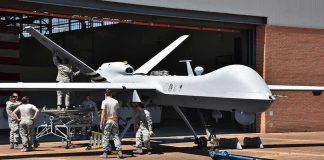
Two security researchers, Sam Curry and Maik Robert, found a public web address in mid-June that led straight into the San Francisco Police Department’s drone system. The link opened live feeds from five Skydio drones and did not ask for a password or any code. The streams showed color video, thermal images, precise location data, and even the names and email addresses of six drone pilots. The researchers reported the problem to Skydio, which then shut the link down.
Reports say the link came from Skydio’s “ReadyLinks” sharing feature and was created by the police back in December. It was set to stay active for a full year and had no authentication turned on. That meant anyone who discovered the URL could watch police operations live without hacking or breaking any digital locks. One report notes the link was later indexed in a public database that security researchers often search, raising the chance others may have seen it before it was closed.
What The Leaked Drone Footage Revealed About Everyday Policing
During the short time they watched, the researchers saw scenes that looked like daily life under an invisible eye in the sky. They viewed apparent arrests, visits to apartment buildings, searches of homeless encampments, and tracking of cars and individuals across city streets. Faces of dozens of people were clearly visible, even when those people were not tied to any crime. A separate report says more than 60 video clips and about 20 flight logs covered roughly 44 miles of drone patrols during the six-month window.
Some drone calls involved “suspicious persons” who turned out to be doing nothing wrong, including one person simply heading to play basketball. This clashes with the police department’s claim that drones are only used for active criminal investigations, vehicle pursuits, and training. The footage instead shows drones being used to check out vague complaints and track people who never face charges. That makes many Americans on both the left and the right wonder if high-tech policing is quietly stretching beyond what voters ever agreed to.
Police, Company, And City Hall Responses: Fixes And Evasive Language
The San Francisco Police Department says the link was “intended for law enforcement use only” and was “improperly obtained and accessed by individuals without authorization.” At the same time, the department admits it immediately disabled the link after learning of the issue and has now put in place stricter sharing rules. Officials also say they have “no information” that anyone besides the two researchers viewed the feeds, though they have not released detailed access logs or internet addresses to prove that point.
A Leak of San Francisco Police Drone Footage Exposes the New Reality of Urban Surveillance | Andy Greenberg & Dhruv Mehrotra, WIRED
Just after noon on a Saturday last month, a Skydio X10 quadcopter hovered about 200 feet over a San Francisco apartment complex, watching police… pic.twitter.com/KxIZ3yKjmi
— Owen Gregorian (@OwenGregorian) July 14, 2026
Skydio, the drone maker, says police agencies—not the company—choose how secure these sharing links are. According to Skydio, departments decide which drones a link can see, how long it stays live, and whether a personal identification number is required to watch. That means the misconfiguration rests with the police, not the vendor. To many readers, the department’s focus on the phrase “improperly obtained” sounds like classic bureaucratic spin. The real problem was not a clever hacker; it was a simple failure to lock the front door.
Big Crime-Fighting Claims, Weak Rules For Watching The Watchers
City leaders and Skydio have heavily promoted the drone program as a crime-fighting success story. Skydio says San Francisco’s auto thefts fell 56 percent between July 2023 and July 2024 with help from drones as “first responders.” Local news reports that the police credit surveillance drones with aiding more than 1,000 arrests since April 2024. San Francisco voters even approved expanded police drone use in Proposition E in March 2024, giving the program an official seal of public support.
Yet state law and city rules have not kept up with the speed and scale of this new aerial surveillance. Monthly drone flights jumped from dozens to more than 600, but oversight boards and privacy protections did not grow at the same pace. Civil liberties groups note a pattern: in 2023, the department logged nearly 200 hours of live camera surveillance, including long monitoring of a major music festival. Across the country, other agencies have leaked huge troves of helicopter and drone footage from unsecured servers, showing that San Francisco is not alone.
Why This Matters For Americans Tired Of A Failing, Unaccountable Government
This leak hits a nerve shared by many conservatives and liberals alike. People who worry about “woke” tech or globalist overreach see yet another example of powerful tools placed in the hands of officials who cannot even manage a basic privacy setting. People who fear “America First” policing and harsh crackdowns on the poor see homeless encampments and ordinary residents swept into secret footage without their consent or knowledge. Both sides see a system that watches them but rarely lets them watch back.
The deeper concern is trust. The federal government feels distant and captured by elites, and now even local police departments seem more focused on expanding technology than on protecting basic rights. When a city can live-stream intimate details of your life to a random web link, it challenges core American ideas about limited government, personal liberty, and equal treatment under the law. The San Francisco drone leak is not just a tech glitch; it is a warning about how easily modern surveillance can slip beyond control when the people in charge are not truly accountable.
Sources:
reclaimthenet.org, dronexl.co, abc7news.com, gadgetreview.com, worldjournal.com, vexdynamics.com, skydio.com, live.skydio.com, sanfranciscopolice.org, eff.org