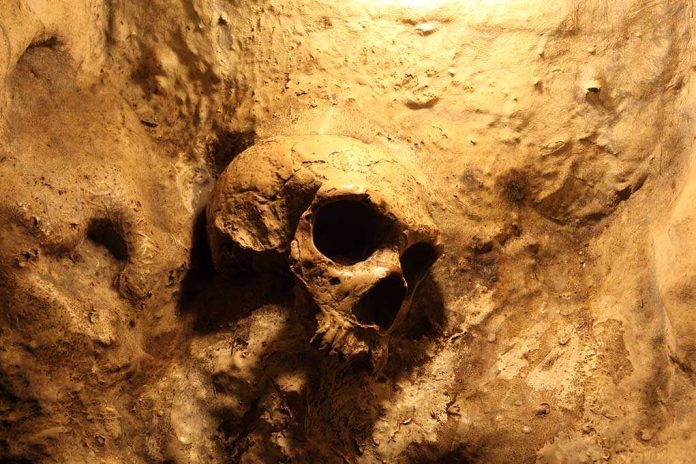
The discovery of Homo luzonensis raises profound questions about human evolution, challenging long-held theories and sparking curiosity among scientists and the public alike.
Story Highlights
- Homo luzonensis, a newly discovered hominin, found in the Philippines.
- The species exhibits a unique blend of primitive and modern traits.
- Challenges the linear model of human evolution.
- Raises questions about ancient sea crossings and human adaptability.
Discovery of Homo luzonensis: A New Chapter in Human Evolution
In a groundbreaking discovery, scientists identified a new hominin species, Homo luzonensis, from the Callao Cave in the Philippines. These fossils, unearthed in 2019, date back approximately 50,000 to 67,000 years, offering a fresh perspective on our evolutionary history. The remains, which include teeth and bones, reveal a fascinating mix of primitive and modern features, challenging the simplistic view of a linear human evolution.
The remarkable find underscores the adaptability of early humans or their relatives who managed to reach the isolated island of Luzon. It is suggested that these hominins might have used rudimentary watercraft to cross seas, a testament to their resilience and ingenuity. This revelation aligns with evidence of similar species, like Homo floresiensis in Indonesia, indicating a pattern of island-based evolutionary pathways.
The Unique Features of Homo luzonensis
Homo luzonensis is characterized by a small stature and a distinctive combination of features. The fossils show curved foot bones similar to those of Australopithecus, alongside other traits more aligned with Homo sapiens. This mosaic of features suggests that island isolation prompted rapid adaptation, leading to unique evolutionary developments. Despite the absence of DNA evidence, due to the tropical degradation of genetic material, the physical evidence alone has been enough to ignite debates among anthropologists.
Researchers like Florent Détroit and Armand Mijares have been at the forefront of this discovery. Their work highlights the complexities of human history, suggesting multiple lineages of Homo coexisted with modern humans until relatively recent times. This discovery not only enriches our understanding of human diversity but also emphasizes the need for further exploration of Southeast Asia’s islands.
Implications and Ongoing Debates
The implications of Homo luzonensis are vast, challenging the “Out-of-Africa” narrative that has dominated evolutionary theories. This discovery suggests that human evolution involves intricate patterns of migration, adaptation, and survival across diverse environments. The existence of such species compels scientists to reconsider the phylogenetic tree, acknowledging the possibility of multiple Homo lineages thriving concurrently.
As debates continue regarding the classification of Homo luzonensis, the scientific community remains divided. Some argue the fragmentary nature of the fossils limits definitive conclusions, while others see it as a vital piece in the puzzle of our ancestral heritage. Regardless, the discovery has invigorated interest in palaeoanthropology, prompting renewed exploration and research funding in the region.
Sources:
New Hominin Shakes the Family Tree—Again
New Insights into the Biology of Homo luzonensis
Homo luzonensis: Hominin Fossils
NCBI Research News on Homo luzonensis