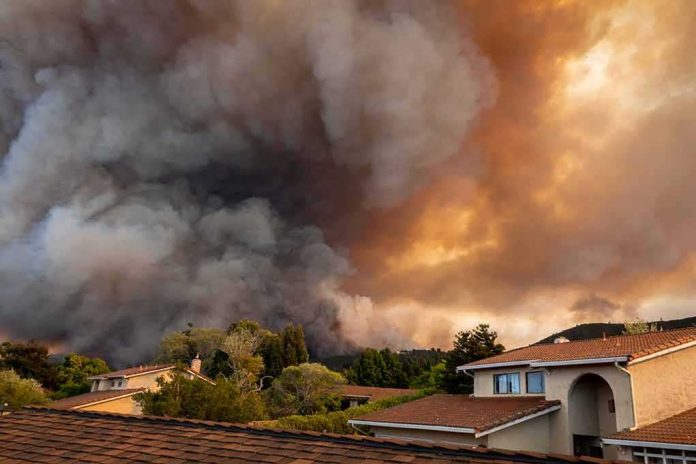
Canadian wildfire smoke is once again pushing hazardous air into the United States, and more than 100 million people are under air quality alerts.
Quick Take
- More than 100 million Americans in 18 states and the District of Columbia are under air quality alerts.
- Several cities have reported air quality index readings in the hazardous range, with some far above it.
- The smoke is tied to large wildfire activity in Canada and is being driven south by weather patterns.
- Officials are advising people, especially vulnerable groups, to limit time outside and use masks when needed.
Smoke Spreads Across the Midwest and Northeast
CNN reported that more than 100 million people in the Midwest and Northeast were under air quality alerts as Canadian wildfire smoke drifted south. The alerts covered 18 states and the District of Columbia, showing how fast the smoke cloud spread across the border and into major population centers.
That scale matters because it turns a faraway fire season into a direct daily health problem for people in U.S. cities and suburbs. Reports described murky skies, reduced visibility, and polluted air that was high enough to affect even healthy adults.
Hazardous Readings and Visible Damage
News reports said air quality index readings reached hazardous levels in several places, including values above 300 and much higher in some cities. One report cited Toledo, Ohio, above 800, while another said Cook, Minnesota, briefly passed 1,000 overnight. Those levels are extreme and help explain why the smoke drew so much attention so quickly.
The smoke also left clear signs on the ground. Reporters described orange haze, obscured skylines, and reduced views of landmarks in cities such as New York, Boston, and Detroit. One report also noted ash on aircraft windshields at Philadelphia International Airport, showing that the smoke was not just a distant haze but a real operational nuisance.
Health Warnings and the Fire Conditions Behind It
State and local agencies urged people to limit outdoor exposure, and some guidance recommended N95 masks for vulnerable residents. Reports also said people should keep outdoor time short when the air stays dangerous, especially children, older adults, and anyone with heart or lung problems. The message was blunt: the air is bad enough to change normal routines.
JUST IN: Trump Seeks to Punish Canada for Wildfire Smoke
Canada doesn’t want the smoke. Not from President Trump and Republicans who are seeking to punish it for wildfire fumes that are covering America’s northern border.
President Trump and Republican lawmakers are now ramping… pic.twitter.com/s7TyG27w2I
— PatriotTakes 1.0 (@PatriotDec5wwo) July 18, 2026
Behind the smoke, Canada is dealing with a very large fire season. Reports put the number of active fires at more than 800 and in some cases near 900, with major burns in places including Western Ontario, Quebec, and the Northwest Territories. Meteorologists said cold fronts and high-pressure systems helped move the smoke south into the Midwest and Northeast.
Why This Keeps Happening
This event fits a pattern that has become familiar in recent summers. Canadian smoke has crossed into the United States before, but the scale of these episodes has grown large enough to affect tens of millions of people at once. That recurring pattern feeds frustration on both sides of the political divide, because it shows how quickly a wildfire crisis can turn into a public health issue far from the flames.
There is also a real gap in the public record. The available reporting gives strong evidence that the smoke is severe, but it does not include a full primary technical package with raw sensor data, detailed plume modeling, or health outcome totals for this specific event. That leaves room for future review, even as the current evidence is strong enough to justify the warnings already being issued.
Sources:
redstate.com, cnn.com, npr.org, wcpo.com, bloomberg.com, cbsnews.com, apnews.com, washingtonpost.com, yahoo.com