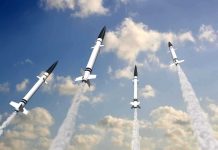

The SR-71 Blackbird dodged 4,000 enemy missiles without a single hit, proving American engineering could outfly Cold War threats.
Story Highlights
- SR-71 evaded over 4,000 surface-to-air missiles across Vietnam, Libya, and Soviet borders through Mach 3+ speed and 85,000-foot altitude.
- First SAM launch occurred July 26, 1968, over Hanoi; pilots used cockpit lights to monitor and accelerate away.
- Lockheed Skunk Works built it with Soviet-sourced titanium; only USAF aircraft with zero combat crew losses.
- Retired in 1998 due to costs, now in museums; influenced hypersonics and stealth tech.
- Pilot accounts confirm perfect survival record against massed defenses.
Origins in Skunk Works Innovation
Lockheed Skunk Works under Kelly Johnson developed the SR-71 from the CIA’s A-12 prototype between 1962 and 1964. The U-2 shootdown over the USSR in 1960 demanded a faster replacement for denied airspace reconnaissance. Engineers sourced titanium covertly from the Soviet Union through third parties. The aircraft entered USAF service in 1966, designed for Mach 3+ speeds and extreme altitudes that no missile could match.
First Combat Test Over Vietnam
On July 26, 1968, Major Jerry Crew, the reconnaissance systems officer, faced the first SAM threat over Hanoi and Haiphong. North Vietnamese SA-2 missiles launched after pilots turned off the ECM jammer. Cockpit lights signaled R for search, M for track, L for launch. Crews accelerated to outrun the 58-second missile flight time, evading both projectiles cleanly.
Peak Evasions in Hostile Skies
SR-71 pilots flew daily over North Vietnam from 1968, gathering real-time intelligence amid the Vietnam War. Soviet-supplied SA-2s failed against the Blackbird’s altitude above 85,000 feet and speed exceeding Mach 3. In 1986 over Libya, pilot Brian Shul pushed to Mach 3.5, dodging missiles in a high-stakes raid. Total evaded missiles reached approximately 4,000 across global hotspots.
USAF Strategic Air Command crews refined tactics like post-launch acceleration and ECM jamming. No crew lost to enemy action marks it unique among reconnaissance platforms, unlike the vulnerable U-2.
Retirement and Lasting Legacy
High operational costs, including titanium tires lasting just 20 landings, prompted 1998 USAF retirement amid post-Cold War budget cuts. NASA flew final missions until 1999. Congress and USAF leaders favored satellites and drones despite the perfect record. The SR-71 validated high-speed recon, spurring F-117 stealth and modern hypersonics.
Expert Views on Technological Edge
Richard Graham, SR-71 commander, detailed evasions in his books, crediting outrunning SA-2 limits. Lockheed Martin stated speed and altitude made defenses hopeless. Airman Magazine called it the only aircraft evading 4,000 missiles with zero losses. Critics highlight 12 accident write-offs and expenses, but facts affirm its dominance aligning with American innovation and self-reliance.
Sources:
4,000 Missiles Were Fired At the SR-71 Blackbird. None Ever Hit.
4000 Missiles Could Not Stop the Mach 3+ SR-71 Blackbird
The SR-71 Blackbird Avoided 4,000 Shots
SR-71 RSO Tells the Story of the First Time the Blackbird Was Shot At By a Missile