A shocking case in a Manila public school exposes just how vulnerable children can be when government systems fail to protect the most innocent among us.
Story Snapshot
- A 52-year-old public school teacher in Tondo, Manila, was arrested for allegedly forcing a 12-year-old student to eat a cockroach to silence him.
- The boy had reportedly witnessed the teacher molesting a female classmate in a school restroom before being chased, threatened, and abused.
- Philippine authorities cite violations of a child protection law and have launched parallel criminal and administrative investigations.
- The case highlights deep failures in government-run schools and raises alarms for parents worldwide about trusting state systems with their children.
Alleged Abuse Inside a Government-Run Classroom
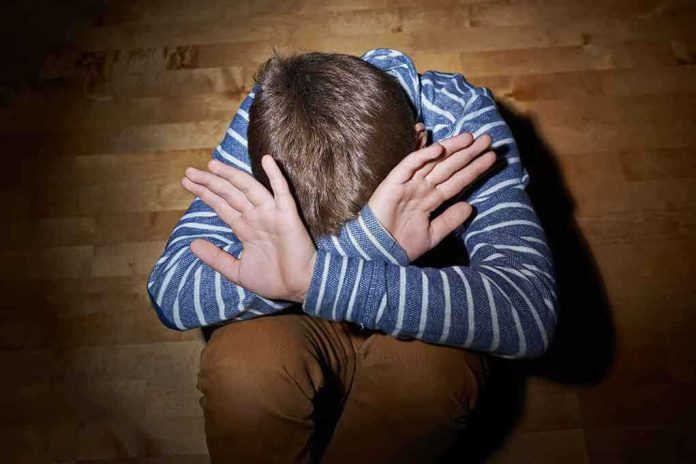
Reports from Manila describe a disturbing scene unfolding in a crowded public high school in Tondo, one of the poorest districts of the Philippine capital. A 52-year-old male teacher, identified in coverage only as “Nel,” allegedly cornered a 12-year-old Grade 7 student in a restroom after the boy walked in on him inappropriately touching a female student. According to police accounts, the teacher chased the boy, dragged him into a cubicle, and turned that moment of panic into an episode of degrading abuse.
Authorities say the teacher then forced the terrified boy to eat a cockroach, using humiliation and disgust as a weapon to keep him quiet about what he had just seen. The teacher allegedly threatened to kill the child and even talked about cutting his foot if he spoke out. The female student the boy tried to protect has not filed a complaint, a silence that underscores how fear and power imbalance can keep victims frozen even when the facts shock an entire community.
How Police and Education Officials Responded
The boy’s mother finally went to authorities in November, weeks after the October incident inside the school restroom. Her complaint triggered action from the Manila Police District, which secured an arrest warrant on December 11. Police arrested the teacher the next day on school grounds along a busy street in Tondo, taking him into custody in front of the same community whose trust he was supposed to earn as an educator. Three days later, he was released on bail equivalent to roughly a few thousand U.S. dollars, pending trial.
While criminal charges move forward under a Philippine law that provides special protection against child abuse, the country’s Department of Education opened its own administrative probe. Officials invoked a nationwide Child Protection Policy that, on paper, promises zero tolerance for violence, abuse, and exploitation by school staff. They announced psychosocial support for the boy, possible class adjustments, and accountability measures for any personnel found responsible. Yet as of the most recent reporting, the teacher’s employment status remains murky, and the female student’s situation is unresolved.
Systemic Failures and What They Signal for Parents
This case did not happen in an isolated jungle outpost; it unfolded in a government school inside a dense urban neighborhood, under a bureaucracy that already had a detailed child protection order on the books. That contrast between policy and practice is what should concern parents everywhere, including here at home. When adults granted authority by the state abuse it, and when oversight mechanisms only react after families go public, it demonstrates why blind trust in government-run systems is dangerous.
Philippine child advocates called the incident a blatant violation of children’s rights, and police described the threats as grave, especially given the boy’s age. Yet the teacher flatly denies everything, claiming the events “never happened.” Courts will ultimately weigh the evidence, but the consistent reporting from multiple outlets and aligned timelines from police and education officials show how serious investigators consider the boy’s testimony. For conservative readers used to media spin, this alignment across sources is a key indicator that the core facts are not some social-media rumor.
Lessons for American Families in an Age of Government Overreach
For many American parents, headlines from abroad can feel distant until we recognize the same pattern: centralized systems insist they protect children, but real accountability often arrives only after a brave family pushes back. Whether it is radical gender ideology in classrooms, secret counseling behind parents’ backs, or lax discipline for abusive staff, the core issue is the same—who ultimately safeguards the child, the state or the family. This Manila case is a stark reminder that parental vigilance cannot be outsourced.
In a United States now turning away from the excesses of woke bureaucracy and renewed under a White House that explicitly rejects globalist groupthink, stories like this underscore why local control, transparency, and strong family authority matter. When government institutions anywhere fail to defend the smallest and weakest, they forfeit moral authority. Parents, churches, and community groups—not distant ministries or federal agencies—remain the first and last line of defense for children’s safety and dignity.
Sources:
Teacher nabbed in Manila for threatening, forcing student to eat cockroach
Manila teacher probed by education department for forcing student to eat cockroach
Manila teacher arrested for allegedly forcing student to eat cockroach
DepEd probes Manila teacher accused of forcing student to eat cockroach
Teacher nabbed in Manila for threatening, asking student to eat cockroach