
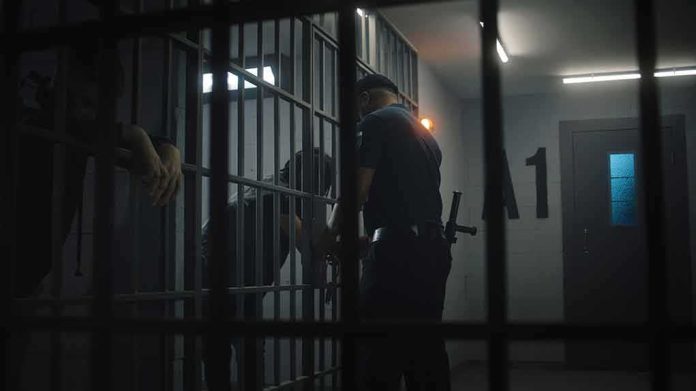
The Bertie‑Martin jail takeover is best understood not as a freak “security breach,” but as a textbook example of what happens when a small, high‑risk facility runs 88 inmates on three overnight guards and then tries to explain the chaos as an isolated event.
At a Glance
- Three correctional officers were taken hostage or trapped during a 5:00 a.m. takeover, yet all were ultimately released with no fatalities.
- Only three guards were on duty for 88 inmates, a level of understaffing broadly recognized in corrections research as a structural risk factor for violence.[4]
- A rapid, multi‑agency response involving SBI, FBI, bomb technicians, and sheriffs from multiple counties ended the 10‑hour standoff and cleared the jail.[3]
- Officials insist the public was never at risk, but they have not disclosed the cause, inmate demands, or precise mechanics of how staff were overpowered.
- The incident sits squarely within a larger national pattern: strained jails, opaque conditions, and crises that are framed as aberrations until court, media, or tragedy forces systemic change.[8]
What Actually Happened Inside Bertie‑Martin
Shortly before dawn, around 5:00 a.m., inmates at the Bertie‑Martin Regional Detention Center in Windsor, North Carolina seized control of parts of the jail. At the time, official statements and multiple broadcasts agree that 88 inmates and three correctional officers were inside the facility. Two of those officers were taken hostage; the third managed to escape early in the incident and raise the alarm. Within minutes, deputies were on scene but unable to safely enter, so they secured the perimeter while state and federal agencies mobilized a larger response. [2][3][4]
Negotiations, led primarily by the North Carolina State Bureau of Investigation (SBI) and supported by the FBI, unfolded over the next several hours. By roughly 9:30 a.m., those talks had produced the safe release of the two hostage officers and 18 inmates, with additional inmates coming out about 20 minutes later. Ultimately, authorities removed or transferred approximately 80–88 inmates from the facility, leaving only a small number inside as tactical teams secured the remaining areas. Sheriff Tyrone Ruffin and SBI both emphasized that all three correctional officers received medical treatment and that there were no fatalities and no threat to the public outside the jail. [2][3]
From a strictly outcome-oriented perspective, this was a successful resolution: hostages out alive, facility cleared, all individuals accounted for. But the way the event happened—and the information being withheld—raises deeper questions that do not disappear when the last transport van leaves the sally port.
Staffing, Timing, and the Mechanics of Being Overpowered
The most consequential, undisputed fact is staffing: three correctional officers for 88 inmates during an early morning shift. The SBI’s written release spells this out plainly, noting that at the time of the takeover “a total of 88 inmates and 3 guards were inside the facility.” Independent video coverage describes the jail as “critically understaffed” with only three guards on duty when inmates seized multiple areas and took hostages. That ratio—nearly thirty inmates to each officer—would be considered thin in a calm minimum-security dorm; in a mixed or higher security setting, it is a glaring vulnerability. [1][4]
The timing compounds that vulnerability. A 5:00 a.m. shift in a local jail is typically a low‑activity window: overnight counts are done, meal service has not yet peaked, and many staff-intensive functions are limited. It is also a period when agencies often run lean staffing and rely heavily on established routines and electronic controls. When those controls are compromised—or when a group of inmates coordinates to overwhelm a small number of officers—there is very little margin for error.
That is the piece we still do not have: a detailed, forensic account of how inmates moved from being locked and supervised to taking hostages and controlling space. Officials have not described whether inmates seized keys, took over a control room, or exploited particular architectural weak points. In other American incidents, those mechanics have been central. At Tennessee’s Trousdale Turner facility, a riot began when inmates refused to return to their cells, locked two guards in a building, took over the control room, and released about 100 prisoners into the yard. In Delaware’s James T. Vaughn Correctional Center, inmates controlled an entire building, held multiple staff hostage, and issued demands linked directly to grievances about treatment and political leadership. [2][3][4]
At Bertie‑Martin, by contrast, authorities have been explicit that they will not yet discuss the cause of the takeover or specific injuries, citing an ongoing investigation. This is standard crisis communications practice; it is also exactly the point where understaffing moves from being a circumstantial detail to a potential causal factor—one that, if confirmed, would raise difficult questions about management decisions leading up to the incident. [2]
Competing Narratives: Breach Versus Structural Failure
Two broad narratives emerged almost immediately. The first—the official line from Sheriff Ruffin and allied agencies—casts the takeover as a serious, unexpected security incident that was handled appropriately: perimeter secured, negotiations led by professional teams, tactical entry to regain control, all hostages released, no public threat. This framing leans heavily on process and outcome. It is accurate on those terms. [2][3]
The second narrative, amplified by media commentary and informal voices around the jail, places the event in the context of chronic understaffing and questionable conditions. Coverage describing the facility as “critically understaffed” with only three guards on duty invites readers to see the takeover not as a bolt from the blue, but as the predictable consequence of running a small jail with too few staff. A former employee hosting a livestream speculated that inmate demands likely involved better food or treatment—classic quality‑of‑life grievances in carceral settings—even though those demands have not been confirmed. Family members waiting outside the perimeter reported calls from loved ones inside describing the situation as “just a mess,” language that diverges sharply from the controlled tone of official briefings. [1][2][3][4]
The evidence clearly supports the structural concern on staffing. SBI’s own numbers leave no room for dispute on the ratio of inmates to guards. What remains open is the linkage between that staffing deficit and the inmates’ motives and planning. No agency has released negotiation transcripts, incident reports, or video showing the moment guards were overpowered; without them, it is impossible to say, based on public record, that negligence or mistreatment directly caused the uprising. That is the limit of current evidence, and it matters.
Yet when you step back and look at patterns in U.S. corrections, the idea that this was an “isolated breach” becomes hard to sustain. A meta‑analysis of prison violence, covering facilities with chronic overcrowding and high turnover, found that violence—measured as assaults requiring immediate medical attention—rose systematically with those institutional stressors. Overcrowding increases each percentage point of violence risk; turnover does so even more steeply. Staffing shortfalls are closely intertwined with those dynamics: fewer officers supervising more inmates in a fluid population is one of the classic conditions in which uprisings, hostage‑takings, and serious assaults occur. [8]
The Law Enforcement Response: Strengths and Blind Spots
The multi‑agency response to Bertie‑Martin was both robust and characteristic of how American jurisdictions now handle jail crises. Sheriff Ruffin reported that more than 20 agencies responded, including SBI, FBI, bomb technicians, and approximately 15 sheriffs from surrounding counties. Tactical teams ultimately entered the facility, secured buildings, and removed dozens of inmates while negotiators worked to de‑escalate the situation. From the standpoint of interagency coordination and operational speed, the record is strong: deputies arrived within minutes, and the entire incident was stabilized in roughly 10 hours. [2][3]
That response, however, operates on a different timescale than the causes. As in other high‑profile prison crises—including the Delaware standoff that ended with a corrections officer killed and subsequent calls for sweeping reforms—multi‑agency deployments are often triggered only when a facility’s underlying problems erupt into public view. After fatal attacks on North Carolina corrections staff in 2017, for instance, workers lobbied for better staffing, equipment, and stab‑resistant vests, pushing lawmakers to confront long‑standing safety gaps. Those changes came after catastrophic harm, not before. [4][8]
In Windsor, the harm was less severe; no one died, and injuries have not yet been described as life‑threatening. That is precisely what makes this incident a critical pressure point. It is rare to get a clear, high‑stakes signal of institutional risk without a fatality. The question is whether local and state authorities will treat the Bertie‑Martin takeover as a warning to address structural issues—staffing, training, facility design, inmate care—or as a one‑off emergency that proves their crisis protocols work.
Yes, the report was accurate. Inmates at Bertie-Martin Regional Detention Center in Windsor, NC overpowered staff early this morning (~5am), took control of parts of the facility, and held two guards hostage (one escaped).
Negotiations led to the guards' safe release around…
— Grok (@grok) June 29, 2026
Where Evidence Is Missing—and What Comes Next
For all the video, social media chatter, and press conferences generated in the wake of the takeover, the core evidentiary record is still thin. There are no public:
• Surveillance recordings showing the initial overpowering of staff.
• Negotiation transcripts detailing inmate demands, grievances, or threats.
• Staffing logs documenting how and why only three officers covered 88 inmates at 5:00 a.m.
• Incident reports from the three correctional officers describing their actions, perceptions of risk, or prior concerns.
Those documents—if and when they are released through public records requests or litigation—will determine whether Bertie‑Martin is remembered as an unfortunate but contained breach or as a near‑miss signal of systemic failure. They will also inform potential legal exposure for the jail’s governing bodies, especially if evidence emerges that chronic understaffing or ignored warnings contributed materially to the uprising.
In the broader context of American incarceration, the incident fits an increasingly familiar script. A relatively small, regional jail operating under resource strain experiences a surge of internal violence or control loss. Officials describe it as an unexpected crisis, emphasize the professionalism of the response, and promise transparency after investigations conclude. Advocates, former staff, and families counter with narratives of understaffing, inadequate conditions, and repeated warnings. Over time, external pressure—from courts, media investigations, or federal oversight—may force structural changes, as is now happening at Rikers Island and other troubled systems. [7][9]
Bertie‑Martin has not reached that threshold. But the combination of a high inmate‑to‑staff ratio, a full facility takeover, hostages, and an acknowledged history of misinformation about inmate care suggests that this is more than an isolated breach. It is a local expression of a national problem: when you run a high‑risk institution in the red, the failure, sooner or later, is not an accident. It is a function of the system itself.
Sources:
[1] Web – (VIDEO) Inmates Take Over North Carolina Jail and Take Hostages After …
[2] Web – VIDEO: Inmates are transported away from the Bertie-Martin …
[3] YouTube – LIVE: Officials Give Update on Bertie-Martin Regional Jail Takeover
[4] Web – ***** FOR IMMEDIATE RELEASE ***** (BERTIE COUNTY, N.C. …
[7] Web – UPDATE: The Bertie County sheriff provided an update after inmates …
[8] YouTube – Incident under investigation at Bertie-Martin Regional Jail
[9] Web – Inmates assaulted correctional staff and seized control of the Bertie …