New Mexico just drew a legal line in the sand that no state has dared cross before, banning armed federal agents from coming anywhere near polling places—and it might ignite the biggest constitutional showdown since the Civil War.
Story Snapshot
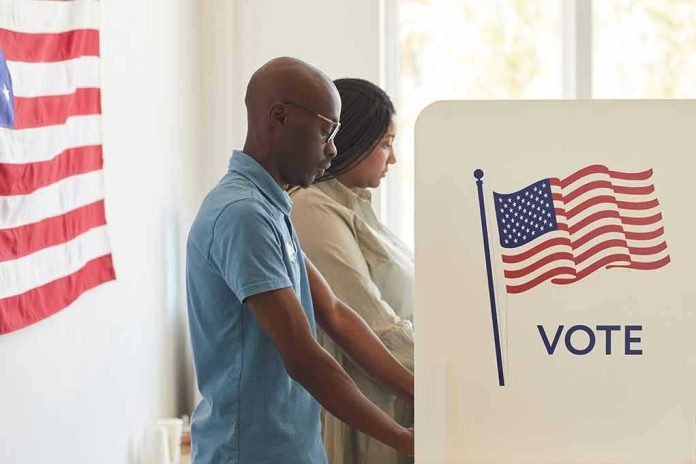
- New Mexico became the first state to prohibit armed federal agents, military troops, and federal personnel from polling places, ballot drop boxes, and within 50 feet of monitored boxes through Senate Bill 264, signed March 9, 2026.
- The law empowers voters, prosecutors, and election workers to file civil suits against violators, imposing fines up to $50,000 per violation while blocking federal changes to voter qualifications that conflict with state law.
- Democratic Governor Michelle Lujan Grisham and House Majority Leader Reena Szczepanski championed the measure as protection against federal election “nationalization,” while Republican opponents dismissed it as unnecessary political theater.
- Seven other states introduced similar legislation amid 2026 election preparations, setting up potential Supreme Court battles over state sovereignty versus federal authority under the Supremacy Clause.
A Constitutional Gambit That Rewrites Election Security
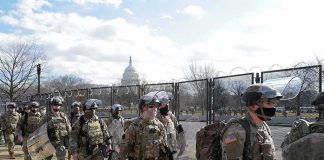
Senate Bill 264 didn’t emerge from a vacuum. Federal law already prohibits deploying troops to polling places under 10 U.S.C. § 275, rooted in the Posse Comitatus Act’s restrictions on military involvement in domestic law enforcement. New Mexico’s legislation extends that prohibition to armed federal agents of any stripe—including immigration enforcement, FBI, or federal marshals—creating state-level penalties where none existed before. The law takes effect from early voting onward, applying to any federal presence near ballot boxes or polling sites, a sweeping expansion that legal experts warn could collide head-on with the Constitution’s Supremacy Clause.
Governor Grisham’s signature on March 9 capped a lightning legislative sprint. The state Senate passed the bill 26-16 on February 15, with every Democrat voting yes and every Republican voting no. Two days later, the House followed suit 41-26, mirroring the partisan divide. Grisham framed the law as fundamental to state authority: “New Mexicans will be safe in every ballot location. States run their elections.” House Majority Leader Szczepanski echoed that sentiment, citing threats to “nationalize elections” that infringe on state rights guaranteed under Article I, Section 4 of the Constitution, which grants states primary responsibility for election administration.
The Federal Overreach Fear or Partisan Overreaction
Senate Minority Leader William Sharer offered the sharpest Republican rebuttal, calling the law a solution in search of a problem. He stated he “cannot imagine” a scenario where a president would deploy armed forces to seize elections by force, dismissing Democratic concerns as alarmist. Yet the timing tells a different story. National debates over election integrity have intensified, with proposals like the federal SAVE Act threatening to impose voter qualification changes that could override state rules. New Mexico Democrats positioned SB 264 as a preemptive strike against such federal intrusions, whether real or hypothetical.
The law’s provisions are straightforward but potent. Any voter, election official, or prosecutor can file civil suits alleging intimidation or obstruction caused by armed federal presence. Violations carry fines up to $50,000 each, a deterrent designed to make federal agencies think twice before sending armed personnel near voting sites. The law also blocks federal attempts to alter New Mexico’s voter qualifications if they conflict with state statutes, a direct challenge to federal supremacy that constitutional scholars predict will end up before judges sooner rather than later.
Eight States, One National Pattern
New Mexico isn’t alone in its anxiety over federal election interference. Seven other states introduced similar legislation during the 2026 session, revealing a stark partisan and geographic pattern. Democratic trifectas in California, Illinois, Virginia, Washington, and Connecticut proposed bans on immigration enforcement or federal agents near polling sites. Georgia Democrats sought to prevent National Guard deployment at polls. Kansas, with divided government, mirrored immigration enforcement restrictions. Arizona Republicans took the opposite tack, proposing—then withdrawing—a measure requiring federal immigration officers at polls as a deterrent, which advocacy groups like Living United for Change decried as voter suppression.
This wave of legislation reflects deeper fractures in American federalism. Democratic-controlled states view federal election involvement as a threat to voter access and state autonomy, particularly for immigrant communities who might fear deportation near polling places. Republicans in some states see federal presence as a tool for election security, though Arizona’s failed proposal highlighted the backlash such measures provoke. New Mexico’s law stands out for its breadth and enforcement teeth, making it a test case for whether states can legally exclude federal agents from election administration zones.
Legal Landmines and Supremacy Clause Showdowns
Legal experts immediately flagged constitutional red flags. The Supremacy Clause of Article VI establishes federal law as supreme over conflicting state laws, and federal statutes governing immigration enforcement, law enforcement operations, and election oversight could theoretically override New Mexico’s ban. No court has yet ruled on whether a state can prohibit federal agents from areas the federal government deems within its jurisdiction, such as enforcing immigration laws near ballot boxes or investigating federal election crimes. If a federal agency challenges SB 264, the case could escalate to the Supreme Court, where justices would weigh state sovereignty against federal prerogatives.
The stakes extend beyond New Mexico. If the law survives legal scrutiny, it establishes a blueprint for other states to wall off elections from federal reach, fundamentally reshaping the balance of power. If courts strike it down, states lose a tool to resist federal intervention they perceive as overreach. Common sense suggests states should control their elections without armed federal intimidation, a principle rooted in constitutional design. Yet federal authority to enforce laws—including immigration and election statutes—isn’t easily dismissed. This tension won’t resolve quietly, and voters in New Mexico and beyond will watch closely as the first enforcement attempts unfold or lawsuits materialize.
Sources:
New Mexico enacts law prohibiting the deployment of troops to polling places – Ballotpedia News