
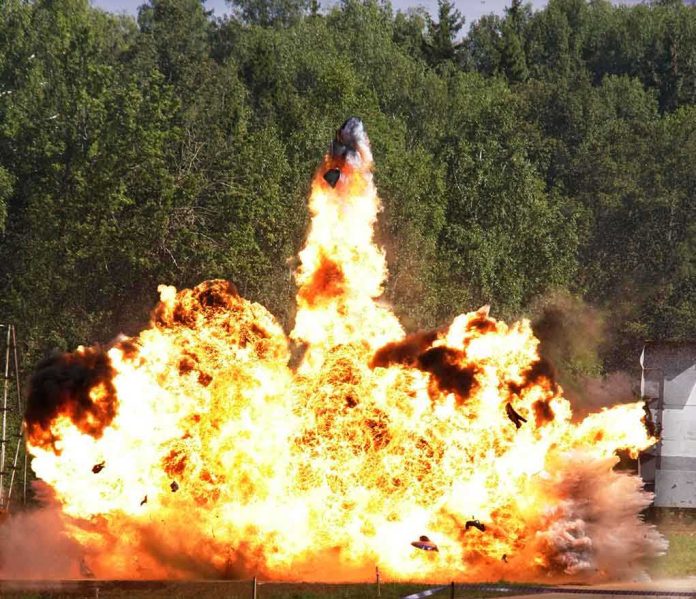
The IDF’s demolition of Hezbollah’s largest tunnel unleashed a blast so massive it registered as an earthquake, shaking Israel’s northern border and exposing the terror group’s hidden invasion plans.
Story Snapshot
- IDF destroyed two vast Hezbollah tunnels in Qantara, southern Lebanon, on April 28, 2026, triggering seismic detection.
- Preemptive alert warned Israeli residents from Rosh Hanikra to Golan Heights to avoid panic.
- Explosion felt widely but did not activate earthquake sirens, showcasing IDF precision.
- Event marks significant blow to Hezbollah’s Iranian-backed underground network amid border tensions.
- No immediate retaliation reported, reinforcing Israel’s deterrence edge.
IDF Demolishes Hezbollah Tunnels in Qantara
Israel Defense Forces detonated two vast Hezbollah attack tunnels near Qantara village on April 28, 2026, Tuesday evening. The site sits in Shiite-majority southern Lebanon close to the border. IDF high command directed the operation to neutralize threats built with direct Iranian guidance. Geological Survey of Israel detected the blast as a small earthquake. Residents felt tremors along the northern border, but no structural damage occurred.
Preemptive Warning Prevents Panic
IDF issued alerts shortly before the blast to communities from Rosh Hanikra to the Golan Heights. The message warned of a large explosion and urged calm. This step minimized civilian alarm during the demolition. Israel’s seismic warning system registered the event without triggering sirens, as military experts anticipated. N12 News reporter Amit Segal tweeted about the earthquake-like force felt across the border.
Hezbollah’s Tunnel Network History
Hezbollah constructed cross-border tunnels since the 2006 Lebanon War for potential invasions. Iranian support fueled these asymmetric weapons. IDF exposed multiple tunnels in 2018 during Operation Northern Shield, demolishing them systematically. Past blasts occasionally triggered seismic alerts, mirroring this event. Ongoing clashes escalated after the October 2023 Hamas attack, with daily exchanges and drone threats preceding the Qantara strike.
Power dynamics favor Israel’s detection technology over Hezbollah’s underground tactics. U.S.-backed IDF operations counter Iran-proxied threats effectively. Common sense dictates preempting invasions aligns with self-defense principles cherished in conservative values. Hezbollah’s ideology drives offensive preparations, but facts show Israel’s superior execution disrupts them decisively.
Immediate Aftermath and Verification
IDF released footage confirming the blasts’ success. Lebanese media captured explosions, verifying the scale. No Hezbollah retaliation emerged immediately, despite concurrent drone interceptions near Misgav Am. Reports clarified two tunnels, not one, as the largest in the war. Regional outlets labeled them unprecedented, backed by Geological Survey data. Tunnels now fully destroyed, crippling attack plans.
Strategic Impacts on Border Security
Short-term effects disrupt Hezbollah operations and boost Israeli deterrence. Long-term weakening of the underground network pressures Lebanon amid fragile ceasefires. Northern Israeli residents stayed safe due to warnings, while Qantara locals endured blasts. Politically, the strike underscores persistent threats, countering international de-escalation calls with hard realities. Defense sectors advance tunnel-detection tech, highlighted by seismic military applications.
Sources:
Watch: Small Earthquake Registered After IDF Blows Up Largest-Ever Hezbollah Tunnel
IDF Destroys Hezbollah Tunnel in
IDF blows up 2 vast Hezbollah attack tunnels built with direct guidance from Iran