A three-year-old in Kansas pulled a trigger, but it was an adult’s decision hours earlier that the law ultimately treated as murder.
Story Snapshot
- A 26-year-old Kansas father admitted leaving a loaded handgun where his small daughters could reach it, leading to a fatal sibling shooting.
- He pleaded guilty to second-degree murder, plus weapons and child endangerment charges, after prosecutors dropped a first-degree count.
- The case spotlights how modern prosecutors turn “accidents” into homicides when guns are left unsecured around children.
- Research shows most unintentional child firearm deaths involve children shooting themselves or other children with readily accessible guns.
How A Father’s Split-Second Choice Became A Murder Case
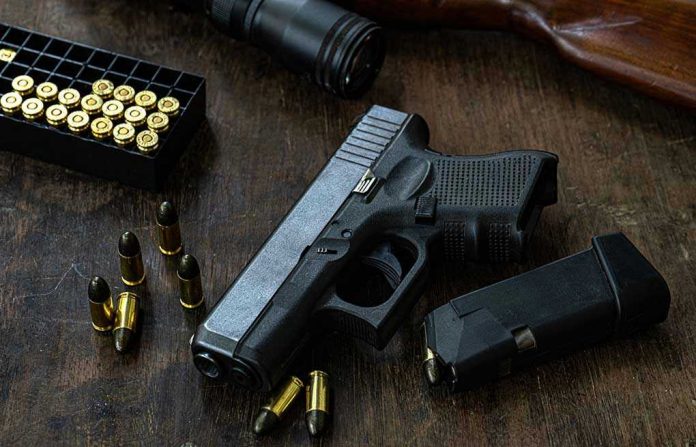
Police say the day started with a familiar scene: a young father, home in Wichita with his two small daughters, carrying a handgun he was not legally allowed to have.[1] Court records describe that gun riding in a prop holster that did not actually secure the weapon, a cosmetic accessory that looked the part but failed the basic test of safety.[1] At some point, the father took the handgun out and set it on the mantel above the living room fireplace, then walked away to change clothes.[1]
According to the arrest affidavit, the father later admitted he knew his older daughter had been curious about the firearm before.[1] That prior curiosity matters because it undercuts the idea that this was unforeseeable. Prosecutors could argue that when you already know a three-year-old wants to touch the gun, leaving it in plain reach on a mantel is not just careless, it is a conscious decision to ignore an obvious risk.[1] That detail helped transform a tragedy into a homicide case instead of a mere accident.
The Fatal Moments And The 911 Call No Parent Wants To Make
After setting the gun on the mantel, the father went into a bedroom, leaving the girls alone in the living room.[1] A loud bang followed. The father told police he rushed out to find his three-year-old crying and his one-year-old on the couch with a gunshot wound to the head.[1] He dialed 911 and told dispatchers his older daughter had shot the baby.[1] Emergency responders could not save the younger child. The facts were simple, brutal, and largely uncontested.
Confession came quickly. According to court documents, the father told investigators, “I knew better, should’ve put it somewhere else.”[1] That one sentence is a prosecutor’s dream and a defense lawyer’s nightmare. It concedes knowledge of the danger, awareness of safer alternatives, and a personal admission of fault.[1] For a jury, you do not need a law degree to connect those words to responsibility. For a judge in a plea hearing, it supplies the mental state needed to sustain a serious homicide conviction.
Why Prosecutors Called This Murder, Not Misfortune
Prosecutors in Sedgwick County charged the father with first-degree murder committed during the commission of a felony, plus criminal possession of a weapon by a convicted felon and two counts of aggravated child endangerment.[1] Those charges send a clear message: if you are a felon with a gun and your negligence kills a child, the state will not treat it as a mere parenting mistake. The plea agreement later pared that back to second-degree murder, but the moral signal did not soften.[1]
The guilty plea to second-degree murder reflects a growing legal trend. Researchers who examined unintentional child firearm deaths found that the vast majority involve children shooting themselves or other children with guns that adults left accessible.[3] That pattern undermines claims that these events are rare flukes. From a common-sense conservative view, this is precisely where individual responsibility is supposed to kick in: if you insist on owning or carrying a gun, you carry the duty to control it every moment it is around your kids.
From “Tragic Accident” To Personal Accountability
Supporters of gun rights often push back on emotional media coverage, pointing out that headlines sometimes rush to blame without waiting for evidence. That concern is valid in many high-profile shooting stories, but here the key facts come from sworn affidavits and the defendant’s own admissions.[1] The father acknowledged his status as a convicted felon with a handgun, described the unsecured placement, and admitted he knew better.[1] That record aligns with common-sense standards for reckless behavior, not speculative media spin.
Broader national data backs up the prosecution’s framing of the risk. A comprehensive study of child firearm accidents found that unintentional deaths overwhelmingly happen because children gain access to guns in homes and then shoot themselves, siblings, or friends.[3] The researchers concluded that “the principal danger to children comes from the availability of firearms to children, their siblings, and their child friends.”[3] In plain language: the gun lying around is the problem, not some mysterious bad luck.
What This Case Signals For Parents, Prosecutors, And Gun Culture
This Kansas case sends a warning shot that goes beyond one home in Wichita. A prosecutor saw a father’s failure to secure a gun as not only morally wrong but criminally murderous, and a judge accepted that frame when the father pled guilty.[1] For parents who keep firearms, the message is blunt: if your child finds your gun and someone dies, you may face a murder charge, even if the shooter is three years old and shares your last name.[1][3]
For those who value both the Second Amendment and traditional responsibility, the lesson is uncomfortable but necessary. Government should not use every tragedy to erode rights, but the flip side is that citizens must exercise those rights with serious discipline. No bureaucrat forced this father to buy a prop holster or to lay a loaded pistol where toddlers could grab it.[1] The state stepped in only after a little girl paid with her life for an adult’s refusal to live up to basic, commonsense standards.
Sources:
[1] Web – Father admits leaving handgun within reach of young daughters before …
[3] Web – Shooting of Ralph Yarl – Wikipedia