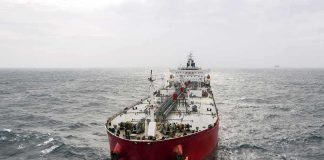
The USS Gerald R. Ford, world’s largest warship at 100,000 tons, boasts cutting-edge tech yet earned the label “Navy’s problem child” amid whispers of hidden deployment woes.
Story Snapshot
- World’s largest aircraft carrier displaces 100,000 tons, measures 337 meters long, carries up to 90 aircraft.
- Revolutionary EMALS catapults and AAG replace steam systems for smoother launches, fewer crew needed.
- A1B reactors triple power output, enabling future weapons, but full operations lagged past 2018 target.
- Boosts daily sorties to 160 from Nimitz’s 140, cuts crew by 500-900 despite bigger size.
- Navy calls it most lethal platform, yet “problem child” tag hints at unresolved technical hurdles.
Gerald R. Ford Class Succeeds Nimitz Era
U.S. Navy engineers designed the Gerald R. Ford-class to replace aging Nimitz carriers. Construction began in 2005 at Newport News Shipbuilding. This class maintains strike group power projection with innovations addressing steam catapult limits. Northrop Grumman built nuclear propulsion featuring two A1B reactors and four shafts. Bechtel manufactured reactors generating three times more electricity than predecessors. General Atomics supplied EMALS for precise aircraft launches. These changes promise higher efficiency in combat scenarios.
EMALS and AAG Transform Flight Operations
EMALS uses linear electromagnetic motors instead of steam catapults. Pilots experience smoother acceleration with reduced airframe stress. Unmanned vehicles launch at slower speeds. Advanced Arresting Gear employs electromagnetic controls on synthetic cables. This setup cuts peak loads on landing aircraft. Redesigned flight deck shrinks the island structure. Flag bridge moved below deck frees space for 160 daily sorties, surging to 220 in crises. Stealth features lower radar cross-section. These upgrades handle 90 aircraft versus Nimitz’s 60.
Structural Power and Crew Efficiency Gains
The carrier stretches 337 meters with 78-meter flight deck beam. Full load displacement hits 100,000 tons across 25 decks. Nuclear power delivers unlimited range at over 30 knots. Crew totals 4,540 including airwing, down 500-900 from Nimitz due to automation. A1B reactors provide 150% more electrical power for lasers and sensors. Weapons include two Mk.29 ESSM launchers, two Mk.49 RAM systems, three Phalanx CIWS. Flexible interiors allow rapid reconfiguration for new gear.
Operational Status Trails Ambitious Timeline
Navy planned full capability by fiscal 2018 after Milestone C. As of March 2026, leaders describe Ford as the most capable combat platform worldwide. It projects power through strike warfare and force protection. Carrier strike group commanders oversee missions. Yet sources label it “problem child,” suggesting delays or glitches persist despite specs. Limited data details exact setbacks like cost overruns or failures. Navy statements emphasize adaptability over acknowledged flaws.
100,000 Ton Nuclear Aircraft Carrier USS Gerald R. Ford Is the U.S. Navy’s Problem Childhttps://t.co/vmH1X0zN7k
— 19FortyFive (@19_forty_five) March 18, 2026
Strategic Edge Shapes Naval Power
Ford enhances U.S. deterrence with sustained sorties and nuclear endurance. Reduced manning lowers costs over 50-year life. Power surplus readies directed-energy weapons against drones or missiles. Contractors like Northrop Grumman gain from investments. Congress oversees funding amid capability scrutiny. Common sense demands flawless execution for taxpayer dollars; facts show tech promise but hint execution gaps erode conservative trust in big-government projects.
Sources:
seaforces.org: Military reference database providing technical specifications
naval-technology.com: Defense technology publication with detailed design analysis
Wikipedia: Aggregated information on vessel specifications and status
Jerusalem Post: News publication covering defense technology
Wikipedia: Aggregated information on USS Gerald R. Ford specifications and status
U.S. Navy Official Sources: Direct Navy statements on operational capability