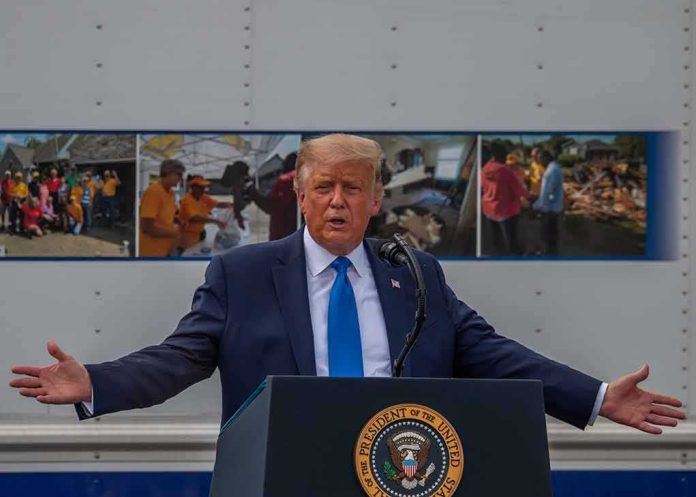
Trump’s claim that an Iran peace deal is “largely negotiated” sits in the tight space between genuine breakthrough and high‑stakes bluff, and that gray zone is exactly where wars are prolonged—or ended.
Story Snapshot
- Trump says a sweeping U.S.–Iran peace agreement is near, tying it to Iran giving up the nuclear weapons path.
- Iran admits a 14‑clause framework draft exists, but warns rapprochement does not equal full agreement.
- Pakistani shuttle diplomacy, a ceasefire, and economic pain all create pressure to close a deal—or fake one.
- The real fight under the headlines is over nukes, sanctions, and who gets credit without looking weak.
Trump’s Big Promise: Peace Deal “Near” And “Largely Negotiated”
President Donald Trump has told Americans that a major peace deal with Iran is not only near, but “largely negotiated,” hinting that a formal announcement could come soon and could involve regional players from Saudi Arabia to Pakistan. Cable segments show him stressing one non‑negotiable condition: Iran must abandon any path to nuclear weapons, or there is no deal at all. He frames the waiting period as a moral trade, saying if he can avoid war by delaying for “a couple of days,” he will do it. [2]
Trump’s language matters because it signals more than optimism; it signals leverage. He repeatedly warns that if Tehran drags its feet, the United States can restart or intensify bombing and maintain a naval blockade that has hammered Iran’s economy. [2] That mix of carrot and stick fits his broader style: declare that victory is within reach, celebrate the deal in advance, then dare the other side to be the one that ruins the party. Many voters respond to that clarity; foreign negotiators often hear a threat disguised as magnanimity.
Inside The Negotiating Room: Draft Frameworks And Real Red Lines
Behind the podium theatrics, the substance looks more complicated. Reporting from Arab News quotes senior United States and Iranian officials saying they could be close to a breakthrough and that a draft deal exists. Iran’s Foreign Ministry spokesman describes a memorandum of understanding, a 14‑clause framework agreement that tries to capture the emerging common ground. [2] That is not a cocktail‑napkin idea; bureaucracies do not draft clause‑by‑clause frameworks unless something real is on the table and lawyers have started sharpening pencils.
Yet the same Iranian spokesman adds a cooling line: there is only a “trend toward rapprochement,” and that trend does not necessarily mean the two sides will agree on the important issues. [2] From Tehran’s perspective, those important issues center on sanctions relief and recognition that Iran may pursue what it calls peaceful nuclear activity under the global non‑proliferation regime. [4] From Washington’s side, especially under Trump, “peaceful” is not good enough; anything that keeps enriched uranium and advanced centrifuges in Iranian hands looks like a breakout risk. When both sides say they are close, they may mean close to defining the cliff, not yet ready to step away from it.
Ceasefire, Blockade, And Pakistani Mediators: Signals Of Real Movement
One clue that this is more than empty talk comes from the battlefield. Coverage of Trump’s comments notes that while he called Iran’s peace offer unsatisfactory, he also told Congress that hostilities had ended and a ceasefire was holding, even as the Pentagon discussed pulling several thousand United States troops from the immediate conflict zone. [1] A real ceasefire buys negotiators time and reduces the risk that a stray missile or militia rocket blows up the talks along with a fuel depot.
Another clue sits in Islamabad. Reports describe Pakistani envoys making repeated trips to Tehran in a single week, acting as mediators between American and Iranian interlocutors. [2] Shuttle diplomacy is miserable work; no one burns political capital and travel budgets on multiple same‑week visits if there is nothing to carry back and forth. Pakistan also has a strong incentive to calm the Gulf—energy prices, sectarian spillover, and its own complicated relationship with both Washington and Tehran—all push it toward brokering some form of settlement. The mere presence of third‑party mediators suggests that drafts, counter‑drafts, and side understandings are flowing.
Media Spin, Political Incentives, And What Conservatives Should Watch
Trump’s supporters hear “largely negotiated” and picture a statesman who forced Iran to the table by refusing to appease, while his critics warn that there is no signed text, no joint communiqué, and plenty of hedging language about “getting a lot closer.” [2][3] Both reactions miss the structural point: in United States–Iran crises, leaders routinely oversell progress while diplomats haggle over verbs and verification schedules. Headlines leap from “reviewing a proposal” to “peace deal imminent” long before the ink exists.
JUST IN: 🇺🇸🇮🇷 President Trump announces major U.S.-Iran peace deal nearing completion. pic.twitter.com/YzrPRLuLaO
— Watcher Pulse (@watcherpulsex) May 23, 2026
For readers who value conservative principles—peace through strength, accountability, and realism—the filter should be simple. First, insist on verifiable outcomes: has Iran actually shipped out enriched uranium, accepted intrusive inspections, or shuttered key sites, or are we trading permanent sanctions relief for temporary promises again? Second, preserve American leverage: any deal that lifts pressure before Iran dismantles its nuclear weapons pathway invites the same cycle that produced past failures. Finally, separate photo‑op rhetoric from signed commitments; hope for a real peace agreement, but do not confuse a “largely negotiated” draft with victory until the hard evidence matches the words.
Sources:
[1] YouTube – Trump says Iran peace deal falls short as cease-fire holds
[2] Web – Iran and US say could be close to agreement, Trump to assess draft …
[3] YouTube – Trump makes big statement as he discusses Iran war …
[4] Web – President Trump’s Pursuit of Peace Through Strength in Iran