Severe strokes don’t just destroy brain tissue—they trigger a bizarre “rejuvenation” in the healthy side that mimics youth, but signals lasting disability.
Story Highlights
- USC study uncovers asymmetric brain aging: damaged side ages faster, undamaged side appears younger via AI on 500+ MRIs.
- Frontoparietal network in contralateral hemisphere reorganizes, linking to persistent motor deficits over six months.
- ENIGMA consortium’s global data challenges uniform aging views, spotlights plasticity’s double-edged role.
- Researchers Hosung Kim and Arthur Toga push personalized rehab based on brain age scans.
- Paradox ties “younger” brain structure to poor outcomes, urging early detection for better recovery.
Core Discovery from USC and ENIGMA
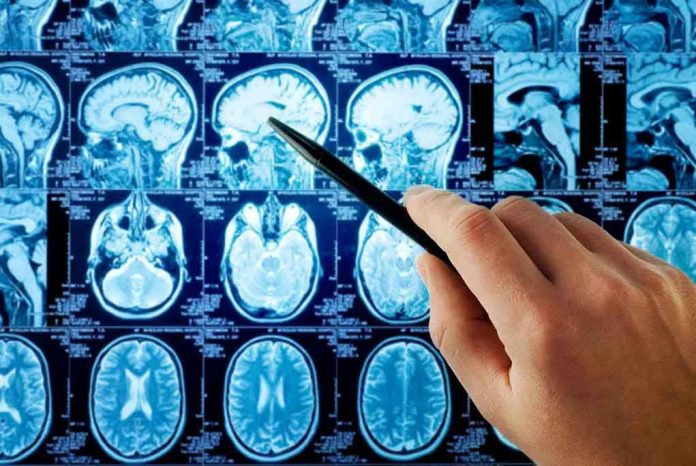
Researchers at USC’s Stevens Neuroimaging and Informatics Institute analyzed MRI scans from over 500 stroke survivors across 34 sites in eight countries. AI-trained deep learning models measured brain age. Severe strokes accelerated aging in the damaged hemisphere. The contralateral hemisphere showed structural youth, especially in the frontoparietal network handling motor planning. This held for deficits lasting beyond six months.
Hosung Kim, co-senior author and USC Keck School associate professor, noted larger strokes make the opposite side appear younger. Arthur W. Toga, Stevens INI director, highlighted AI’s detection of subtle patterns. ENIGMA Stroke Recovery Working Group pooled the data, leveraging tens of thousands of scans since 2009. The March 2026 Lancet Digital Health publication quantifies hemispheric asymmetry unseen before.
Brain Plasticity’s Compensatory Twist
Ischemic strokes block blood flow, sparking primary damage then inflammation and reorganization. Chronic phase hits millions with motor disabilities as top issue. This study diverges from past work on cortical remapping. It links contralateral rejuvenation not to gains but severe, enduring deficits. Prior ENIGMA norms for healthy aging enabled stroke deviations’ precise quantification.
Traditional views assumed uniform post-stroke aging. Facts show plasticity compensates by remodeling undamaged areas. Conservative values prize self-reliance; this underscores rehab’s role in harnessing adaptation for independence. Common sense demands targeting frontoparietal changes early, aligning facts with practical recovery over vague optimism.
Key Players Driving the Research
Hosung Kim led analysis interpreting the rejuvenation paradox. Arthur W. Toga advocated global data pooling and AI. USC Stevens INI executed the study. ENIGMA’s consortium democratized data from over 50 countries, centering U.S. leadership without commercial ties. Motivations target personalizing rehab for 800,000 yearly U.S. strokes, improving chronic outcomes.
Academic hierarchies fuel funding. Journal editors at The Lancet Digital Health and NIH backers shape translation. Rehab specialists stand as clinical influencers. No power imbalances undermine findings; scale and peer review bolster credibility.
Recent Advances and Broader Implications
March 2026 marks the core publication. January brought Northwestern’s nanomaterial crossing blood-brain barriers post-ischemia. February’s American Stroke Association Conference spotlighted Phase III loberamisal trials—neuroprotective drug started under 48 hours yielding better recovery—and ENTF electromagnetic therapy cutting disability. UW Medicine’s implant trial restores fine motor skills in a 2021 patient.
Short-term, brain age tracking informs rehab timing on frontoparietal focus. Long-term, custom protocols via scans boost rates, slashing disability costs—stroke’s top adult cause. Families gain caregiver relief; society fosters independence. Neurotech accelerates with implants, drugs, nanomaterials. Stroke care shifts adaptive, influencing ALS research. Causality uncertainties persist—correlation, not proven cause—but meta-analysis scale reassures.
Sources:
Severe strokes may ‘rejuvenate’ undamaged brain regions
Post-stroke injection protects the brain in preclinical study
UW Medicine stroke brain stimulation implant fine motor recovery
The potential of stem cells to improve stroke treatment
Stimulating the brain with electromagnetic therapy after stroke may help reduce disability
UCLA discovers first stroke rehabilitation drug repair brain
Started within 48 hours of stroke neuroprotective medication helped brain cells recovery