Philadelphia residents are kicking, sitting on, and vandalizing Uber Eats delivery robots, reviving the city’s infamous reputation for robot destruction that began with hitchBOT’s demise over a decade ago.
Story Snapshot
- Uber Eats Avride robots launched March 10, 2026, in Center City, Chinatown, and Old City—Philadelphia’s 12th city, first with major hostility.
- Two viral incidents in two weeks: sitting and graffiti at 15th and Locust; kicking and toppling at Juniper and Locust around midnight.
- Avride calls it “expected curiosity”; robots designed to stop and resume safely, with locked compartments alerting operators.
- Police not investigating but note potential criminal mischief charges; no city regulations yet exist for robots.
- Businesses like Hi-Lo Taco welcome robots amid driver shortages; experts see urban pedestrian frustration redirected at machines.
Philadelphia Revives Robot Wrecker Legacy
Canadian researchers built hitchBOT in 2014 to hitchhike across North America relying on human kindness. The robot traversed Canada and parts of the U.S. unscathed until Philadelphia, where vandals decapitated it after two weeks. This incident cemented the city’s anti-robot notoriety. Now, Uber Eats Avride robots face similar fates, suggesting Philadelphians test technological intruders aggressively. Common sense dictates sidewalks prioritize human pedestrians over machines; forced sharing breeds conflict.
Timeline of Rapid Robot Resistance
Uber Eats demonstrated Avride robots on March 10, 2026, in dense neighborhoods ideal for testing but risky due to foot traffic. Late March brought the first assault at 15th and Locust: a pedestrian sat atop a robot while graffiti proclaimed “DESTROY ME PLZ.” Days later, near midnight at Juniper and Locust—past the 10 p.m. cutoff—a reveler kicked the bot twice, toppling it. The Philadelphia Inquirer documented these on April 1. Such swift backlash, absent in 11 prior cities like Los Angeles and Miami, underscores local skepticism.
Company Response and Robot Resilience
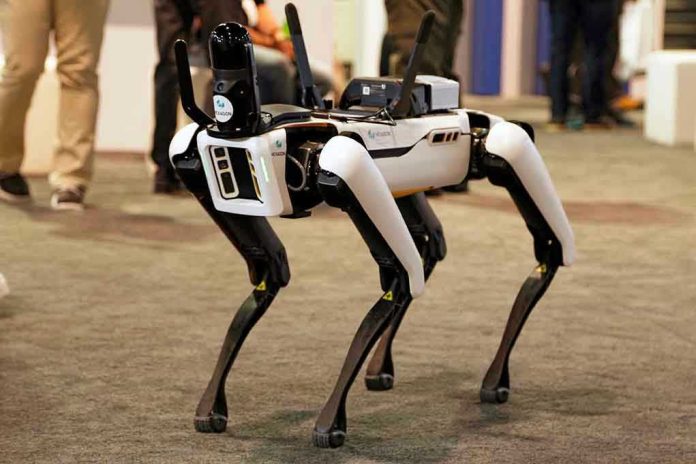
Avride dismissed incidents as a “known phase” of curiosity when robots enter new areas. Machines travel at 5 mph, carry 55 pounds, and halt conservatively upon approach, resuming in a minute. Locked cargo needs app unlocks; tampering alerts operators. Each $10,000 unit endured without service halts. Avride vows no expansion delays. This pragmatic engineering aligns with conservative values of self-reliance—tech must prove durable without taxpayer bailouts or endless excuses.
Stakeholder Clashes and Community Concerns
Residents guard sidewalk space and distrust “surveillance bots,” fueled by other firms sharing robot footage with police. Delivery workers fear job loss amid labor shortages. Businesses gain efficiency; Hi-Lo Taco owner Jeff Newman cited rain-driven demand outpacing drivers. Police skip probes but warn of mischief charges. Temple’s roboSNAP researcher Lindsay Ouellette attributes acts to routine urban ire at slow walkers, now aimed at bots. Power tilts to tech firms, yet grassroots pushback enforces accountability.
MAN VS MACHINE: Philadelphians aren't taking kindly to sharing sidewalks with delivery robots https://t.co/pzXNtSQ27t #FoxNews
— charlie Emick (@amishhart62) April 10, 2026
Implications for Tech and Urban Life
Short-term, viral videos amplify Philly’s robot-hostile image, straining company PR without operational hits. Long-term, expect regulations carving robot lanes or zones, mirroring car-pedestrian separations. Labor shifts loom, though shortages temper displacement fears. Nationally, rollouts may slow, demanding cultural sensitivity over blind innovation. Philadelphia spotlights reality: gadgets succeed technically but falter socially without community buy-in rooted in property rights and personal space.
Sources:
MAN VS MACHINE: Philadelphians aren’t taking kindly to sharing sidewalks with delivery robots
Uber Eats delivery robot gets kicked in Center City Philadelphia