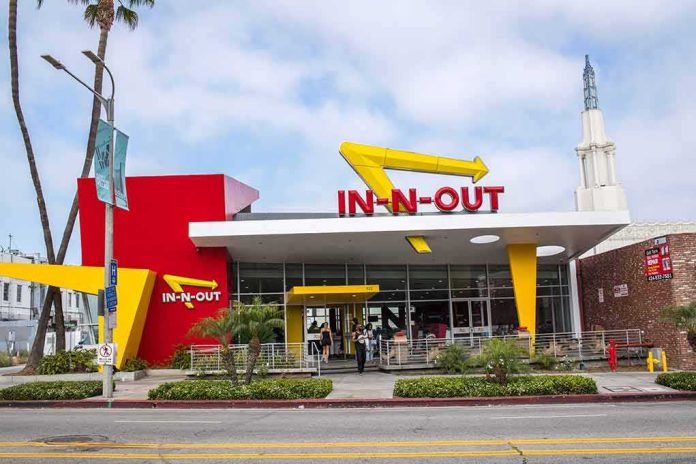
The central fact in the Twin Falls In-N-Out shooting is not that an armed civilian was present; it is that early reporting produced a plausible but still unproven narrative of civilian intervention before the full forensic chain of events was known. The record supports a fast-moving attack, a dead suspect, and video of an armed man in the scene. It does not, on the supplied evidence, prove a civilian shootout as the cause of the gunman’s death.
Key Points
- Police said the immediate threat to the community was over and that the suspected shooter was dead.
- Multiple outlets reported video of a man carrying a gun near the restaurant, but several also said it was unclear whether he was the shooter or another armed person.
- The early casualty counts and scene descriptions changed across reports, which is typical of the first news cycle in an active shooter event.
- The supplied record does not establish that the armed civilian exchanged fire with the gunman, nor does it identify that person by name or role.
What the public record actually establishes
On the evidence provided, the Twin Falls incident began as an active-shooter emergency at a crowded commercial site, triggered urgent police warnings, road closures, and a flood of 911 calls. Officials then said the suspected shooter was dead and that there was no continuing danger to the public. That much is solid. What remains unresolved in the supplied record is the mechanism by which the suspect died and whether any civilian gunfire contributed to it.
That distinction matters. In mass-shooting coverage, “the threat is over” is a public-safety statement, not a forensic conclusion. It tells the public the immediate danger has passed; it does not tell you who fired the fatal shots, whether the suspect died by police fire or self-inflicted injury, or whether a bystander’s weapon altered the outcome. The reporting here repeatedly stops short of that causal chain, which is why the more dramatic “hero civilian” framing outruns the evidence.
Why the armed-civilian narrative took hold so quickly
The visual ingredients of the story were irresistible: chaotic video, people fleeing, a visible armed man, and a suspect later reported dead. NBC-style and ABC-style coverage confirmed the presence of a man with a gun in or near the scene, while also saying it was unclear whether that person was the shooter or another armed individual. That ambiguity is precisely where social media and cable coverage often leap from observation to interpretation. A gun seen on video is not yet a hero, a bystander, or a defender; it is only a gun seen on video.
The supplied transcripts from local television add an important wrinkle. One witness account describes a man in the drive-through firing a handgun at the shooter and says the intervention may have distracted him, but that is still a witness narrative, not an official reconstruction. Another report summarized the death as resulting from a “quick response from officers and first responders,” which leaves open multiple causal possibilities, including police fire, self-inflicted injury, or some combination of armed actors at the scene. The available record does not resolve which of those explanations is correct.
The evidentiary gap: what is missing, and why it matters
The missing pieces are not minor. The supplied sources do not name the armed person seen in footage, do not provide a shot-by-shot sequence, do not identify who fired first, and do not include autopsy, ballistic, or body-camera evidence tying the fatal shots to a civilian. They also reflect instability in the early casualty counts, with reports varying between three dead and two injured, three dead and five injured, and four dead including the gunman. That kind of volatility is normal in the first hours of a mass-casualty scene, but it is exactly why strong conclusions about a civilian shootout should wait for hard evidence.
There is also a deeper issue of attribution. A civilian can act bravely and still not be the decisive factor in stopping an attack. He can also be present, armed, and wholly peripheral. Without the investigative file, the line between “armed person at the scene” and “civilian who exchanged gunfire and changed the outcome” remains unproven. The supplied sources support the former. They do not establish the latter.
How this fits the larger pattern of first-cycle shooting coverage
This case follows a familiar pattern. In the first news cycle of a public shooting, police prioritize evacuation, next-of-kin notifications, and immediate safety messaging over granular tactical disclosure. That produces a vacuum: witnesses have fragments, video circulates without context, and outlets race to describe what the images might mean. In that environment, an armed bystander can quickly become a “hero civilian” in the public imagination even when the underlying causal facts are still open.
The result is a durable narrative trap. Once audiences have seen a clip that appears to show an armed civilian, later clarifications about the shooter’s death mechanism may arrive too late to dislodge the first impression. The supplied record is a textbook example of that dynamic. It is strong on chaos, public fear, and visible weapons; it is weak on the evidentiary chain needed to prove that a civilian and the gunman actually traded shots.
🚨 BREAKING: A shooting at an In-N-Out Burger in Twin Falls, Idaho, has left 3 people dead and 7 injured, according to authorities. Police say there is no ongoing threat, and the investigation is continuing.#Idaho #TwinFalls #BreakingNews #InNOut #IdahoShooting pic.twitter.com/oZATIG9f1V
— Mohammed Nezamul Hoque Chowdhury (@nhchy2025) August 2, 2026
What would settle the question
Only a narrow set of documents can close this case cleanly: coroner findings, ballistic comparison, body-camera footage, dispatch audio, and surveillance video from the restaurant and surrounding lots. Those materials would reveal whether the suspect died from police fire, self-inflicted injury, or another source; they would also identify the armed person in the circulating footage and show whether that person engaged the shooter at all. Until then, the most defensible reading is cautious and precise: an armed civilian may have been present, but the supplied record does not prove a civilian shootout or sustain the full “hero saved the day” storyline.
Sources:
redstate.com, nytimes.com, youtube.com, news.cgtn.com, politico.com, aol.com, facebook.com, idahonews.com