Alliance exercises on the Korean Peninsula are never just about training; they are instruments of deterrence, assurance, and diplomacy, so any presidential move to cut or expand them is a strategic signal with real operational consequences.
At a Glance
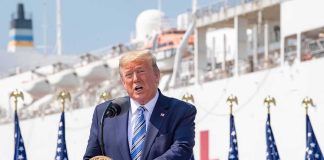
- President Trump ordered a substantial reduction to scheduled U.S.–South Korea drills, citing his relationship with Kim Jong Un and Seoul’s refusal to support U.S. aims on Iran.
- The exercise package proceeded, indicating scale-back rather than cancellation; Seoul said Ulchi Freedom Shield would run as planned while details were adjusted.
- There is precedent for leveraging exercise suspensions as signaling to Pyongyang; the move fits a known diplomatic playbook even as critics warn of readiness risk.
- Analysts contest the strategic payoff and argue late timing and unclear interagency rationale risk eroding deterrence and alliance cohesion.
What the decision actually did: a reduction to pre-planned drills, not an alliance rupture
Trump’s directive targeted a live, pre-scheduled exercise window rather than dismantling the alliance architecture. Ulchi Freedom Shield had been publicly slated to run in mid-to-late August with scenarios that included counter-drone, GPS disruption, and cyber defense—adaptations to North Korea’s evolving toolkit. His order landed hours before commencement and called for a substantial reduction, not cancellation. South Korea’s defense ministry responded that the drills would proceed, signaling adjustments within the package rather than a stand-down of combined training wholesale. In practical terms, that means staff work, simulations, and some field events continued while authorities trimmed scope, visibility, or certain live components.
The administration’s framing combined three arguments: that Trump’s personal channel with Kim Jong Un created space to de-escalate perceived provocations; that South Korea had declined to help on Iran, justifying leverage; and that the drills’ costs were excessive. Public reporting captured those rationales in the President’s statements and in contemporaneous coverage, but did not provide a Pentagon or NSC analytic memorandum laying out modeled benefits or a cost ledger justifying the fiscal critique. The absence of such documentation in open sources does not negate the decision; it does, however, make it harder to evaluate on its own strategic logic.
The strategic logic: exercises as signals in a recurring bargaining cycle
Combined U.S.–ROK exercises sit at the intersection of three requirements that often pull in different directions. First, deterrence: realistic, large-scale training sharpens readiness and telegraphs capability and will. Second, alliance assurance: shared burdens, integrated command post work, and field drills reinforce political trust and operational fluency. Third, diplomacy: because Pyongyang predictably denounces exercises as “war rehearsals,” Washington can dial up or dial down pieces of the package to test de-escalatory signals or buy negotiating space. This is not theoretical. After the 2018 Singapore summit, Trump paused or scaled back major drills as a diplomatic gambit, a move documented across U.S. government and analytic records; the 2026 reduction fits that lineage of tactical signaling rather than inaugurating a new doctrine.
North Korea had, in the days before the order, denounced the upcoming drills and vowed stronger nuclear deterrence—a familiar KCNA script that raises the salience of perceived provocation in Pyongyang’s narrative. Against that backdrop, a White House can argue that trimming conspicuous elements might reduce short-term escalatory risk while preserving essential command-post work inside the exercise lattice. Whether that logic yields durable security benefits depends on two variables no exercise tweak can determine: Pyongyang’s willingness to engage in meaningful talks and the regime’s broader military-industrial trajectory.
The contested ground: readiness risk, timing, and an Iran linkage that lacks a tight operational tie
The core critique from military practitioners and Korea specialists is simple: combined drills are the muscle memory of deterrence; degrade them and you invite seams in crisis. Analysts such as Leif-Eric Easley warn that downsizing risks fraying coordination and slowing Seoul’s path to greater defense responsibility, weakening the very deterrent posture that has kept the peace for decades. Others argue the decision lowers coalition readiness without a compensating gain for U.S. security, describing it as an “unforced error” that muddles signaling to allies and adversaries alike. These are not idle complaints; large allied formations rely on habitual integration in logistics, fires, C2, and ISR. You cannot surge trust.
Two additional points draw specific concern. First, timing. Because the directive landed hours before the drills, much of the cost and mobilization had already been sunk, making it hard to treat the change as a carefully optimized recalibration rather than late-stage political signaling. Jenny Town noted the months of planning and troop staging that precede this exercise window, calling the last-minute scale-back “hard to understand” on operational grounds. Second, the Iran rationale. However one rates Seoul’s choices on Iran, the available reporting does not tie that dispute to a formal alliance obligation linked to U.S.–ROK training, which allows critics to characterize the move as holding one theater’s readiness at risk to coerce concessions in a separate regional dossier.
Costs and who pays: a perennial talking point with incomplete public data
Presidents regularly invoke cost when adjusting overseas posture or training. Trump described these drills as expensive, but open reporting around the 2026 reduction did not present an exercise-specific budget or a DoD audit isolating U.S. and South Korean shares. Analysts and former officials have countered that Seoul covers a large portion of the expenses associated with hosting and sustaining U.S. forces, and that for an exercise already in motion, most marginal costs are incurred by the time troops are on station. Without a disclosed ledger for that specific iteration of Ulchi Freedom Shield, the fiscal argument remains asserted rather than demonstrated.
Precedent and pattern: how past suspensions inform today’s bets
History says two things at once. Scaling back or suspending headline drills has been used deliberately as a bargaining chip with Pyongyang, sometimes coordinated publicly by the Pentagon to “reduce tension and support diplomatic efforts”—language Washington employed when adjusting exercises after 2018. At the same time, years of North Korean missile development and military cooperation with other adversaries have marched on irrespective of allied signaling. That is why many experts insist that while one shortened cycle will not undo combined defense, serial reductions without compensating readiness workarounds (e.g., more frequent, lower-visibility reps, distributed command-post training, and allied integrated fires rehearsals) can accumulate unacceptable risk. The crux is not whether a single trim is fatal; it is whether the alliance treats exercise modulation as a reversible tactic within a larger readiness regime, or as a substitute for it.
What matters going forward: separating tactics from strategy
Set aside partisanship and the atmospherics of presidential social posts, and the durable questions that should discipline future decisions are straightforward:
– Mechanism: If reducing a visible exercise element is meant to open a diplomatic channel, what specific back-end mechanism converts the gesture into concrete nuclear restraint—freeze-for-freeze, inspections access, or de-confliction hotlines? Absent that, a reduction is only a message, not a policy.
– Readiness continuity: What fillers backstop lost muscle memory—smaller distributed drills, simulation-heavy command-post work, allied staff exchanges? If the answer is thin, the deterrence penalty rises; if robust, the penalty shrinks.
– Alliance assurance: How are Washington and Seoul synchronizing public messaging and private planning so that a tactical cut does not read in Seoul or Tokyo as strategic drift? The South Korean statement that Ulchi Freedom Shield proceeded as planned shows a floor remained, but reassurance is a process, not a press line.
– Cross-theater linkage: If an Iran dispute is to influence policy on the Peninsula, what is the theory of success that justifies bearing military risk in Asia to generate diplomatic leverage in the Middle East? The 2026 record in open sources does not supply that connective tissue, leaving the Iran rationale as a political talking point rather than an operational argument.
Why did Donald Trump scale back one of America's biggest military alliances in Asia after South Korea refused to back his Iran push?
Just hours before the annual Ulchi Freedom Shield military exercise was set to begin, Trump announced the US would substantially reduce joint…
— News18 (@CNNnews18) August 18, 2026
Bottom line: a familiar tool, an unsettled payoff
Cutting the scale of a U.S.–ROK exercise is a known tool in the diplomatic kit; it can be used to test Pyongyang’s receptivity without dismantling allied readiness outright. In 2026, the tool was applied late and justified publicly by a blend of personal diplomacy, alliance grievance over Iran, and cost concerns. The exercises still ran, signaling continuity alongside curtailment. The case for strategic benefit remains unproven in the open record, while the risks to deterrence are the standard ones that attend any reduction in complex allied training: less practice, more friction. That trade-off can be managed for a cycle; it cannot be ignored indefinitely.
Sources:
humanevents.com, cnn.com, cnbc.com, axios.com, english.news.cn, mk.co.kr, reuters.com, youtube.com, instagram.com