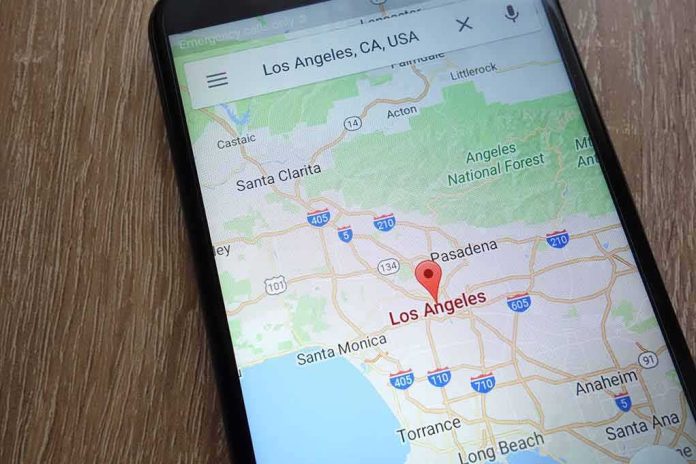
A burst of about 90 small earthquakes shook South Los Angeles in less than a day, reminding millions how fragile daily life can feel on a restless fault line.
Story Highlights
- About 90 micro-earthquakes hit South Los Angeles near the Newport–Inglewood Fault.
- Reported magnitudes ranged from around 1.0 up to about 2.7 across the cluster.
- United States Geological Survey data show swarms like this are common and usually not damaging.
- Local reports flagged multiple magnitude 2.5+ tremors near Westmont and Inglewood.
What Shook Los Angeles And When
Local outlets and seismic feeds reported a concentrated cluster of small quakes from Friday night into Saturday, September 12, 2026. Reporters counted roughly 90 micro-earthquakes centered around Lennox and Westmont in South Los Angeles. The largest in that group reached the upper 2s on the magnitude scale. This activity lined up along the Newport–Inglewood Fault, a known seismic zone that runs through the basin. Separate local updates noted several magnitude 2.5 or stronger quakes during the same window.
The United States Geological Survey map and catalog tools showed a flurry in and near the basin that day, matching public alerts and local headlines. One listed event of magnitude 2.6 struck near Westmont around the early morning hours. Another update placed a magnitude 2.6 close to Inglewood later that morning, at a depth around 12 miles, based on preliminary readings. These magnitudes are small, but they can wake people, rattle windows, and raise nerves in dense neighborhoods.
How Scientists Classify A Swarm Like This
The United States Geological Survey explains that an earthquake swarm is a set of many small quakes that happen in one area over a short time, without one big mainshock that dominates the pattern. In a swarm, many events have similar sizes. That is different from a mainshock-aftershock sequence, where one large quake sets off smaller ones that fade over time. Research notes that most swarms are made up of small quakes and rarely cause damage.
Scientists and emergency managers also stress that labels can vary. Newsrooms may say “swarm,” “flurry,” or “cluster” for the same burst. The United States Geological Survey explains that these terms reflect patterns in space and time, not a clear line between types. That makes some counts and time windows differ across reports. But the core fact stands: many small quakes struck close together in South Los Angeles on September 12, 2026.
Why This Matters For Daily Life And Preparedness
South Los Angeles is packed with homes, schools, shops, and key roads. Even small quakes can disrupt sleep, trigger false alarms, and test building systems. Residents across the political spectrum see events like this as another sign that vital systems often run near the edge. Families want clear alerts, honest guidance, and working plans. Swarms like this one give officials a chance to check warning tools, practice responses, and fix gaps before a larger event hits.
We have an earthquake swarm currently in process in the Los Angeles Basin. No major quakes yet, but over 100 minor ones in that large cluster. Consider how the massive erosion that struck many SoCal beaches transported tons of sand to new locations and altered mass distribution. pic.twitter.com/kzHx4TQ6LF
— Stefan Burns (@StefanBurnsGeo) September 13, 2026
Experts say most small swarms end without a larger quake. Still, they urge simple steps that cut risk for everyone. People can secure heavy furniture, keep flashlights and shoes by the bed, and refresh water and first aid kits. They can learn “Drop, Cover, and Hold On” and know how to text family after a shake. These are low-cost moves that help whether you rent or own, live alone or with kids, and no matter your politics.
Sources:
nypost.com, earthquaketracker.org, earthquake.usgs.gov, scedc.caltech.edu, scienceinsights.org, en.wikipedia.org