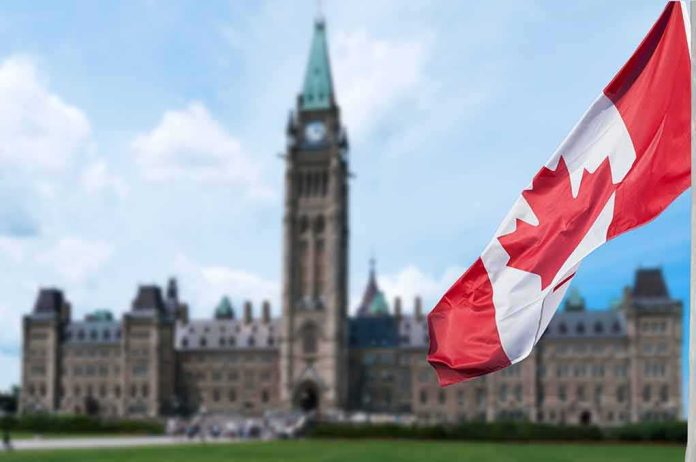
Europe’s overture to make Canada the European Union’s first “associate member” is less about badges and more about hedging: two advanced economies building optionality across technology, defense industry, and critical supply chains at a moment when Washington’s trade posture can swing from partner to punisher overnight.
The Short Version
- The European Commission president publicly invited Canada to pursue a novel “associate member” relationship, with a concrete agenda across industry, tech, security, and the Arctic.
- No such legal status exists in the EU treaties; any deal would need to be built from scratch and likely cleared by all 27 member states.
- Ottawa is signaling interest in a bespoke alliance, not EU membership, reflecting a preference for sectoral cooperation over institutional fusion.
- President Trump mocked the idea and warned of tariffs if he deems it hostile to U.S. interests, injecting coercive uncertainty into Europe–Canada design choices.
What the EU actually put on the table
In her State of the Union address, European Commission President Ursula von der Leyen did not float a gauzy slogan; she enumerated domains for immediate deepening—advanced manufacturing, defense production, energy and critical minerals, batteries, artificial intelligence, quantum, cybersecurity, economic security, and an Arctic flagship—then framed the aim as consolidating democratic capacity in a more openly adversarial world. This is industrial strategy plus security resilience, not a cultural exchange. It is also a natural extension of the existing EU–Canada economic architecture under CETA, which already lowered tariff walls and institutionalized cooperation; think of the associate concept as moving from a classic trade agreement to a targeted capacity-building compact.
On substance, the logic is sound. Europe needs trusted partners to derisk critical inputs—lithium, nickel, cobalt—and to scale clean-energy, battery, and dual-use manufacturing. Canada wants predictable access to Europe’s market, technology networks, and capital to diversify away from overdependence on the United States amid periodic tariff salvos. Done right, associate status would braid supply chains, standard-setting, and defense-industrial interoperability into an enduring advantage.
The legal vacuum and the political math
There is one immediate problem: associate membership, as invoked here, is not a term of art in EU law. The Union does have a long history of “association agreements” with neighbors or future members, but this particular label does not map to rights, obligations, voting power, or market access in the treaties; any bespoke structure would have to be engineered from existing legal bases or require new authority, and either way would run the member-state gauntlet. In practice, that means unanimity politics. Countries guarding market access or regulatory coherence will scrutinize anything that looks like cherry-picking—especially when several accession aspirants still wait in line. The odds that 27 capitals will wave through a quasi-membership package without precise guardrails are low.
That is why the most realistic near-term pathway is not a one-shot “status” but a set of sectoral instruments that approximate its benefits—industrial security compacts, mutual recognition in defined tech areas, defense production MOUs, and Arctic research and infrastructure projects—nested over CETA rather than replacing it. Such layering fits the EU’s external-relations playbook: build function first, formalism later, and keep the treaty lawyers inside the tent from day one.
Ottawa’s calibrated interest
Canadian leadership has not asked to join the EU; they have consistently framed the target as a unique alliance, not membership by another name. That rhetorical discipline is not cosmetic. It reduces sovereignty blowback at home, avoids pre-judging legal form while officials test what Europe will actually fund or deregulate, and keeps the U.S. relationship from being cast as a zero-sum pivot. Expect Ottawa to push for high-velocity wins—joint procurement in defense manufacturing, battery and critical-mineral financing, digital-trade facilitation—while steering clear of commitments that pull Canada into automatic regulatory alignment or free movement.
The commercial case for doing this with Europe is better than critics suggest. Even under provisional application, CETA has lifted bilateral goods trade materially, and both sides have learned the machinery of deeper integration—committees, technical annexes, dispute channels—that any “associate” package would rely on. The scaffolding exists; what’s new is the ambition to tie it directly to security of supply and technology leadership rather than generic tariff efficiency.
Trump’s tariff warning and the geoeconomic game theory
President Trump dismissed the associate concept as “laughable” and threatened “serious tariffs” on Europe if he reads the move as hostile to U.S. interests, while also saying a benign arrangement would be “fine”. Strip away the epithet and you have the familiar predicate of conditional coercion: Washington will tolerate allied diversification that does not undercut U.S. leverage; it will punish designs that do. For European and Canadian negotiators, that is not an abstraction—it sets a boundary condition on how far defense-industrial and technology policies can converge without tripping U.S. retaliation risk into their cost-benefit calculus.
Yet the deterrent is not absolute. The same logic that invites U.S. tariffs—resilience among allies—also argues for building redundancy precisely so that single-country pressure cannot upend entire value chains. The art is in design choices: avoid explicit anti-U.S. constructs, emphasize NATO-adjacent defense production and interoperability rather than autonomous blocs, and ensure supply-chain gains in critical materials and semiconductors stabilize, rather than divert, North American and European capacities. In other words, write the deal so it hardens the shared West, not a rival pole.
How an “associate” compact could actually work
Forget labels and build modules. The durable version of this initiative would likely include five planks. First, a Critical Minerals and Battery Alliance with co-financed extraction, refining, and cathode/anode capacity, pegged to reciprocal offtake guarantees and environmental equivalency. Second, Defense Industrial Interoperability—common standards, reciprocal security-of-supply guarantees, and coordinated capacity expansions in munitions, ISR components, and cyber defense. Third, a Tech and Data Bridge that pilots mutual adequacy in defined subdomains, joint funding for AI and quantum testbeds, and streamlined talent visas for researchers and young workers in capped, reciprocal programs. Fourth, Arctic infrastructure and science—dual-use ports, ice-capable shipping corridors, and climate observation networks—managed through transparent governance that reassures NATO and avoids regulatory export by stealth. Fifth, an Economic Security Council mechanism for rapid consultation on sanctions, export controls, and third-country coercion.
None of this requires inventing voting rights in Brussels. All of it requires clarity on dispute resolution, subsidy coordination, and the compatibility of standards regimes so firms can invest with confidence. That is what gives the concept ballast: bankable rules, not rhetorical novelty.
Where the real disagreements lie
Three fault lines will determine viability. Inside the EU, member states wary of precedent will resist anything that looks like privileged market access without full obligations—expect a hard line on agriculture, public procurement, and regulatory autonomy. In Canada, sovereignty hawks will scrutinize labor mobility, product standards, and any encroachment on domestic industrial policy. Across the Atlantic, the U.S. will test whether Europe–Canada supply-chain consolidation dilutes American leverage or, conversely, backstops allied capacity in ways Washington ultimately values. None of these disagreements are fatal, but all demand precision drafting and political sequencing.
The pragmatic path forward
Read the signal, not the slogan. Von der Leyen’s invitation is a strategic direction to codify Europe–Canada resilience across a set of consequential sectors; the lack of a treaty hook is a solvable design task, not a showstopper. Ottawa’s preference for a “unique alliance” over formal membership points to the right instrument: modular, sectoral, and measurable. And Trump’s tariff saber-rattling is a constraint to respect, not a veto to obey—design the package to strengthen NATO-relevant capacity and shore up shared supply chains, and it becomes harder, not easier, to target without self-harm. If negotiators keep their eyes on function—rules firms can price and planners can deploy—associate status can evolve from an eye-catching phrase into the operating system for a transatlantic resilience network.
CANADA JOINS THE EUROPEAN UNION’S JUNIOR VARSITY TEAM, CONGRATULATIONS… I GUESS.
Canada just got offered associate membership in the EU. That is not a real thing. They invented a title because Canada is not in Europe and full membership would require a map, a treaty, and 27… pic.twitter.com/uYnXbR5RjN
— Airborne (@_airborne325th) September 17, 2026
What to watch
Ignore grand labels. Track the mandates. If Brussels produces a scoping paper tied to existing treaty bases, if member-state ministries begin drafting sectoral annexes, and if Ottawa tables reciprocal financing and standards language, the initiative has moved from podium to policy. That is when the tariff rhetoric will meet its first real test—and when companies in batteries, defense manufacturing, and quantum will decide whether to bet on a Europe–Canada production corridor that can ride out the next squall in Washington or Beijing.
Sources:
facebook.com, reuters.com, bbc.com, globalnews.ca, youtube.com, kielinstitut.de