
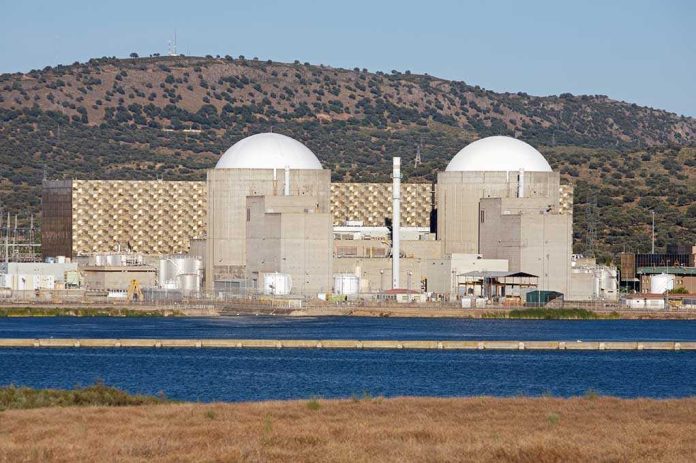
The core dispute over Iran’s nuclear program is not whether Tehran says it wants peaceful technology—it emphatically does—but whether the program’s scale, enrichment levels, and transparency comport with a strictly civilian trajectory under the Non-Proliferation Treaty; today, the sharper, document-backed contention is the International Atomic Energy Agency’s charge that serious verification gaps and high enrichment place Iran in noncompliance, even as Iran insists “no nuclear weapons and no limitations to peaceful nuclear technology.”
At a Glance
- Tehran publicly rejects nuclear weapons while asserting an unrestricted right to peaceful nuclear technology under the NPT, tying it to medicine, agriculture, and industry.
- The IAEA Board of Governors has referred Iran to the UN Security Council for noncompliance with safeguards obligations, citing verification shortfalls and access denials.
- IAEA reporting and member statements have highlighted Iran’s production and accumulation of uranium enriched up to 60% U-235—a level far above typical power-reactor fuel and proximate in effort to weapons-grade.
- The strategic reality is nuclear hedging: civilian rights and latent capability coexist, which is why declaratory pledges alone neither settle the dossier nor allay proliferation risk.
What Iran Says: Peaceful Purposes, No Bomb, Full Civilian Rights
Iran’s president has put the position starkly: no nuclear weapons, and no limitations on peaceful nuclear technology. At the UN General Assembly, President Masoud Pezeshkian linked nuclear capabilities to “cure and treatment,” “food security,” and industrial progress—the familiar catalogue of civilian applications that any NPT party can pursue under safeguards. Iran’s Atomic Energy Organization has reinforced the same frame in Vienna, describing the program as peaceful and transparent, rooted in domestic science serving medicine, agriculture, and industry. This is not new rhetoric: Iran has long presented itself as an early NPT adherent exercising a lawful fuel-cycle, and it leans on that status to resist external curbs not codified in its basic safeguards agreement.
For a domestic and regional audience, the claim does political work: it recasts pressure campaigns as attempts to deny sovereign technological rights and positions civilian outputs—radiopharmaceuticals, crop improvement, irradiation for food safety—as tangible social goods. The narrative is coherent on its own terms and echoes the NPT’s promise of peaceful nuclear use. The question is whether the technical profile and verification posture of Iran’s program align with that narrative at scale, over time, and under inspection.
What the Watchdog Says: Verification Gaps and High Enrichment
Here the evidence cuts the other way. The IAEA Board adopted a resolution referring Iran to the UN Security Council for noncompliance with nonproliferation commitments—an institutional act that signals a breakdown in confidence about declared material, facility access, and the Agency’s ability to verify the program comprehensively. The Agency has warned of a persistent “lack of information” about nuclear material and curtailed access to verify it—an explicit proliferation concern when combined with sensitive fuel-cycle work.
Equally consequential is enrichment. Iran has produced and accumulated uranium enriched up to 60% U-235, far beyond the low-enriched uranium used in power reactors and much closer, in separative work terms, to weapons-grade material. IAEA documentation and member state readings of those reports fix that level as a standing concern because it compresses breakout timelines and reduces the technical steps remaining to reach weapons-grade should a decision be taken. None of this proves a bomb decision; it does establish that verification shortfalls plus high enrichment are incompatible with claims of a transparently civilian program.
The Mechanism Behind the Dispute: Hedging in Plain Sight
Why do these two narratives persist in parallel? Because civilian rights and weapons-relevant capabilities sit on the same technological continuum. Uranium enrichment, once mastered, can serve power fuel or, with additional stages and configuration, feed a weapons program. Scholars have long described Iran’s approach as nuclear hedging: maintaining the option without crossing the threshold, extracting diplomatic leverage while avoiding the legal and strategic costs of an overt bomb. Hedging thrives where inspections are incomplete and technical capability advances; it withers when transparency is restored and material balances are nailed down.
This is also why slogans—on either side—don’t resolve the file. A pledge of “no bomb” cannot offset inspection blind spots at high enrichment. Conversely, alarm over potential does not negate lawful civilian activity if it is verifiably bounded. The hinge is safeguards performance and material accountancy in real time, not speeches.
How We Got Here: From Managed Limits to Eroded Transparency
When the Joint Comprehensive Plan of Action functioned, it channeled Iran’s program into quantified caps, intrusive monitoring, and longer breakout timelines. As that framework frayed, so did the restraints that made the hedging problem manageable. The IAEA’s recent reporting cadence reflects that erosion: reduced access, fewer in-field verification activities, and unresolved questions about nuclear material and locations have narrowed the Agency’s line of sight. In parallel, enrichment moved upward to 60%, which is not prohibited per se under a basic safeguards agreement but, in combination with verification gaps, forces the Board to treat the file as a noncompliance case rather than a routine safeguards account.
Iran’s counter-argument—that it remains within NPT rights and faces double standards—lands politically but does not answer the core safeguards issues. The NPT model grants peaceful use in exchange for verifiable assurance that no diversion occurs. If the verifying authority reports it cannot verify, the bargain is not being met, regardless of asserted intent.
What Would Settle the Question
The pathway back to a convincingly civilian program runs through transparency, not rhetoric. Three steps are decisive. First, restore unfettered IAEA access across declared sites and resolve outstanding material-balance questions documented in Board reporting; without that, the system cannot certify non-diversion. Second, reconfigure enrichment holistically—level, stockpile size, and configuration of cascades—so that the technical distance to weapons-grade lengthens materially, not just marginally; 60% stocks are incompatible with durable confidence absent extraordinary monitoring. Third, demonstrate civilian outputs at scale with audited data: reactor operations for power and research, radiopharmaceutical production volumes, and industrial irradiation services tied to traceable supply chains. An NPT party that can show inputs, processes, and outputs under safeguards wins the argument by demonstration, not assertion.
None of this requires capitulation on sovereign rights; it does require accepting that rights under the treaty come tethered to verification sufficient to convince skeptics. The IAEA is the venue for that proof. Restoring its visibility—comprehensively and durably—is the only route to transform Iran’s declaratory line into an internationally persuasive fact pattern.
Evening Briefing — Sep 23
The UN General Assembly dominated the day's developments as Iranian President Masoud Pezeshkian delivered a defiant wartime address [1] — with the US delegation walking out — asserting Iran's right to peaceful nuclear technology, displaying images of…
— Iran Monitor (@iranmonitor_org) September 23, 2026
Bottom Line: Speeches Don’t Close Verification Gaps; Inspections Do
Iran’s leadership has reiterated a categorical rejection of nuclear weapons and wrapped its nuclear work in the language of public health, food security, and industry. Those uses are real domains of civilian nuclear technology. Yet the IAEA’s formal referral to the Security Council, its warnings about verification shortfalls, and the program’s 60% enrichment erase the benefit of the doubt that a purely peaceful trajectory would ordinarily enjoy. In the nuclear field, the standard is simple and unforgiving: trust is a byproduct of traceable atoms. Until inspections are restored and high-enrichment stocks are addressed, the stronger evidentiary case is the watchdog’s—noncompliance risks persist, and hedging remains the apt description of Iran’s posture.
Sources:
rediff.com, fr.jpost.com, presstv.co.uk, ground.news, congress.gov, bbc.com, aljazeera.com