The pattern now on display at Southwark Crown Court is the one that defines almost every modern sexual-offence prosecution: no physical evidence from the moment itself, no contemporaneous police report, and a case built instead on the convergence of multiple, unconnected accounts years after the fact — a structure prosecutors call corroboration by independence, and one that juries are increasingly asked to weigh.
Key Points
- The Crown Prosecution Service authorized seven charges against Russell Brand — three counts of rape, three of sexual assault, and one of indecent assault — covering alleged conduct in London and Bournemouth between 1999 and 2009.
- Prosecutors told the jury the six complainants did not know one another and came forward independently, several only after 2023.
- Opening submissions described alleged incidents in a hotel room, a music-TV office, a bar toilet cubicle, a radio station, and Brand’s home.
- Brand has pleaded not guilty to every charge and told police any sexual activity was consensual, calling some accounts “reinvented or imagined.”
- Delayed reporting, far from unusual, is the statistical norm in UK rape cases — context that bears on how the evidence should be read, not on guilt or innocence.
What the Crown Has Charged, and Why It Took Decades
In April 2025 the Crown Prosecution Service announced it had authorized charges against Brand following a police investigation, concluding there was sufficient evidence for a realistic prospect of conviction on offences including rape, sexual assault, and indecent assault. The alleged offences span a ten-year window, 1999 to 2009 — Brand’s rise from jobbing comedian to national celebrity — and the case did not reach a courtroom until October 2026, a gap of more than fifteen years between the earliest alleged conduct and trial. That lag is not an anomaly in this area of law; it is close to the rule, a point the prosecution addressed directly rather than ignored.
Opening the case, prosecutor Riel Karmy-Jones KC told the jury the six complainants “did not know each other” and had come forward independently, several only in 2023. That structure — unconnected women describing similar conduct in different settings across a decade — is the backbone of the prosecution’s theory: not a single disputed encounter but a recurring pattern. The alleged locations read like a map of Brand’s working life at the time: a hotel room after a Labour Party conference event in Bournemouth, the offices of a music television channel, a bar toilet cubicle, a radio station, backstage at a comedy venue, and his own home.
The Specific Allegations Laid Before the Jury
Court reporting from the opening days detailed each complainant’s account in turn. The earliest concerns a woman who alleges Brand raped her in 1999 in a Bournemouth hotel room after a political-conference fringe event; a second describes an attempted indecent assault at a London music-television office in 2001. A third alleges that in 2004, at a party, Brand grabbed her and orally raped her in a toilet cubicle despite her protests, with a witness reportedly seeing the two leave the cubicle together. A fourth account, from a radio station employee, describes aggressive kissing and groping in front of colleagues who did not intervene. The two final complainants allege incidents in 2009 — one involving anal sex she says was non-consensual after a backstage encounter at Hammersmith Apollo, another a workplace incident at Channel 4 that she says was not taken seriously when reported internally at the time.
The prosecution’s first witness, Mark Pinheiro, a former friend who accompanied Brand on the 1999 Bournemouth trip, testified that Brand was unusually eager to leave the following morning and appeared “incredibly alert and incredibly afraid”. Prosecutors also pointed to an alleged admission from Brand to a friend that “things might have got a little out of hand” after one encounter — the closest the opening case comes to a contemporaneous statement from the defendant himself rather than a complainant’s account.
Brand’s Response and the Legal Standard He Faces
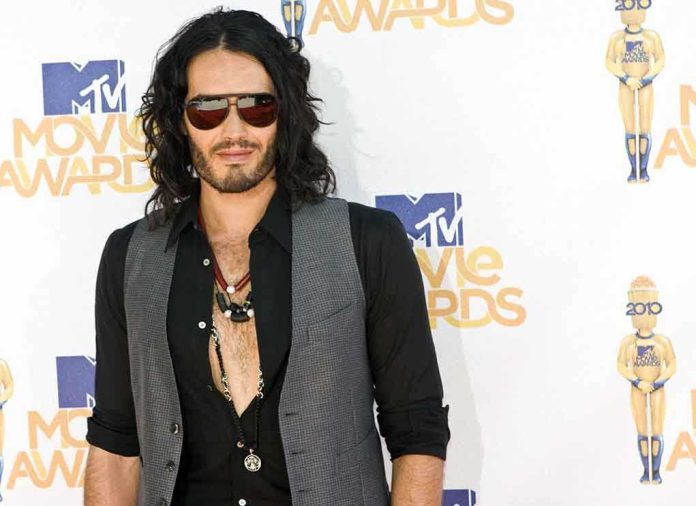
Brand, now 51, has pleaded not guilty to all seven charges. Court reporting indicates that when police interviewed him in 2023, he provided a prepared statement declining to answer questions in detail, stating that he had “never engaged in non-consensual activity” and that, where he could not recall a specific encounter, he could not confirm what had happened. He has separately characterized some of the allegations as “reinvented or imagined.” An allegation is a formal accusation, not a finding; nothing in the opening prosecution case constitutes proof, and the matter will be decided by the jury on evidence tested at trial, not on opening submissions alone.
LONDON
Russell Brand Rape Trial – Day 2
Southwark crown court jury is shown video of woman telling detectives about an alleged attack.
A woman has alleged Russell Brand told her “It’s just fun”, as he raped her in a hotel room at the 1999 Labour party conference, a court has… pic.twitter.com/s8Zv8X2Nh5
— Grouse Beater News (@Grouse_Beater) October 15, 2026
Why Delay Is the Norm, Not the Exception, in These Cases
Juries and the public alike tend to treat a long gap between alleged assault and police report as inherently suspicious. UK data complicates that instinct. Home Office figures for the year ending March 2024 show only 2.6 percent of recorded rape offences resulted in a charge or summons — itself evidence of how rarely these cases reach any courtroom, let alone this one. Separate research into the system’s attrition found that even shorter delays of days or weeks measurably affect whether cases proceed, let alone delays of years. None of that evidence establishes what happened between Brand and any complainant; it does establish that the absence of contemporaneous reporting is common across sexual-offence prosecutions generally, and that prosecutors routinely build cases around corroborating circumstance rather than physical proof precisely because disclosure is so often delayed.
What the Trial’s Course Signals Going Forward
The scale of media interest — more than 100 journalists sought accreditation, and the court dismissed prospective jurors who had already seen prior broadcast or print investigations into the allegations — reflects how thoroughly this case sits at the intersection of criminal process and celebrity scrutiny. The trial, expected to run six to nine weeks, will test the prosecution’s multi-complainant theory charge by charge, since each count must be proven independently regardless of how the pattern reads as a whole. Whatever the jury ultimately decides, the case is already a template for how sexual-offence prosecutions involving public figures are built: not around a single incident but around the accumulation of separately sourced, independently reported accounts spanning years, assessed count by count under a standard that remains proof beyond reasonable doubt.
Sources:
insiderpaper.com, bbc.com, itv.com, deadline.com, independent.co.uk