
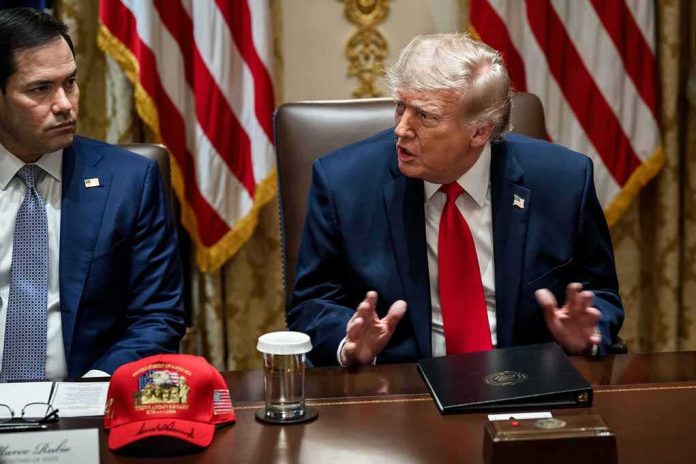
The promise of big whistleblower paydays captured headlines, but the durable takeaway is simpler: the Justice Department’s new pilot pays fixed, modest awards for criminal fraud tips, not an uncapped 1% commission—placing it squarely in the tradition of targeted, milestone-based whistleblower incentives rather than a bounty free-for-all.
The Short Version
- DOJ has launched a three-year criminal tip rewards pilot paying $10,000–$30,000 for actionable fraud tips that lead to unsealed charges in covered areas.
- President Trump publicly touted a 1% commission on amounts uncovered, with no upper cap; DOJ’s written program rules do not include any percentage payout.
- The program formalizes a criminal-tip channel; it is distinct from civil False Claims Act cases, where relators can receive 15%–30% of recoveries.
- Early publicity featured a $10,000 check to a citizen journalist; the operative policy is still the $10,000–$30,000 DOJ framework.
What the program actually pays—and why the wording matters
The Justice Department’s National Fraud Enforcement Division has instituted a Criminal Tip Rewards Pilot Program that offers a defined award—between $10,000 and $30,000—for voluntary tips that are original, specific, truthful, complete, and timely, when those tips lead to unsealed criminal charges in covered categories. That design choice anchors the program within prosecutorial milestones. It is not a qui tam vehicle and does not hinge awards on amounts recovered or forfeited; it pays for information that unlocks viable criminal cases. In parallel, the department’s public release describing the separate Fraud Whistleblower Incentive Program conveys the same cash range and the same outcome trigger: tips that lead to charges, not a share of recoveries.
Against that written scaffold, President Trump repeatedly described an unlimited 1% commission on “what you find,” sketching hypotheticals of $1 billion, $10 billion, even hundreds of billions of dollars to illustrate potential payouts. The contrast is not semantic. A percentage-based bounty, especially one tied to sums “uncovered,” would resemble civil recovery regimes; by contrast, DOJ’s pilot caps awards and pays upon the charging event, keeping discretion and cost exposure predictable while deterring frivolous volume.
How it fits within the U.S. whistleblower landscape
American law has long used incentives to turn dispersed knowledge into enforceable cases. The False Claims Act (FCA) invites private parties to sue on the government’s behalf for fraud against federal programs and, if successful, awards relators a share of the recovery—typically 15% to 30%, depending on government intervention and contribution. That model has delivered steady results across decades, with billions in annual settlements and judgments reported in recent fiscal years, much of it generated by whistleblower-initiated actions. But FCA is civil, statute-based, and procedurally intensive; rewards are paid post-judgment or settlement, pegged to actual dollars recovered and sustained.
By contrast, the DOJ pilot is a criminal-tip mechanism with a fixed award ceiling. Its incentive sits earlier in the enforcement pipeline—at the moment a case is charged—so it can surface criminal schemes that might never ripen into civil recovery. That also explains the eligibility rigor in DOJ’s FAQs: tips must be original, specific, and timely, and they must lead to unsealed criminal charges in defined enforcement lanes. The design avoids the budgetary volatility—and litigation leverage—implicit in open-ended percentage bounties.
Reconciling the White House rhetoric with DOJ’s written rules
When presidential messaging and departmental policy diverge, practitioners look to the promulgated rules the department will actually apply. On this file, DOJ’s public materials are unambiguous: the pilot is time-limited, category-bounded, and pays a defined $10,000–$30,000 award for tips culminating in criminal charges. Reuters reported the contrast directly, quoting the president’s 1% framing while noting DOJ’s stated cap and criteria. The practical implication is straightforward. For as long as the pilot stands as written, tipsters should evaluate their participation against the DOJ criteria and capped award structure; any broader, percentage-based payment would require either a separate statutory authority or a formal policy revision that has not been issued.
The program’s rollout included a $10,000 presentation to citizen journalist Nick Shirley—a tangible, early example that aligns with the DOJ range. That check does not establish a 1% precedent; it reinforces that the department is executing within its published bands. If a percentage model were to emerge later, expect it to come with the same legal scaffolding other bounty regimes require: statutory authorization, well-specified eligibility, adjudication standards, and an appropriation or dedicated fund to manage award risk.
Mechanics: eligibility, timing, and the evidentiary bar
For would-be tipsters, the operative mechanics matter more than podium rhetoric. Eligibility rests on voluntariness and originality: DOJ wants information not already known to the government and detailed enough to catalyze investigative steps. Timeliness controls value—stale or derivative submissions are unlikely to qualify. Most importantly, the award trigger is not “I found fraud,” but “my tip led to unsealed criminal charges” in a covered subject area. That milestone forces a quality filter: prosecutors must find probable cause and file charges that survive sealing. It also aligns the payout with a transparent, auditable event in the court record.
Because awards are capped and pegged to charging, the pilot reduces incentives to inflate claimed loss amounts or to withhold cooperation pending civil valuations. It also compresses the time between contribution and potential payment, addressing a classic whistleblower pain point under civil regimes where rewards can lag for years. The tradeoff is scale: a fixed $30,000 maximum will not lure every insider in a nine-figure scheme, but it may be sufficient to unlock targeted, high-yield criminal leads.
What this means for enforcement—and for tipsters deciding where to file
In practice, this pilot complements, rather than competes with, the FCA and other statutory bounty programs. Insiders with documentary proof of false claims tied to federal spending and an appetite for civil litigation may still be better served by the FCA’s recovery-based awards. Tipsters with urgent criminal intelligence—active kickback rings, identity-theft mills, organized benefit fraud—may find the DOJ pilot’s faster, fixed payout more responsive to the immediacy of criminal harm. Sophisticated counsel will often bifurcate: channel time-sensitive criminal facts through DOJ while preserving civil claims, where appropriate, for a later FCA filing. The key is sequencing and privilege hygiene.
For policymakers, the cap and charge-linked trigger reflect a defensible balance. They signal seriousness—real money, paid on a real milestone—without creating the perception that federal criminal charging decisions are a gateway to windfall bounties. And by running the effort as a three-year pilot, DOJ preserves room to evaluate: Are tips higher quality? Do cases mature faster? Do capped awards suffice to move the marginal insider? Those answers, not launch-day rhetoric, will determine whether the program is extended, expanded, or harmonized with civil incentives in a future, more integrated framework.
Where the real debate lies
The unresolved policy question is not whether to pay whistleblowers—decades of FCA history have already answered that—but how to calibrate criminal-tip incentives to maximize credible leads without inviting abuse. Advocates of a percentage model argue that tying awards to amounts uncovered better aligns incentives and attracts higher-value insiders. DOJ’s pilot reflects the countervailing judgment: in criminal enforcement, bright-line caps and charge-based triggers protect prosecutorial discretion and public confidence. At launch, the department’s view is the one that governs; unless and until a percentage payout is codified, the 1% promise remains political framing, not program architecture.
Sources:
facebook.com, justice.gov, inquirer.com, washingtonpost.com, thehill.com, mprnews.org