Every few years, a column of migrants walking north through southern Mexico becomes the flashpoint for a much older American argument: does deterrence work, or does the promise of leniency pull people toward the border faster than any wall or warning can stop them? The current caravan moving through Mexico, and Tom Homan’s blunt response to it, is only the latest iteration of a cycle that has repeated since 2018 — and understanding that cycle matters more than any single headline about a single group of travelers.
Key Points
- Large, organized migrant caravans have formed repeatedly since 2018, often numbering in the thousands, with one 2022 wave reaching an estimated 15,000 people across multiple groups departing Tapachula.
- Border czar Tom Homan has stated plainly that unauthorized entrants will not be released into the United States and face prosecution, detention, and removal — including third-country removal for migrants whose home governments refuse repatriation.
- The Trump administration has paired public warnings with concrete measures, including visa restrictions on caravan organizers and continued coordination with Mexican authorities to intercept groups before they reach the U.S. border.
- Academic and policy research is split on whether enforcement rhetoric actually changes migration patterns, with some studies finding punitive policy dampens caravan formation and others finding deterrence simply pushes movement underground.
- Caravans draw outsized media and political attention relative to their share of total migration flows through Mexico, making them a recurring proxy battle in the broader immigration debate.
What Is Actually Moving Toward the Border
The pattern is well documented. In June 2022, several thousand migrants — mostly from Central America, Venezuela, and Cuba — departed Tapachula in southern Mexico on foot, with estimates running between 4,000 and 5,000 people in that single group. By July 5 of that year, a separate caravan of nearly 7,000 left the same city, and cumulative counts for 2022 reached as high as 15,000 across multiple waves. These are not fringe or speculative numbers; they come from on-the-ground wire reporting and have been corroborated across outlets tracking the same corridor for years.
More recent caravans, including one dubbed “Fe y Esperanza” (Faith and Hope), have followed the same route and the same rhythm: assembly in Tapachula, a grinding overland push north, and intermittent interception by Mexican state authorities. Chihuahua’s governor, for instance, halted a caravan of 1,200 to 1,500 people within her state, citing health and safety conditions rather than federal immigration enforcement alone. The Washington Post has reported that migrants in these groups often spend days cycling between detention centers, asylum offices, and other Mexican government agencies before authorities issue temporary documents simply to disperse the crowd.
Homan’s Message and the Enforcement Toolkit Behind It
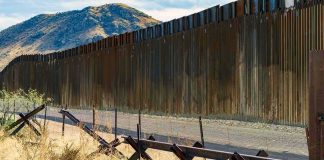
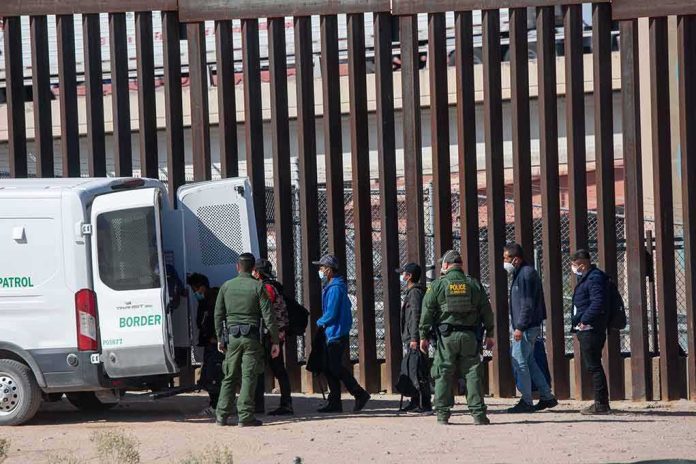
Tom Homan’s position has been consistent and specific: migrants who cross without authorization will not be released into the interior of the country, and many will face prosecution, detention, and deportation rather than the catch-and-release processing that defined earlier eras of border policy. The White House has reinforced that message directly. Spokeswoman Lauren Bis stated that the administration’s position toward the caravan is unambiguous — participants will not be permitted entry, and the border “remains closed to those attempting to enter illegally”. That is not a rhetorical flourish; it describes an operational posture being executed in real time.
The administration has also widened its toolkit beyond the border itself. It has imposed visa restrictions on individuals identified as organizers of these caravans, targeting the logistical and financial scaffolding that allows thousands of people to move in coordinated fashion rather than as isolated travelers. And Homan has raised a sharper instrument still: third-country removal, aimed specifically at migrants from Cuba and Venezuela whose home governments routinely slow-walk or refuse to accept deportation flights. That threat matters because it closes a loophole that has historically let migrants from adversarial or uncooperative states avoid removal simply by waiting out the diplomatic stalemate.
Why Serious Researchers Disagree About Whether Any of This Works
Here the evidence genuinely splits, and an honest accounting has to say so. A Baker Institute analysis found that punitive immigration policy appears to dampen the formation and movement of caravans specifically, while more permissive policy postures tend to create additional impetus for migrants to organize and move collectively. The same research, however, concluded that policies driven primarily by political posturing — as opposed to substantive enforcement — showed no measurable effect on the number of people leaving their home countries in the first place. In other words, tough talk aimed at a caravan already in motion may do little to address the underlying conditions pushing people out of Venezuela, Honduras, or Cuba.
Academic work on deterrence policy more broadly complicates the picture further. One scholarly review concluded that deterrence-based enforcement tends to generate more irregular migration rather than less, because it does not eliminate the underlying motive to migrate — it simply reroutes people toward riskier, less visible paths. Historical analysis of the original 2018–2019 caravans similarly found that their political significance stemmed as much from the scale of public attention they generated as from the raw number of people involved. Caravans, in that sense, function as a visible stress test of enforcement credibility — which is exactly why both sides of the immigration debate treat them as proof of their own argument.
What This Means Going Forward
Homan’s framing — that the border stays closed regardless of the political composition of Congress — reflects an administration betting that executive enforcement authority, not legislative compromise, is the durable lever here. That bet will be tested every time a new caravan forms, because caravans are, by design, a public test of whether a stated policy holds under pressure. The research record suggests enforcement measures can suppress caravan formation at the margins, but rarely touch the deeper economic and political pressures driving individual decisions to leave. Expect the cycle — organize, march, intercept, warn, repeat — to continue for as long as that gap between stated deterrence and underlying migration pressure remains unresolved.
Sources:
zerohedge.com, fox26houston.com, cubaheadlines.com, en.wikipedia.org, borderreport.com, frnt.com, newsweek.com, bakerinstitute.org, latintimes.com, washingtonpost.com, redstate.com, congress.gov, adore.ifrc.org