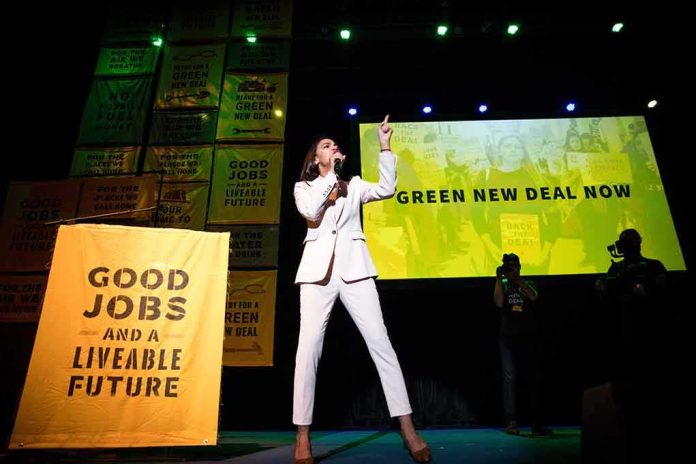
The fight here is not really about one interview or one Instagram Live; it is a recurring test of how progressives translate moral clarity on policy into choices inside a party structure that rewards coalition, sequence, and procedure.
The Short Version
- Charlamagne’s criticism centered on a concrete demand: say plainly whether progressives will back Hakeem Jeffries for Speaker or back a challenger.
- Ocasio-Cortez publicly framed the leadership question as uncontested and explained that the decisive vote occurs by secret ballot inside the caucus, not on the House floor.
- Jeffries’s well-documented pro-Israel posture supplies the policy friction driving the accountability push, even if it does not predetermine progressives’ leadership votes.
- This clash reflects a durable tension in Congress: moral policy stands versus the mechanics of party leadership and leverage.
What the dispute is actually about: policy conviction vs. party mechanics
Charlamagne’s charge landed because it named a specific pressure point: if progressives describe Israel’s conduct in Gaza as genocide and favor conditioning or cutting U.S. military aid, how do they justify supporting a leader they believe will sustain current policy? He argued the moment called for a clear answer—either “don’t back Jeffries” or “support a challenger”—not a civics lesson about leadership procedure. That critique, however blunt, ties rhetoric to an identifiable record: reports that Jeffries opposed an amendment to cut Foreign Military Financing to Israel and has repeatedly backed Israel-related funding measures, including a 2024 supplemental. The through-line is straightforward: policy commitments should map onto leadership choices.
Ocasio-Cortez’s public posture emphasized a different truth about how Congress works. She described an uncontested race and underscored that the real leadership election happens in caucus via secret ballot, making a floor protest largely symbolic absent a credible challenger. She also stated, explicitly, that her explanation was not an endorsement of Jeffries—“I’m just laying out the field here”—and urged constituents to ask whom their representatives are for, not only whom they are against. In other words, she separated process description from a pledge, and she pointed to the only arena where dissidents can actually unseat a leader: inside the caucus, with numbers.
How House leadership actually gets decided
Leadership contests are inside games first, outside shows second. The majority and minority parties choose their leaders behind closed doors; the televised floor vote is the epilogue. Without a challenger who can assemble votes in the room, calls for “vote no on the floor” are theatrically satisfying but strategically thin. That is not an evasion; it is the operating system of Congress. Political science has long described the bargain at the heart of party leadership: members empower leaders to deliver collective gains yet preserve tools to constrain or replace them when alignment breaks down. The friction surfaces when members’ district-level imperatives and moral positions collide with caucus incentives to project unity and retain negotiating power.
That is why the same episode can look different from the gallery and the cloakroom. To an audience hearing urgent moral claims about Gaza, the natural question is, “Will you oppose the leader who backs the policy you reject?” To a member counting votes, the gating question is, “Is there a viable challenger who can win a secret-ballot election—and what leverage do we gain or lose by forcing the issue now?” Both questions are legitimate; they operate on different layers of the institution.
The evidence on Jeffries’s Israel posture—and what it does and does not prove
Jeffries’s record provides real substance to the accountability demand. Reporting describes his consistent pro-Israel stance over years and his vote for the April 2024 Israel supplemental; he has been publicly identified with the party’s pro-Israel center of gravity. Critics point to his opposition to efforts to cut or condition aid and his alignment with institutional donors and advocacy networks that prioritize Israel’s security assistance. Those are concrete points of contention; they justify tough questions about conditions on aid, end-use monitoring, and red lines on weapons transfers.
But that record alone does not answer the narrower question at the heart of Charlamagne’s critique: whether any given progressive is obligated to oppose Jeffries in a leadership vote. Leadership ballots bundle many considerations—committee ratios, agenda control, internal rules changes, assurances on procedural votes, and personnel—into a single yes/no act. A member can judge that, at a given moment, conditional cooperation inside the caucus yields more policy leverage than an unwinnable leadership revolt. That choice can be contested; it is not illogical on its face.
Charlamagne’s demand for clarity vs. AOC’s process-first answer
Was Ocasio-Cortez “beating around the bush,” as alleged, or accurately describing the state of play? The on-record statements attributed to her indicate two things at once: she declined to endorse Jeffries while saying the race was uncontested and the decisive vote would be a private caucus ballot. That is a direct answer about process and a refusal to stage a symbolic protest without a real contest. Charlamagne’s response—“we don’t need a civics lesson”—reflects a media-accountability instinct: when issues are life-and-death, procedural precision can read as hedging. Yet the claim that she endorsed Jeffries, or that she refused to say anything definitive, is not supported by the cited material; she explicitly said her remarks were not an endorsement.
There is, in short, no factual dispute that she drew a process line and left her final leadership vote contingent on whether a race existed. The genuine disagreement is normative: should progressives convert their policy critique into an explicit leadership opposition even in an uncontested race, or husband leverage for concrete concessions inside the caucus? Reasonable actors will divide on that tactical question.
Charlamagne PUTS AOC ON BLAST Over Hakeem Jeffries & Chuck Schumer! 🔥😳🫣😬🤫🔥 https://t.co/K4WuwhEdrT via @YouTube
— Tunes&Truth (@TunesAndTruth) November 15, 2026
What accountability that actually changes outcomes looks like
The durable lesson here is not about personalities; it is about sequencing power. If progressives want aid conditions, they need one of three assets: votes to block a rule or a supplemental without conditions; a whip count sufficient to threaten the leader’s standing; or a negotiation that trades procedural support for concrete written commitments—on bill text, committee oversight, or floor scheduling. Public clarity has value, but clarity tied to leverage moves policy. Conversely, leadership loyalists who want to preserve unity need to meet their left flank with substantive answers: what conditions on aid, what oversight triggers, and what consequences for violations will leadership support? Those specifics are testable in statutory text and roll calls.
The episode distilled a familiar dynamic. Media voices ask for a clean, declarative answer; members operating inside the machine answer with the structure that governs what they can credibly threaten or deliver. Both can be right about their domain. The hard work is converting that conversation into choices that change actual votes and binding law. On questions as grave as war and peace, nothing less should satisfy either side.
Sources:
foxnews.com, noticias.foxnews.com, ground.news, josealnino.org, newsweek.com