
Talk of using “martial law” to settle a disputed midterm is not a novel constitutional theory or a hard-nosed security plan; it is a category error that confuses political disappointment with an emergency the law empowers the president to resolve by force.
The Short Version
- Advocates on a MAGA-organized call floated martial law and federal seizure of ballots or equipment if the midterms are “rigged,” presenting a concrete but extraordinary remedy untethered to established law.
- U.S. election administration is decentralized by design; states run elections under federal guardrails, and neither emergency powers nor martial law authorize a president to commandeer ballots or voting machines.
- Security and legal experts report no evidence that vote-counting systems are deleting or changing votes; prior multi-agency reviews found no foreign manipulation of voting systems in 2020.
- The durable safeguard is lawful process: audits, recounts, canvasses, and litigation—not military deployment, which the Defense Department has disavowed in this context.
What was proposed and why it drew attention
In late September 2026, during a partisan activist call hosted on Rumble, attorney Peter Ticktin—described as a longtime Trump associate—suggested that “there would have to be martial law” in the event of “another rigged election,” and elaborated that authorities would need to “commandeer” ballots and election equipment to investigate before results were finalized. The proposal tried to sound operational rather than merely rhetorical: seize paper ballots and machines, pause certification, and recount by hand, echoing activist Tina Peters’s paper-ballot plan. The specificity is the point; it framed an executive-led remedy, not just a grievance.
That concreteness is also where the idea fails. It posits a federal authority that does not exist in American election law and a military role that contradicts the Defense Department’s own posture toward civilian elections. The strength of the current system—federalism with layers of checks—makes dramatic national seizure plans not just controversial but structurally inapt.
How U.S. elections actually work: decentralization by design
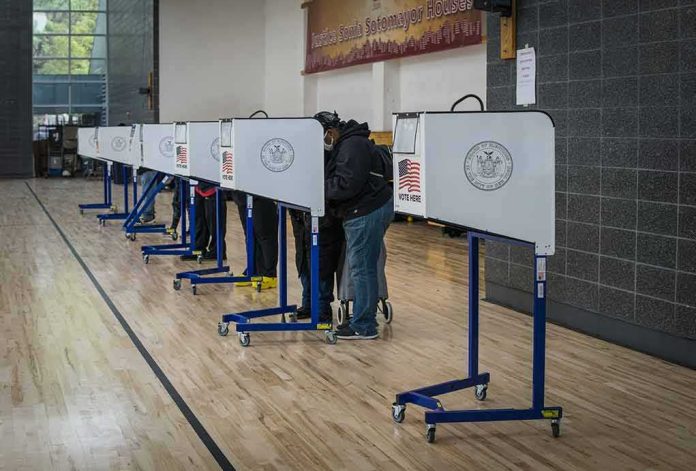
American elections are administered locally, under state authority, within federal constitutional and statutory boundaries. States choose voting systems and set counting procedures; local officials conduct canvasses; bipartisan audits and recounts are triggered by statute or through courts. Congress fixes federal election dates. Within this architecture, the presidency is not an election czar. Emergency powers do not create a general license to manage, delay, or redo elections; they must track specific statutes and constitutional limits. That is why expert analyses emphasize that neither “martial law” nor the Insurrection Act could lawfully authorize a president to seize ballots or override state election law; the Act empowers the enforcement of law, not its violation.
This is not a mere lawyerly quibble. Chain-of-custody, ballot accounting, pollbook reconciliation, and canvass boards exist precisely to surface anomalies without political command taking custody of the evidence. Federal agents and armed troops are barred from polling places except in the narrowest foreign-attack context, and even then other federal protections still apply.
Claims of rigging versus the available evidence base
Assertions that the forthcoming midterms will be “rigged” remain predictions, not findings. When prior cycles produced broad, testable allegations, multi-agency and state reviews did not substantiate machine manipulation or foreign control of voting systems. A Reuters investigation, drawing on federal inquiries, reported no evidence that foreign actors infiltrated U.S. voting systems or manipulated machines in 2020; election-security officials likewise stated they found no evidence of systemic deletion or alteration of votes in disputes that followed.
None of this proves future perfection—no real system is risk-free—but it does locate the burden where it belongs: on credible, verifiable facts. If anomalies arise, the pathway is familiar and lawful: preserve evidence under existing chain-of-custody rules, trigger targeted audits or hand counts as statutes allow, and adjudicate disputes in court. Epidemic claims without commensurate proof do not upgrade the president’s powers.
Martial law, the Insurrection Act, and the myth of a presidential “override” button
“Martial law” is a term with a fraught American pedigree. The Constitution does not vest the president with a free-standing authority to displace civilian governance nationwide, and Congress has not enacted a statute authorizing a presidential declaration of martial law to run elections. The Insurrection Act allows the use of military forces to suppress insurrection, enforce federal law, or protect civil rights—within law, not above it. It does not empower seizure of ballots, replacement of state voting systems, or a national hand recount by order of the executive. Legal experts across the ideological spectrum, including those at the Brennan Center, converge on this point.
Operationally, the military has been clear about its stance: no plans to deploy troops to polling places or to seize election materials, and strong legal barriers to any such role regardless of political pressure. That is as it should be in a civilian republic; the armed forces do not referee our vote counts.
Axios: Trump's MAGA Allies Discuss Martial Law If Midterms Are Deemed Riggedhttps://t.co/gU3FDixeZ3 pic.twitter.com/SXcFO8MO17
— Twitchy Team (@TwitchyTeam) October 17, 2026
Why the talk resonates—and why it misleads
Fraud narratives have political power even when their factual base is thin: they mobilize donors, energize factions, and justify attempts to centralize election control. In the last decade, belief in sweeping fraud claims has-grown in segments of the electorate despite the lack of systemwide findings in audits, recounts, and prosecutions. The friction here is durable: low documented incidence of outcome-changing fraud meets high salience of stories about it. That is precisely when institutional design matters most; decentralization and transparent, rule-bound audits dampen the incentive to swap lawful procedure for executive fiat.
The serious alternative: hardening confidence without breaking the law
If the goal is resilient trust, there is a rigorous, legal menu: risk-limiting audits that statistically confirm outcomes; post-election canvasses with public reporting of reconciliation data; targeted hand counts where statutes prescribe them; bipartisan observation rules that protect both access and integrity; and prompt litigation channels that force claims into sworn, evidentiary posture. Where equipment security is questioned, states can arrange court-supervised forensic examinations with preserved hashes, logs, and custody controls. None of this requires—nor would it benefit from—military custody of ballots.
The most important habit is epistemic discipline: extraordinary remedies must wait for extraordinary evidence, not the other way around. The republic has tools to correct genuine errors. It does not need, and the law does not allow, an executive short-circuit of elections.
Sources:
twitchy.com, axios.com, newsweek.com, ibtimes.co.uk, commondreams.org, rawstory.com