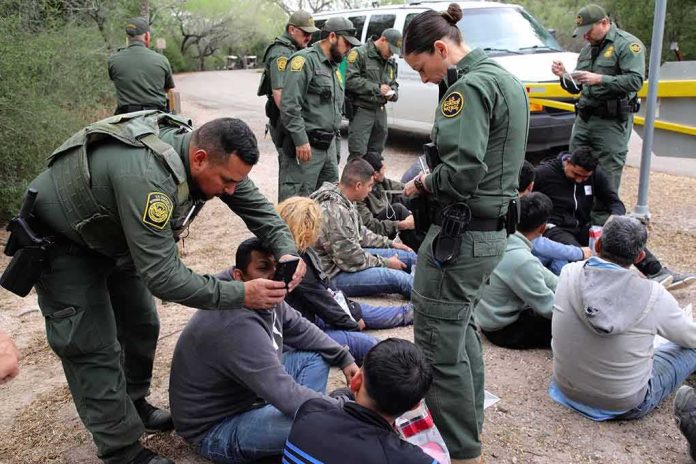
Immigration enforcement in America runs on a paradox: the more vetting infrastructure the government builds, the more both sides find evidence to support entirely opposite conclusions about whether it works. That paradox is on full display in Border Czar Tom Homan’s warning that a Democratic win in 2028 would mean reopening the border — a claim that rests less on what any future administration has actually proposed and more on Homan’s reading of what happened the last time Democrats held the executive branch.
Key Points
- Homan argues Biden-era migrant releases were never properly vetted against criminal databases, and predicts a future Democratic administration would repeat that pattern.
- A DHS inspector general report found vetting errors in 40 percent of Afghan asylum applications reviewed under Operation Allies Welcome, lending concrete support to Homan’s broader argument.
- Immigration attorneys and DHS’s own prior statements counter that extensive biometric and criminal-background vetting has existed in federal law for decades.
- The dispute reflects a familiar cycle in immigration politics: enforcement officials emphasize danger and urgency, while program administrators emphasize existing safeguards and legal process.
- Reconciliation legislation already funds ICE and Border Patrol operations through 2028, meaning enforcement capacity, not just rhetoric, will shape whatever either party inherits next.
The Claim and the Case Homan Builds Around It
Homan’s prediction didn’t emerge from nowhere. In an October 2026 Newsmax interview, he pointed to two illegal aliens wanted in the stabbing and robbery of an off-duty NYPD detective as “another example of the national security threat” he attributes to Biden-era border policy, insisting the administration “lied for four years” about vetting migrants it released into the country. He has repeated versions of this argument for years — telling MSNBC’s Joe Scarborough in 2025 that “there was no vetting process for the hundreds of thousands — actually millions — of people they’ve released in the country”. The consistency of the claim across multiple venues and over an extended period is itself notable; this is not an off-the-cuff remark but a settled talking point Homan returns to whenever a new case surfaces.
The strongest independent support for that talking point doesn’t come from Homan himself but from a federal watchdog. A DHS inspector general review found vetting errors — missing aliases, missing security checks, incomplete documentation — in 40 percent of asylum applications examined under the Biden administration’s Operation Allies Welcome program for Afghan evacuees, concluding the deficiencies increased risk. That is a hard, document-based number from an independent auditor, not a political assertion, and it materially strengthens Homan’s broader argument that vetting systems during that period had real gaps, even if it doesn’t by itself prove systemic failure across the entire border population.
The Vetting Infrastructure Homan’s Critics Point To
Immigration attorneys dispute the premise that vetting was absent altogether. The American Immigration Lawyers Association argues the system “already reflects” a security priority “through some of the most extensive screening and vetting processes in federal law,” including biometric collection, criminal background checks, and FBI name checks that have existed for decades. AILA’s brief goes further, arguing that framing every migrant as a potential threat — rather than targeting vetting at demonstrated risk indicators — distorts a system that already screens applicants methodically. Reporting on the Biden-era humanitarian parole program for Cuban, Haitian, Nicaraguan, and Venezuelan migrants similarly noted that DHS described participants as “thoroughly screened and vetted,” with added scrutiny of financial sponsors after fraud concerns surfaced.
These two positions aren’t as contradictory as they first appear. Vetting infrastructure existing in law is not the same as vetting being executed without failure at scale — and the inspector general’s 40 percent error rate shows exactly that gap between statutory design and operational reality. Homan has applied the same standard even to his own side: after a fatal shooting involving an ICE agent in Biddeford, Maine, he told CNN that if allegations against the agent proved factual, the agent “would have had an almost impossible time to pass vetting”. That consistency — holding Biden-era releases and his own agency’s hiring to the identical vetting standard — is evidence Homan’s concern is procedural rather than purely partisan, even if his public framing of it is unmistakably political.
Open Border Rhetoric Versus Legal Mechanism
The phrase “open border” is where the dispute gets genuinely murky, because it conflates political posture with legal mechanism. Congressional testimony compiled in the Congressional Record argues that U.S. borders were never “open” under Biden because the administration was processing asylum claims under decades-old, bipartisan statute — an obligation, not a choice. Parole authority itself, which Homan and allies have criticized as a vehicle for mass entry, has a documented history reaching back seven decades across administrations of both parties, used 126 times before Biden expanded it for the CHNV program. That history complicates the claim that any future Democratic administration reopening parole pathways would represent something unprecedented rather than a return to a tool every modern president has used, just at different scale.
Why the Framing Recurs Every Election Cycle
Scholars who study immigration enforcement describe this pattern as securitization: immigration gets framed as an existential threat, which raises the political payoff of emphasizing danger and urgency over incremental process fixes. Research on local immigration enforcement finds that “toughness” postures tend to intensify when immigration is politically salient and electorally useful to officials on both sides. That doesn’t make Homan’s specific factual claims wrong — the Afghan vetting failure rate is real and documented — but it explains why the same vetting debate resurfaces almost unchanged every election cycle, regardless of which administration is in office, and why both camps reach for extreme framing rather than the messier truth in between.
What Actually Changes in 2028
Whatever happens politically in 2028, the operational baseline will look different than it did in 2021. Recent reconciliation legislation has already locked in funding for Border Patrol and ICE enforcement capacity through that year, meaning a change in the White House won’t instantly dismantle the infrastructure built under the current administration — reversing enforcement posture would require new legislation, not just a change in rhetoric. Homan’s prediction is best read not as a settled fact but as a warning rooted in a real, documented vetting failure from the last Democratic administration, aimed at making that failure the central issue the next one has to answer for.
Sources:
youtube.com, newsmax.com, bostonglobe.com, washingtonexaminer.com, foxnews.com, cbsnews.com, cmsapi.theepochtimes.com, caliber.az