
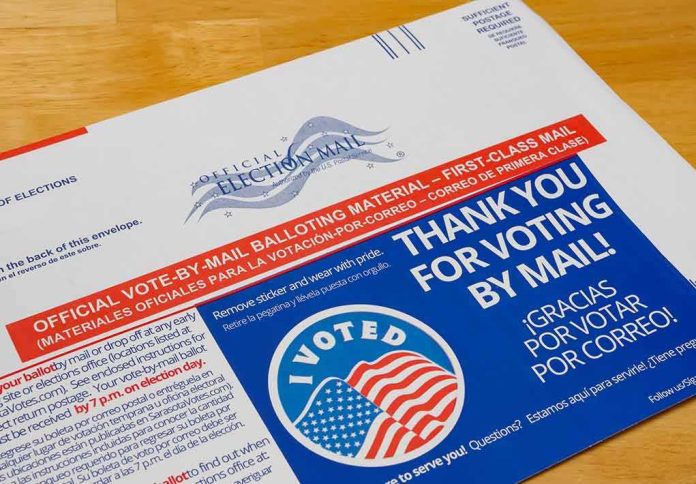
When duplicate ballots go out, the integrity question that matters is not whether two envelopes reached a mailbox, but whether the election office can reconcile each voter to exactly one accepted ballot — and in Tulare County, officials identified the cause, quantified the scope, and described the controls that limit the problem to issuance rather than counting.
At a Glance
- Tulare County attributed thousands of duplicate vote-by-mail packets to a vendor error during a ballot-replacement run.
- Officials identified 7,791 affected voters, primarily in the City of Tulare, and notified them directly.
- Voters were told to submit only one ballot and securely destroy the duplicate; either packet could be used to vote.
- The county said safeguards ensure only a single ballot per voter is accepted; additional returns are rejected by the system.
What happened and who was affected
Tulare County election officials reported that a printing vendor error during the ballot-replacement process resulted in duplicate vote-by-mail packets being sent to 7,791 voters, concentrated largely in the City of Tulare. The Registrar of Voters’ office said it began fielding calls and in-person reports the same afternoon, traced the problem to its long-serving ballot printer, and confirmed that the vendor accepted responsibility. The county sent a postcard notice to impacted voters, and local outlets corroborated the scope and operational cause based on on-record statements by the county’s chief elections staffer.
The vendor was identified in local reporting as ProVote Solutions, a Porterville-based firm that has printed Tulare County ballots for years. According to that reporting, the company acknowledged the mistake, which occurred in the course of replacing previously issued ballots — a routine but tightly controlled action when voters request a new packet or officials correct a mailing detail. While the county did not publish a technical root-cause report, it characterized the failure as a production misstep confined to duplicate packet issuance.
How California’s mail-ballot acceptance controls work
Duplicate issuance is not the same as duplicate counting. In California, returned vote-by-mail envelopes are scanned and matched to a specific voter record; election workers compare the signature to the voter’s registration signature and check whether a ballot has already been accepted for that voter before a new return can move to tabulation. That design — essentially a one-voter, one-accepted-envelope gate — is why a mailing error can increase workload and confusion without creating a straightforward path to two counted votes from the same person. Tulare County officials emphasized that if more than one packet were returned by an affected voter, only the first accepted ballot would count; subsequent returns would be rejected and excluded from processing.
To operationalize that promise at scale, counties rely on unique ballot envelope identifiers tied to each voter record inside their election management and vote-by-mail systems. When a replacement is issued, the older envelope is typically inactivated in the database; upon receipt, the system logs the first valid return and prevents a second from clearing acceptance. The public-facing instruction — submit one ballot and destroy the other — aligns with those internal mechanics, but it also helps reduce rework by keeping truly duplicative envelopes from entering the verification queue. Tulare County’s postcard explicitly stated: “SUBMIT ONLY ONE BALLOT,” “YOU MAY USE EITHER PACKET TO CAST YOUR BALLOT,” and “SECURELY DESTROY THE DUPLICATE PACKET.”
What the county told voters to do — and why it matters
Clear instructions were central to the county’s response. Affected voters were told they could vote using either of the two packets, but not both; they were asked to securely destroy the duplicate to avoid confusion and operational churn. That guidance serves three purposes. First, it assures voters their ballot remains valid despite the mailing mistake. Second, it discourages returns that would be rejected anyway — reducing signature-review workload and post-rejection notifications. Third, it minimizes the chance that an unintended return, such as a family member mailing both envelopes, triggers unnecessary casework. Local and regional reporting carried those instructions verbatim, and the county reiterated that its systems would count only one return per voter.
For residents who prefer in-person resolution, county offices typically offer ballot surrender: a voter can bring both envelopes, surrender them, and cast a single replacement ballot. While Tulare County’s notice focused on mail guidance, California counties routinely accept surrendered vote-by-mail packets at vote centers as another path to reconcile to one accepted ballot per voter.
The role of the vendor and what we still don’t have in public view
Local coverage named ProVote Solutions as the vendor and reported that it accepted responsibility for the error. The county has used the firm for years, which is common in jurisdictions that outsource large-volume, time-compressed ballot printing and mailing. What the public record does not contain, at least yet, is a detailed technical chronology from the vendor — for example, whether a replacement run was queued twice, whether a production file was misflagged, or whether a mailing manifest was duplicated. Those specifics matter for internal corrective action and future prevention, but they do not change the immediate mechanism by which counties prevent duplicate counting: voter-level acceptance controls at intake.
The county’s statements about safeguards are consistent with standard California procedures: signature verification, unique envelope identifiers, and system checks that block acceptance of a second ballot once a first one has been accepted. Reporting that quotes the registrar’s office explains both the presence of those controls and the county’s confidence that only one ballot per voter would be counted.
JUST IN: Thousands of California voters just received duplicate mail-in ballots.
Tulare County election officials confirmed that a “printer vendor error caused duplicate Vote By Mail ballots in the City of Tulare,” in a notification posted to the county website.
The vendor has…
— The Epoch Times (@EpochTimes) October 23, 2026
How to judge incidents like this going forward
Ballot production errors are, unfortunately, a recurring operational risk in large, vendor-supported elections — New York City’s 2020 absentee program, for instance, saw tens of thousands of wrong return envelopes mailed due to a vendor misprint. The right test for a mail-ballot system is not “no mistakes ever” but whether voter-level reconciliation, from envelope identification through signature review, reliably enforces the one-ballot-per-voter rule. Tulare County’s response followed that playbook: identify scope, inform affected voters, and rely on acceptance controls that prevent duplicate counting.
Sources:
zerohedge.com, abc30.com, latimes.com, theepochtimes.com, yourcentralvalley.com, recorderonline.com