When a university shuts its doors for a day, the decision is never merely logistical — it is a statement about what an institution believes it owes the dead, the living, and its own sense of identity, and Utah Valley University’s handling of the first anniversary of Charlie Kirk’s killing shows exactly how fraught that calculus has become.
Key Points
- UVU canceled classes and closed campus operations on September 10, the one-year anniversary of Charlie Kirk’s shooting death on its grounds, to create space for “reflection, service and connection.”
- Turning Point USA, the organization Kirk founded, held a private memorial titled “Freedom Built to Last Honoring Charlie Kirk” at the UCCU Center, a venue UVU kept open specifically for that event.
- The observance drew heightened security, required preregistration, and unfolded alongside organized student protest, reflecting a campus still visibly divided over how — and whether — to mark the date.
- The episode fits a recognizable pattern in American higher education, where campus tragedies force administrators to balance memorialization, safety, and neutrality, often without satisfying anyone completely.
What UVU Actually Did on the Anniversary
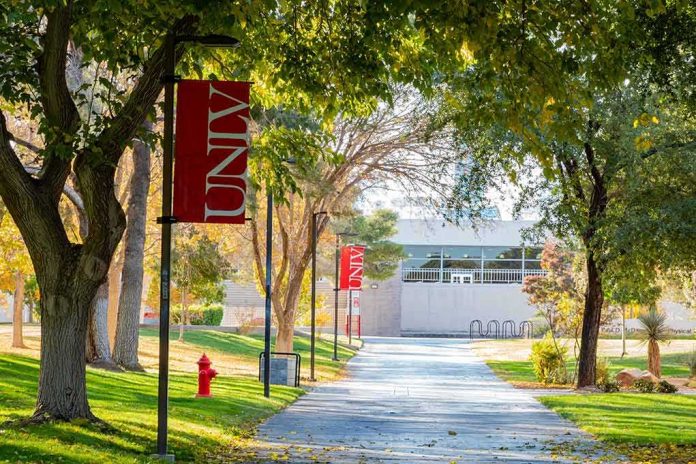
Utah Valley University told students and staff well in advance that it would not hold classes on September 10, the anniversary of Kirk’s killing during a campus speaking event. In its communication, the university said it wanted to give the community “time and space for reflection, service and connection,” and Interim President Wayne Vaught described the closure as part of an effort “to foster healing” in the aftermath of what UVU called an assassination. That framing — healing rather than routine holiday — is significant, because it positioned the closure as an institutional response to trauma rather than a scheduling convenience, a distinction that shaped how the day was received across campus.
Even as academic operations paused, UVU kept one building running: the UCCU Center, where Turning Point USA staged its memorial that evening. The university was explicit that this was a privately organized event using rented campus space, not a university-produced ceremony, noting that the organization “engaged Utah Valley University to use the UCCU Center” for the occasion. That arrangement — campus closed, one venue open for an outside group’s program — is the operational core of the day, and it explains much of the ambiguity that followed about who, exactly, was doing the memorializing.
The Memorial Itself and the Security Around It
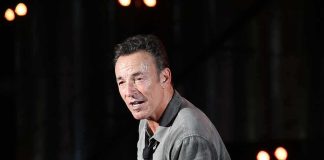
Turning Point USA billed its program, “Freedom Built to Last Honoring Charlie Kirk,” as a tribute to the man who built the organization into one of the most influential conservative youth movements in the country before his death at 31. Doors opened at 4 p.m. for a 6:30 p.m. start, attendees were required to preregister, and UVU confirmed an increased security presence on campus for the day. That security posture was not incidental. A year earlier, the same campus had been the scene of a fatal shooting during one of Kirk’s signature outdoor speaking events, and the man charged in his killing, Tyler Robinson, has pleaded not guilty and faces the possibility of capital charges if convicted. Planning a large public gathering at the exact site of that violence necessarily meant treating physical security as a first-order concern, not an afterthought.
The observance also had a life beyond campus. Utah marked the date statewide, and the Republican National Committee joined in commemorating Kirk nationally, signaling that this was never going to be a purely local or academic event — it carried the weight of a figure whose death had already become a fixture of national political memory.
A Divided Campus, Not a Unanimous One
UVU’s own reporting environment made clear that the anniversary was not universally embraced as a moment of shared mourning. A student group opposed to the memorial organized a letter, signed by more than six hundred people, arguing the event clashed with the university’s stated commitment to care for all students, and a counter-demonstration was planned for the same day. This is not evidence that UVU’s rationale was insincere or poorly conceived; it is evidence that a public university sitting atop a politically polarizing death cannot fully separate an act of remembrance from the ideological identity of the person being remembered. The private, TPUSA-organized nature of the memorial — as opposed to a university-authored ceremony — appears to have been one mechanism by which UVU tried to thread that needle: facilitate space, control security, but let the organization most associated with Kirk own the program’s content and tone.
🔥ONE YEAR LATER: MEMORIAL HONORS CHARLIE KIRK AT UTAH VALLEY UNIVERSITY
A memorial now stands at the exact spot on Utah Valley University’s campus where Charlie Kirk was assassinated one year ago today in an attack attributed to a radical left-wing extremist. pic.twitter.com/rUD9EFSY4q
— Carolyn Sue Burgess (@SingerRoyale) September 11, 2026
Why This Kind of Decision Is Never Simple
UVU’s dilemma belongs to a long and well-studied lineage. Scholars who track disputed campus memorials — one widely cited study examined twenty-five such controversies between 2015 and 2020 — have found that administrators tend to reason through one of a handful of recurring frameworks: what the honoree’s principal legacy actually was, what should be preserved or represented, who the memorial includes or excludes, and whether present-day values should govern how the past is remembered. The unifying insight is that these disputes rarely resolve into a clean right answer; they become proxy fights over what an institution believes itself to be. Precedents from Kent State, Virginia Tech, and Northern Illinois University’s 2008 shooting all show the same tension recurring in different forms: administrators must weigh commemoration against liability, safety planning against the appearance of politicization, and the desire to give a community closure against the risk of appearing to take a side.
Viewed against that backdrop, UVU’s approach — a full closure paired with a security-managed but privately run memorial — reads less as an improvised response and more as an institution applying a familiar, if imperfect, playbook for navigating grief on a campus that cannot agree on what, exactly, it is grieving. Whether that balance satisfied the community it was designed to serve remains an open question the university will keep answering, in one form or another, for years to come.
Sources:
deseret.com, heraldextra.com, upi.com, breitbart.com, nfpevents.tpusa.com, youtube.com