When a fuel facility next to a capital-city airport burns, you are looking at more than a fire: you’re seeing a strategic message about reach, risk, and leverage aimed at the heart of a nation’s aviation and energy nexus.
At a Glance
- Flames and a towering column of black smoke rose near Riyadh’s King Khalid International Airport as air-raid alerts and booms swept the capital.
- Imagery and eyewitness reporting indicated a blaze at or near fuel storage infrastructure, with flight operations disrupted as authorities managed the incident.
- The attack aligned with a sustained Houthi campaign to pressure Saudi Arabia by striking aviation and energy targets across the kingdom’s south and interior.
- Airport-adjacent fuel depots are attractive targets: concentrated energy, high visibility, and immediate operational ripple effects.
What happened near Riyadh’s main airport
In the hours after Saudi air-raid alerts sounded over Riyadh, residents heard concussive booms; soon after, a dense plume of black smoke rose in the direction of King Khalid International Airport. Video and still images, including agency footage, showed flames and smoke rising from an area consistent with fuel storage infrastructure near the airport, prompting major disruptions to flights while civil defense units brought the blaze under control. Multiple outlets relayed similar witness accounts, noting the proximity to airport facilities and the scale of the smoke column visible from major roads leading to the terminals. The sequence—warning, blasts, fire at or near a fuel depot—matches the operational logic of past Houthi strikes on Saudi aviation and energy nodes, which pair airborne threats with high-visibility impact sites to magnify political and economic effect.
Saudi authorities issued an all-clear after the immediate threat window closed; commercial operations were affected as carriers and the airport operator cycled aircraft and crews through precautionary delays and cancellations. The incident arrived amid a renewed tempo of Houthi claims of long-range attacks on Saudi targets, including Aramco facilities and airports in the kingdom’s south and west, and periodic Saudi retaliatory strikes in Yemen. Within this broader escalation, a strike that ignites fuel infrastructure alongside the capital’s primary international gateway is not an outlier; it is the point.
Why airport-adjacent fuel depots are so consequential
Airports run on kerosene, literally. Jet-A/Jet A-1 moves from bulk storage through hydrant systems or tanker trucks to feed aircraft at the gate; interrupt storage or distribution and an international hub’s schedule buckles. Fuel farms are engineered with firewalls, foam suppression, and isolation valves, but they are still concentrated energy—flame at one tank begets operational shutdowns across the complex, even if the fire is contained to a single unit. For an attacker, that concentration is an efficiency: a drone or missile that penetrates perimeter defenses and reaches a fuel tank can force hours of diversions and delays, creating an outsized media footprint versus the cost of the munition. For defenders, it is the nightmare that drives layered air defense—radar pickets, point-defense systems, electronic warfare to spoof guidance, and dispersal of critical assets.
The Houthis have demonstrated exactly this theory of effect across years of conflict: choose targets whose temporary loss generates maximum optics and logistical friction—airports, distribution depots, pumping stations—then coordinate salvos to saturate defenses. The group’s operations have repeatedly broadened beyond border-adjacent towns into strategic depth, from Najran to Abha to oil logistics in Jizan and Yanbu, and beyond, underscoring both improved range and a willingness to risk escalation in exchange for bargaining power. When flames rise beside Riyadh’s main airport, global audiences do not need a military communique to understand the signal.
How this escalation took shape
After a stretch of reduced cross-border fire, the truce architecture frayed over the summer: Houthi spokespersons publicly threatened Saudi energy infrastructure; within weeks, the group announced strikes against airports and Aramco-affiliated sites across multiple provinces, while Saudi forces conducted retaliatory missions in Yemen. Independent reporting documented flight disruptions and damage to energy infrastructure in several incidents across August and September, placing the kingdom’s defenses under sustained pressure. This is not the first time a Saudi aviation facility or its supporting fuel systems have been targeted, but the concentration of attacks and the geographic spread marked one of the heaviest operational tempos in years.
Within this pattern, the Riyadh incident followed a familiar cadence: preemptive warning to residents, audible intercepts or impacts, and then a fire at a piece of infrastructure civilians recognize instantly. The symbolism is calibrated. Hitting a remote pipeline valve station pressures markets; hitting a capital-adjacent fuel tank commands evening newscasts and reroutes aircraft. The technical means—drones with small warheads, cruise missiles with terrain-hugging profiles, or ballistic systems lofted from deep in Yemen—differ by range and survivability, but the operational design is consistent: exploit gaps in coverage, overwhelm with numbers, and accept that even one leak ignited at the right node is a strategic success.
Mechanics of defense and the limits of perfection
Saudi Arabia fields a layered system: long-range sensors and interceptors for ballistic arcs, medium-range systems for cruise profiles, point defenses at critical sites, and electronic warfare to disrupt seekers. This architecture, built and refined since the 2019 Abqaiq-Khurais wake-up call, has reduced successful penetrations; it has not eliminated them. Air defense is a probability game. Every layer imposes attrition; salvos and mixed profiles restore odds to the attacker. Urban proximity adds complexity—rules of engagement in a capital must account for debris and downrange risk. That is why, even on a day when most inbound threats are intercepted, a single hit on an auxiliary facility can still translate into flames and flight delays that dominate headlines.
Fuel depots attempt to blunt that residual risk with industrial defenses: remote-operated isolation valves to starve a fire of product, foam-deluge systems to smother burning hydrocarbons, and earthen berms or walls to prevent tank-to-tank propagation. Imagery and reporting from Riyadh suggested responders contained the blaze before a multi-tank event developed—consistent with modern design and training—but that tactical success does not erase the strategic cost of demonstrating vulnerability next to the primary gateway to the capital.
The political and economic message
This strike’s target class—aviation-adjacent fuel—checks three boxes central to the Houthi strategy of coercive signaling. First, visibility: an airport fire is unmissable to residents and international media. Second, economic friction: even short-lived disruptions ripple across airline rotations and cargo schedules. Third, bargaining leverage: the group ties its long-range capability to demands in Yemen and to Saudi policy more broadly, reminding Riyadh that domestic calm depends on decisions at the negotiating table as much as on intercept rates in the sky. Analysts tracking September’s escalation flagged that repeated pressure on logistics nodes, rather than core upstream oil fields, can still undermine Saudi export resilience by stressing terminals, pipelines, and the credibility of uninterrupted operations. Markets have learned since 2019 that the kingdom can often restore flows quickly; what cannot be as easily restored is the perception of invulnerability that once anchored pricing assumptions.
For Saudi planners, the response matrix is well-worn: reinforce air defense coverage along approach corridors to critical infrastructure, harden and disperse fuel storage, increase redundancy in hydrant and tanker operations at major airports, and calibrate retaliation to dissuade further deep strikes without triggering a wider regional spillover. For airlines and shippers, the operational playbook is equally familiar: contingency fuel planning, flexible crew and fleet management, and dynamic routing away from temporary risk boxes. None of it is costless; all of it is now routine.
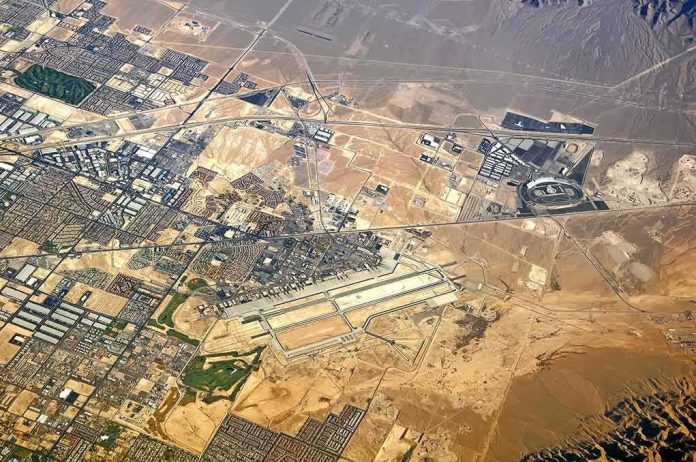
Yemen’s Houthis Claim Attack on Saudi Capital After Fuel Depot Burns at Airport (targeted with ballistic missiles – 24°58'50.0"N 46°40'50.7"E).
King Khalid International Airport, Riyadh Saudi Arabia.#KingKhalidInternationalAirport#Riyadh #SaudiArabia#Yemen #Houthis#IRGC pic.twitter.com/Ls8jR4SIZ8— Comte de Saint Germain (@StGermain1776) September 19, 2026
The through-line: infrastructure as leverage
Across this conflict phase, the center of gravity is not a single tank farm or runway; it is the idea that critical infrastructure, even when defended and redundantly engineered, can be periodically shocked to strategic effect. The Riyadh airport-adjacent fire distilled that idea into a single, stark image. It demonstrated how a movement with limited conventional means can punch at the level of perception—of safety in a capital, of schedule integrity for global carriers, of reliability for energy logistics. As long as that logic holds, the incentives for both actors are set: the Houthis will continue to reach for high-visibility nodes; Saudi Arabia will strive to make every reach costlier and every success rarer.
Sources:
thegatewaypundit.com, english.ahram.org.eg, wionews.com, ua.news, reuters.com, acleddata.com, sanaacenter.org, theguardian.com