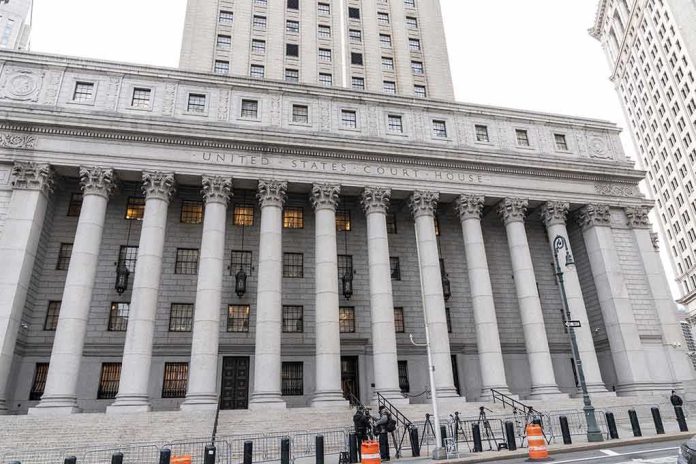
A federal judge just wiped out Trump Media’s $3.8 billion case against The Washington Post, underscoring how hard it is for any citizen to hold powerful national media to account in today’s legal system.
Story Snapshot
- Trump Media’s $3.8 billion defamation lawsuit against The Washington Post has been dismissed by a federal judge in Florida.
- The judge ruled the company failed to show the newspaper acted with “actual malice,” the high legal bar public figures must meet.
- The case targeted Post reporting that Trump’s social media startup committed securities fraud tied to a disputed $240,000 finder’s fee.
- The ruling fits a broader pattern: Trump and other political figures almost never win defamation suits against major media outlets.
How Trump Media’s Big Case Ended
United States District Judge Thomas Barber in Tampa granted summary judgment to The Washington Post, ending Trump Media and Technology Group’s $3.8 billion defamation lawsuit before it could ever reach a jury. Summary judgment means the judge reviewed the evidence and decided there was not enough for a trial under the law. The suit was filed in 2023 by Trump’s social media company, claiming the Post badly damaged the firm’s value and reputation with false reporting about alleged securities fraud.
The core dispute centered on a Washington Post article that said Trump Media committed securities fraud by hiding a $240,000 “finder’s fee” tied to a loan from a trust friendly to the company. Trump Media argued no such fee agreement existed and claimed the article was part of a larger “conspiracy” by legacy media to tank its stock and scare investors. The company sought massive damages, saying the reporting helped fuel doubts about its business, which leans on Trump’s political brand and his Truth Social platform.
Why the Judge Said “No”
Judge Barber’s key ruling was simple but powerful: Trump Media did not offer evidence that could let a jury find, by “clear and convincing” proof, that the Post published the statements with actual malice. Under the Supreme Court’s New York Times v. Sullivan standard, public figures must show a news outlet either knew a claim was false or seriously doubted it and printed it anyway. Barber concluded Trump Media’s filings did not meet this heavy burden, even after earlier chances to improve its complaint in front of another Florida judge.
The Washington Post’s lawyers stressed that reporter Drew Harwell had done a thorough investigation and believed his story was accurate when it ran. Barber’s order echoed this, saying there was no proof Harwell or his editors knew the finder’s fee claims were wrong or had serious doubts they were true. Trump Media argued the Post relied on a bad source and ignored its denials, but the court said that was not enough to show actual malice under existing law. In other words, sloppy or unfair reporting is not automatically defamation when public figures are involved.
Part of a Bigger Fight Between Trump and the Press
This defeat is not a one-off. Legal trackers note Trump and his companies have filed a flurry of defamation suits against outlets like CNN, The New York Times, The Washington Post, and The Wall Street Journal, and have almost always lost. Judges, including some appointed by Trump himself, have tossed these cases for the same reason: failure to prove actual malice. In some instances, courts have even criticized Trump-side legal teams as disorganized, with missed deadlines and weak filings, which hurts their chances further.
🔴 Trump's $3.8bn defamation suit against Washington Post dismissed
Federal judge Thomas Patrick Barber, a Trump appointee in Tampa, granted summary judgment to the Washington Post, finding Trump Media and Technology Group (TMTG) failed to prove the newspaper acted with actual… pic.twitter.com/75jRgDd5xQ
— NewsTongue (@NewsTongueX) July 8, 2026
For many Americans on the right and the left, this pattern feeds a familiar frustration. Conservatives see big media as biased, hostile to populist and nationalist ideas, and sheltered by legal rules that make it nearly impossible for outsiders to win in court. Liberals worry that weakening protections for the press could let the government or rich figures silence reporters who expose real abuse of power. Both sides look at rulings like Barber’s and see a system tilted toward entrenched institutions, whether that is the media or the political class.
What This Says About Power, Truth, and “The System”
Trump Media’s case speaks to something deeper than one article about a finder’s fee. It highlights how ordinary citizens and even high-profile figures struggle to challenge large media companies once a story is out in the world. The law favors speech, especially on public issues, and sets a bar so high that even billion-dollar plaintiffs with political clout rarely clear it. That helps protect honest journalism, but it also means people who feel smeared often see no real remedy.
At the same time, the size of Trump’s demands—$3.8 billion here, $10 billion in a separate suit against The Wall Street Journal—leads many analysts to describe these actions as political weapons or “strategic lawsuits” meant to send a message more than to win damages. Supporters say they are necessary pushback against a media elite that never pays for getting stories wrong. Critics say they drain court resources and distract from deeper problems like inflation, stagnant wages, and rising distrust in all institutions. Either way, this latest ruling fits the growing sense that the struggle is not just Trump versus the press, but citizens versus a system that feels distant, complex, and hard to hold accountable.
Sources:
mediaite.com, washingtonpost.com, saudigazette.com.sa, reason.com, x.com, youtube.com