At Ground Zero, the most consequential choice is often what leaders don’t say: New York’s 9/11 commemoration is intentionally speechless, and that deliberate silence—not a scheduling quirk—explains why President Trump marked the 25th anniversary at the Pentagon instead of lower Manhattan.
The Short Version
- Ground Zero’s annual ceremony has, for years, barred political remarks to keep the focus on the reading of names, not speeches.
- Reporting indicates President Trump initially eyed Ground Zero with the intent to deliver remarks; his team pivoted when told no speeches are allowed.
- The president commemorated the anniversary at the Pentagon, where presidential remarks are customary and permitted.
- This tension—institutions safeguarding nonpartisan rituals versus elected leaders seeking a national platform—is a recurring feature of commemorative politics.
Why the Ground Zero ceremony is designed to be silent
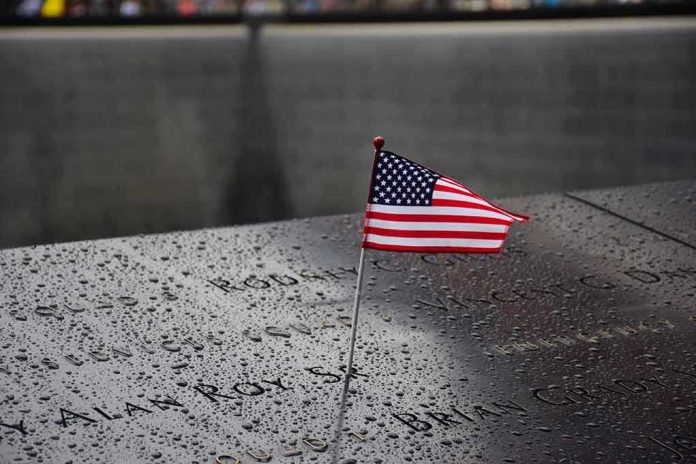
New York’s September 11 memorial observance is built on a single organizing principle: the dead speak through their families. After the early years of official addresses and political pageantry, the National September 11 Memorial and Museum formalized a no-speeches practice to keep the event from becoming a partisan performance. In 2012, organizers publicly said the commemoration would feature no political speeches and that the reading of victims’ names by their relatives would be the exclusive focus—a rule set to protect the ritual’s moral center from being pulled into the centrifugal force of contemporary politics. Over time, coverage has described this as a standing rule: politicians may attend but not speak; the gathering is intentionally nonpolitical.
This is not a minor procedural detail; it is the design of the ceremony. Public grief rituals become meaningful because they establish guardrails—what is said, by whom, and to what end—and then they defend those guardrails across election cycles. By disallowing official addresses, Ground Zero constrains the incentives of any sitting official to leverage the day’s solemnity for broader political messaging, however anodyne the prepared text might be. That constraint is the point.
Trump’s change of venue and what reporting actually shows
In the run-up to the 25th anniversary, reporting from multiple outlets indicated President Trump initially planned to attend Ground Zero but wanted to deliver remarks; when told the event bars speeches, plans shifted. The New York Times, citing individuals familiar with the planning, reported that he would mark the anniversary at the Pentagon rather than attend the Ground Zero ceremony “in part because he wanted to deliver a speech and the annual event has long barred remarks”. Other coverage echoed the same basic account: Ground Zero was off-limits to political speaking; the Pentagon was not, and thus became the venue where the president could address the nation as commander in chief.
None of this is unprecedented. Presidents have long spoken at the Pentagon observance; Trump did so in earlier years as well, in keeping with the Department of Defense’s own memorial traditions. That the White House opted for the setting that accommodates formal remarks is consistent with the institutional logic of both ceremonies—New York’s is a family-centered roll call of the lost; the Pentagon’s is a military observance where presidential and senior defense officials’ statements are integral to the program.
The mechanism: how commemorative rules shape presidential behavior
Ritual rules act like institutional vetoes that reorder political incentives. A president facing a no-speeches constraint at Ground Zero has three options: attend silently among dignitaries and families; attend separate, adjacent events in the city; or shift the fulcrum of presidential observance to a venue that welcomes formal remarks. The third option maximizes the White House’s communications objectives without overtly challenging the New York memorial’s norms. In practice, that is what happened: the president honored the day at the Pentagon, where he could speak, instead of Ground Zero, where he could not.
For planners, the upside of constraint is credibility: families and the public can trust that the Ground Zero commemoration will not be bent to the needs of whoever holds office. For presidents, the upside of choosing the Pentagon is control: message, staging, and security can be aligned with national-level priorities and the commander-in-chief role. The friction is structural, not personal.
Where the genuine disagreement lies—and where it doesn’t
The substantive dispute is not over whether the Ground Zero ceremony bars political remarks; that rule has been on the public record for years and is widely reported across ideologically varied outlets. Nor is there a meaningful clash over whether presidential remarks at the Pentagon are appropriate; they are customary and documented across administrations. The only live question is interpretive: should a president attend Ground Zero even without a speaking role?
Reasonable people land differently. Some argue a president’s physical presence at Ground Zero, speech or not, signals national unity and respect for New York families. Others counter that splitting time or staging parallel events risks politicizing the day by turning attendance itself into a proxy for partisan narratives. What the evidence supports is straightforward: this year’s choice tracked the long-standing design of the two ceremonies. The New York commemoration maintained a speech-free ritual, and the president delivered remarks at a venue built to receive them.
How we got here: from improvisation to institutional norm
In the first decade after the attacks, the balance between official speaking and family-centered remembrance varied. By the early 2010s, New York’s organizers settled the question by codifying silence from politicians; the Atlantic and other analyses chronicled the emerging ethic of “the politics of silence,” where restraint by officeholders was reframed as a mark of respect, not abdication. That decision aligned with a broader maturation of 9/11 observances nationally: Patriot Day proclamations, service initiatives, and site-specific rituals each found their own grammar—who speaks, who reads names, who lays wreaths—and then replicated it year after year across changing administrations. Institutions built muscle memory; that stability is why these commemorations still carry weight.
Trump skips Ground Zero’s 9/11 anniversary ceremony after speech ban, choosing the Pentagon as travel plans also shape decision. https://t.co/Ay6oQbxWXd
— Newsradio Savannah (@newsradiosav) August 28, 2026
What it means going forward
Expect the Ground Zero rule to endure. Once a memorial establishes a core ritual—here, the reading of names absent political speeches—abandoning it invites exactly the politicization the rule was meant to prevent. Expect presidents to continue honoring the day at venues aligned to their role and message discipline—the Pentagon for national-security framing, Shanksville for valor and civilian courage, New York for solidarity through presence rather than podium. And expect the same interpretive skirmishes every milestone year: was the choice of venue respectful or opportunistic? The durable answer comes not from rhetoric but from design. The architecture of these rituals already tells us how they are meant to work; leaders reveal their priorities by how closely they work within that architecture.
Sources:
reddit.com, nypost.com, nj.com, independent.co.uk, democrats.senate.gov, northjersey.com, dnes.bg, nytimes.com