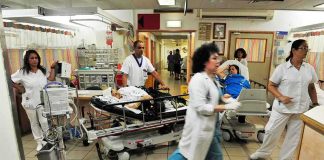
When frightening local anecdotes collide with national datasets, the only durable guide is scale: large, well-controlled evidence consistently shows COVID-19 vaccination in pregnancy does not raise the risk of stillbirth and, in several analyses, is associated with lower risk. The Fresno lawsuit and similar narratives should be evaluated on their documents and data, but they do not overturn what rigorous studies and public health surveillance have already established.
The Short Version
- Multiple large cohort studies and meta-analyses find no increased stillbirth risk from COVID-19 vaccination in pregnancy; several report a reduction in risk.
- California’s health department reported no significant statewide rise in stillbirths after vaccine rollout and no stillbirth certificates listing vaccination as a cause as of late 2022.
- COVID-19 infection itself is a known risk factor for adverse pregnancy outcomes, including stillbirth; vaccination mitigates infection risk.
- Local claims of sudden spikes demand chart-level verification and exposure-adjusted analysis; litigation assertions alone are not causal evidence.
How to judge a dramatic local claim against population-scale evidence
Claims of abrupt spikes in adverse pregnancy outcomes tend to surface after major immunization campaigns because temporal proximity is easy to see in a ward; causality is not. In obstetrics, causal inference requires denominator data (how many vaccinated pregnancies), careful confounder control (age, comorbidities, infection waves), and standardized outcome definitions. When those methods are applied at scale, the pattern is consistent: vaccination in pregnancy is not associated with higher stillbirth risk, and several studies show a statistically significant reduction, likely mediated by protection against maternal SARS-CoV-2 infection—a risk factor for stillbirth in its own right.
California’s public health authorities, looking across the state rather than a single unit, reported no significant increase in stillbirths after vaccine introduction and said no stillbirth certificates listed vaccination as a cause as of November 2022. That does not adjudicate what happened inside any one hospital on any one month; it does establish that if there was a large, vaccine-driven effect, it did not manifest at the population level where it would be most visible.
What the strongest studies show about vaccination and stillbirth
Two complementary lines of evidence carry the most weight. First, population-based cohort studies tracking hundreds of thousands of pregnancies have compared outcomes by vaccination status while adjusting for confounding. A widely cited Canadian analysis found a reduction in stillbirth risk among vaccinated individuals, with an adjusted hazard ratio of 0.65—an effect consistent with the hypothesis that preventing maternal COVID-19 reduces downstream obstetric harms. Second, meta-analyses aggregating multiple cohorts and designs converge on the same conclusion: no increase in stillbirth and, in pooled estimates, a modest reduction (odds ratio around 0.85). These analyses encompass diverse health systems and vaccination timings, which strengthens external validity.
Those results align with clinical guidance from obstetric and public health bodies. The American College of Obstetricians and Gynecologists advises that available evidence does not link COVID-19 vaccination in pregnancy to pregnancy loss or stillbirth and may reduce severe maternal morbidity and perinatal complications. The CDC’s guidance likewise summarizes data from studies including more than a million pregnant people with no signal of increased stillbirth risk from vaccination.
Why COVID-19 infection—and not vaccination—tracks with higher stillbirth risk
Severe maternal respiratory infections have long been associated with adverse obstetric outcomes. SARS-CoV-2 infection increases risks of preterm birth and stillbirth through pathways that include maternal hypoxemia, placental inflammation, and vascular injury; smaller studies and case series have documented placental malperfusion and thrombotic lesions after infection. California’s pregnancy guidance reflects this: infection is a risk factor for preterm and stillborn delivery; vaccines lower the chance of severe disease. In that light, the most coherent epidemiologic picture is that vaccination, by reducing infection severity and frequency, indirectly reduces stillbirth risk—a mechanism consistent with the observed protective associations in cohort and meta-analytic results.
This does not deny that rare, serious adverse events can follow vaccination; myocarditis in young males, for example, is a known, uncommon risk. But rate, mechanism, and clinical profile matter. The background stillbirth rate, the timing of infection waves, and the share of pregnancies vaccinated must be considered together. Absent that scaffolding, a visually dramatic cluster can mislead.
How a hospital-level spike should be investigated
When a unit reports a sudden rise—say, moving from an expected single-digit monthly count to several dozen—the correct response is a structured epidemiologic review, not inference by proximity. Essential steps include: verifying case definitions and gestational-age thresholds; auditing coding and documentation changes; reconstructing monthly denominators (total births and total vaccinated pregnancies) to compute rates with confidence intervals; time-aligning with community infection surges; and stratifying by maternal risk factors and trimester of vaccination. Only then can one test whether an apparent cluster exceeds statistical expectation and whether vaccination status independently predicts risk after adjusting for confounders.
Court filings can surface leads—policy memos, data extracts, timelines—but they are not, by themselves, causal analyses. If litigation uncovers internal data showing exposure-adjusted elevations with dose–response patterns and biologic plausibility, that would merit urgent, independent replication. Until then, statewide and multinational datasets remain the higher-order evidence.
The available CDC evidence does not establish that COVID-19 vaccination causes stillbirth; a large Vaccine Safety Datalink study found no association.
— John F Kenndy (@JohnfKennedy218) October 6, 2026
What this means for patients, clinicians, and policymakers
For patients: the preponderance of rigorous evidence supports vaccination during pregnancy as safe with respect to stillbirth and likely protective by lowering the risk of severe COVID-19. Decisions should be individualized, but fear driven by isolated anecdotes conflicts with the best-available data.
For clinicians: keep the discipline of causal inference at the bedside—document exposures precisely, report serious events to surveillance systems, and counsel using risk ranges anchored in cohort and meta-analytic estimates rather than single-institution stories. If a local signal appears, convene a rapid review with obstetrics, epidemiology, and pathology to test it against denominators and contemporaneous infection dynamics.
Bottom line
The claim that COVID-19 vaccination caused a surge in stillbirths runs against the grain of large, methodologically sound studies and statewide surveillance. COVID-19 infection increases obstetric risk; vaccination reduces infection risk and, in several analyses, correlates with fewer stillbirths. If a hospital truly experienced an extreme cluster, the path to clarity is rigorous, exposure-adjusted analysis and independent verification—not assumption by association. Until such evidence emerges, the weight of the data stands: vaccination in pregnancy does not raise stillbirth risk and may lower it.
Sources:
reuters.com, factcheck.afp.com, cdc.gov, cdph.ca.gov, link.springer.com, ncbi.nlm.nih.gov