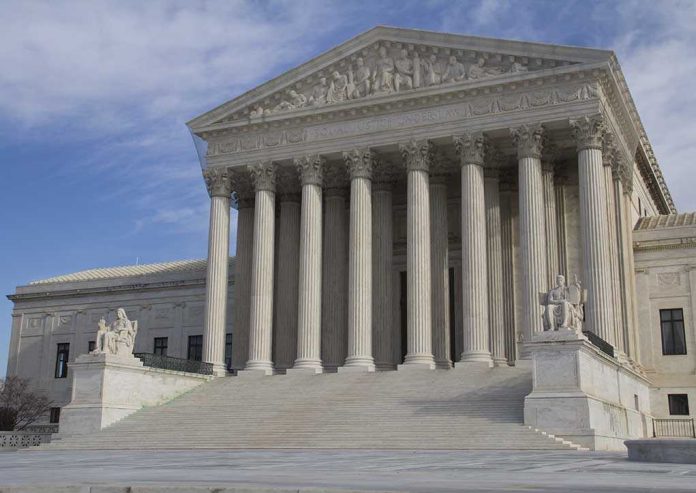
The Supreme Court’s birthright citizenship ruling keeps automatic citizenship for children of illegal and temporary migrants in place, and Scott Jennings says that “abomination” hands long‑term power to China and other foreign interests.
Story Snapshot
- The Supreme Court struck down President Trump’s order to limit birthright citizenship and reaffirmed that almost anyone born on U.S. soil is a citizen.
- Scott Jennings calls the ruling an “abomination,” warning it rewards illegal immigration and commercial “birth tourism” schemes involving wealthy Chinese nationals.
- Three conservative justices dissented, saying the Court misread the Fourteenth Amendment and twisted it away from its original purpose after the Civil War.
- The decision cements 150 years of precedent, making change nearly impossible without a new constitutional amendment or a future Court shift.
Supreme Court Blocks Trump Order and Reaffirms Broad Birthright Citizenship
The Supreme Court’s decision in Trump v. Barbara directly rejected President Donald Trump’s executive order that tried to limit birthright citizenship to children of citizens and lawful permanent residents. Chief Justice John Roberts wrote for a six‑justice majority that children born in the United States to parents who are here illegally or only on temporary visas are still “subject to the jurisdiction” of the United States and therefore citizens at birth under the Fourteenth Amendment. This means automatic citizenship continues for almost all babies born on American soil, with only narrow exceptions such as children of foreign diplomats.
The ruling leans heavily on the 1898 case United States v. Wong Kim Ark, which said the Fourteenth Amendment simply wrote into the Constitution the old rule that birth in the country makes you a citizen, unless your parents are exempt like ambassadors or enemy soldiers. The Court refused to carve out any new exception for children of illegal migrants or short‑term visitors, despite the Trump administration’s argument that these parents lack “direct and immediate allegiance” to the United States. Justice Brett Kavanaugh agreed the order was unlawful under federal law, while the three other conservatives—Clarence Thomas, Samuel Alito, and Neil Gorsuch—would have let Trump’s restrictions stand.
Conservative Dissents and Jennings’ Charge That the Ruling Is an ‘Abomination’
Justice Samuel Alito’s dissent said the Court made a “serious mistake” by refusing to revisit how “subject to the jurisdiction” should apply to modern mass migration and temporary visitors. Justice Clarence Thomas went further, warning that the Fourteenth Amendment has been “repurposed for political projects,” far beyond its original goal of protecting formerly enslaved Americans after the Civil War. Their view echoes a long‑running conservative argument that the amendment was never meant to grant citizenship to children of people who violate immigration law or only pass through the country briefly.
Conservative commentator Scott Jennings picked up that theme, calling the ruling an “abomination” on his show and saying it badly harms the United States. Jennings argued the Court chose a reading of the Constitution that rewards illegal immigration and locks in a system where foreign nationals can gain powerful rights for their children simply by crossing the border or landing at an American airport. He framed the decision as a blow to national sovereignty and the rule of law, suggesting it undercuts President Trump’s effort to restore control over who becomes part of the American political community.
Birth Tourism, China, and Fears of Long‑Term Foreign Influence
Jennings pointed to federal prosecutions for visa fraud tied to “birth tourism” schemes, where companies arrange for wealthy foreign women, especially from China, to travel to the United States late in pregnancy so their children are born here and gain U.S. passports. These cases show that birthright citizenship is not only a concern at the southern border but also a business model for people who exploit American law for long‑term advantages. Under the Supreme Court’s ruling, those children keep full citizenship, including future voting rights and access to government benefits, no matter how their parents gamed the system to enter the country.
https://t.co/8eCWrCQh2h
Scott Jennings Calls Birthright Citizenship Ruling by SCOTUS an ‘Abomination’ That Benefits China pic.twitter.com/Jrlrqnu0db— William Kornblum (@KornblumWi27974) July 1, 2026
Jennings argues this setup “benefits China” and other rival nations by letting their citizens create American‑born children who can later move freely, own property, and influence politics in the world’s leading republic. While public reporting does not yet give detailed statistics for how many such cases involve Chinese nationals or how large the birth tourism industry is overall, the prosecutions he cites highlight a policy gap that the Court’s ruling leaves wide open. For many conservatives, this looks like a textbook example of globalist rules and weak borders colliding with a Constitution that elite lawyers refuse to reinterpret for today’s threats.
A Century of Precedent and What It Means for Future Fights
Roberts and the majority stressed that the Fourteenth Amendment’s citizenship rule has been applied the same way for over 150 years, and said changing it would require either a new constitutional amendment or a radical break from long‑standing Supreme Court decisions. Legal groups such as the American Civil Liberties Union hailed the decision as a defense of “fundamental American values,” saying it proves no president can take away citizenship rights by executive order. Academic writing also treats broad birthright citizenship as settled law since Wong Kim Ark, and this latest ruling will be taught as the modern capstone on that line of cases.
For Trump supporters and many constitutional conservatives, that stability now feels like a brick wall. Every major attempt since the 1990s to narrow birthright citizenship—through laws or executive orders—has been struck down or blocked by courts pointing back to the same Fourteenth Amendment language. The Trump v. Barbara ruling signals that even a Supreme Court reshaped by Trump’s own nominees is not ready to depart from that history. That leaves critics like Jennings calling for deeper reforms, such as an amendment, tighter voter ID laws, and aggressive enforcement against birth tourism, to stop what they see as a slow erosion of borders and of the meaning of American citizenship itself.
Sources:
constitutioncenter.org, bbc.com, youtube.com, aclu-nh.org, cfr.org, apnews.com, nbcnews.com, npr.org, fam.state.gov, aclu.org, supremecourt.gov, americanimmigrationcouncil.org, law.virginia.edu