
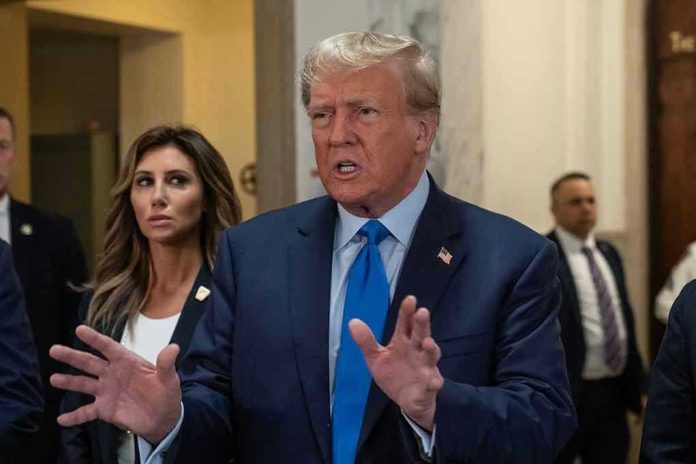
The most ruthless comic on television is about to host Hollywood’s big night and has sworn off the one joke that used to be a standing ovation: Donald Trump.
Story Snapshot
- Nikki Glaser returns to host the Golden Globes after a breakout year roasting Hollywood.
- She has deliberately ruled out Trump jokes and overt politics from her monologue.
- She is also shelving once‑easy targets like Ozempic, plastic surgery, and “America’s sweetheart” Julia Roberts.
- Her approach reflects a larger shift away from partisan lecturing and toward crowd‑pleasing, common‑sense comedy.
A roast assassin decides to holster her sharpest political weapon
Nikki Glaser built her reputation by saying the thing everyone else in the room was afraid to say, from Comedy Central roasts to Netflix’s “Roast of Tom Brady.” Yet as she steps back onto the Golden Globes stage, she is doing something most late‑night hosts and coastal comics refused to do for nearly a decade: she is taking Donald Trump off the table entirely and promising viewers a politics‑light show focused on Hollywood, not Washington.
Glaser is not pretending politics do not exist; she is choosing not to turn a prime‑time entertainment broadcast into another campaign rally in disguise. According to her interviews, even when comedy legend Steve Martin sent her a Trump‑related political joke, she judged it as going “too far” for the Globes and signaled it would almost certainly never make it to air. That restraint matters in an era when too many big platforms confuse partisan dunking with courage.
From Ozempic one‑liners to a new rulebook on what’s “done”
Glaser’s last outing as the first solo female Golden Globes host leaned hard on Ozempic and GLP‑1 weight‑loss jokes, calling the show “Ozempic’s biggest night” and skewering a fad Hollywood could not stop chasing. Those lines landed so well they helped earn her the return invite, yet she now says Ozempic is “done” and no longer worth revisiting. From a conservative common‑sense lens, that sounds like respect for the audience rather than addiction to the same safe applause lines.
Her self‑editing goes far beyond diet drugs. Glaser describes a writers’ room over Christmas where colleagues flagged plastic surgery and facelift jokes as off‑limits because they read as broad body‑shaming in a room where nearly everyone has had work done. She listened. That response is not “cancel culture”; it is an acknowledgement that relentless mockery of aging faces in an industry built on vanity has gotten cheap and lazy. Strong comedy requires sharper targets than the insecurity of people whose careers already depend on their appearance.
Julia Roberts, test audiences, and learning where the crowd’s line really is
Glaser’s new standards are not theoretical. She tested her monologue in Los Angeles clubs, floating material about Julia Roberts and immediately seeing the crowd recoil. The message was unmistakable: you cannot casually take swings at a beloved figure many still see as “America’s sweetheart.” Rather than double down for edginess points, she re‑calibrated, recognizing that an awards host needs the room’s trust more than one extra viral clip.
This kind of field‑testing reflects a professional who understands the difference between a roast, where everyone volunteers to be skewered, and a workplace party, where most attendees never asked to be the punchline. Glaser has said she reserves true meanness for roasts and treats the Globes as a “covert mission,” nudging stars into slight discomfort without poisoning the atmosphere. That attitude aligns more with traditional American decency than with the nihilistic “burn it all down” energy some past hosts celebrated.
Why a politics‑free monologue speaks to a broader cultural fatigue
Award shows spent the Trump years turning opening monologues into extended political sermons, usually from one ideological side, while ratings kept sliding. Viewers who tuned in to relax got told, again, that half the country was the punchline. Glaser’s explicit promise not to mention Trump or dive into partisan material signals that at least some producers now hear the message that middle‑of‑the‑road audiences are tired of being collateral damage in someone else’s culture war.
From an American conservative and common‑sense perspective, comedy that stops short of demonizing political opponents is not weakness; it is basic respect. Glaser still plans to joke about Hollywood excess, fashion misfires, and the odd mustache choice—she famously targeted Timothée Chalamet’s facial hair before learning it was for a role and reconsidering that line of attack later. The difference now is that the bite is pointed at behavior and trends, not at tens of millions of voters watching from home.
Sources:
The Express – Nikki Glaser’s controversial Golden Globes material and evolving joke limits
Fox News – Golden Globes host Nikki Glaser names one Hollywood star you cannot make fun of
The Daily Beast – Steve Martin sent Nikki Glaser a political joke that went too far
YouTube – Golden Globes host Nikki Glaser vows not to mention Trump