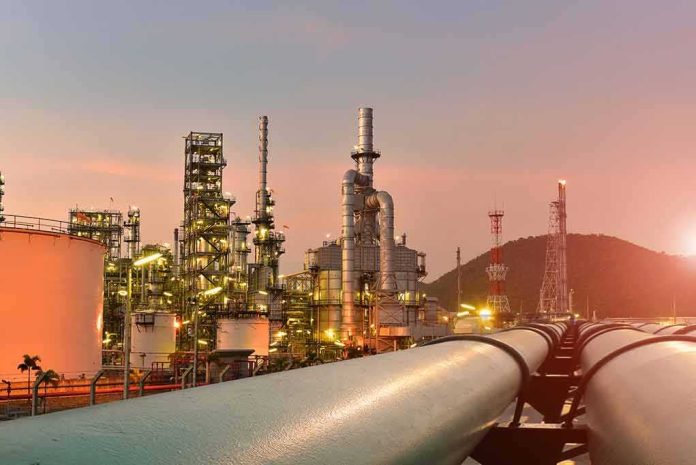
Targeting refineries is not symbolic warfare; in Russia’s case, Ukraine’s sustained drone campaign has repeatedly forced major plants offline, triggered regional fuel shortages, and pushed Moscow into diesel-export controls—clear, documented effects at the source of supply—while the leap to a proven, quantifiable global diesel shortage remains asserted more often than it is measured.
The Short Version
- Ukrainian strikes have disabled significant Russian refining capacity, with named plants shut or curtailed for months, and queues and rationing reported across multiple regions.
- Russia responded with emergency measures, including a nationwide diesel export ban to protect domestic supply, underscoring the real disruption inside its fuel system.
- Independent estimates and geolocated reporting indicate material impairment to Russia’s product output and logistics, not isolated “nuisance” hits.
- Evidence for a confirmed, durable global diesel shortage directly attributable to these strikes is thinner than the evidence for Russian domestic stress; global metrics are discussed more than demonstrated in the record at hand.
What the strikes are doing inside Russia’s fuel system
When a refinery goes dark, the consequences cascade: crude stops flowing into distillation units; secondary units—hydrocrackers, reformers, desulfurization trains—idle; and the regional product slate tightens quickly, especially for transport fuels. That is precisely what the reporting shows across multiple Russian sites. Reuters detailed strikes on major, named facilities—Moscow’s refinery among them—describing damage significant enough to keep the plant offline for at least six months, with knock-on shortages and queues at filling stations far from the front line. Officials weighed emergency curbs, then moved to outright diesel export restrictions to preserve supply at home. This is not the footprint of a “pinprick” campaign; it is systemic strain.
Importantly, the disruptions were not confined to one region or a single operator. Separate Reuters dispatches describe “virtually all major oil refineries in central Russia” halting or scaling back after waves of drone attacks, followed by deepening shortages reported in additional regions as the strikes continued. Plants at Orsk, Ilsky, Saratov, TANECO, and TAIF-NK appear in the tally, as does the Ust-Luga complex that handles product exports—evidence of both inland processing pressure and coastal logistics exposure. The pattern is cumulative: repeated hits, prolonged repairs, and emergency policy moves to triage domestic demand.
Mechanism: why refinery hits bite faster than crude outages
Crude oil is globally fungible; refined products are less so, especially when regional specifications (sulfur content, cold flow properties) and pipeline topologies constrain substitution. Refineries are optimized for a given crude slate and product mix; taking a catalytic cracking unit or hydrotreater out of service can slash diesel yield even if crude distillation nominally restarts. Fire damage to control systems and heat exchangers compounds downtime, as spares and specialist crews are not easily surged under sanctions and wartime conditions. It is therefore plausible—and consistent with the record—that concentrated strikes on Russia’s refineries create sharper local product shortages than an equivalent volume of upstream crude disruption would suggest. Independent estimates carried by Reuters argued that roughly a quarter of Russia’s c. 7 million bpd refining capacity was disrupted at points in the campaign. While such figures are estimates, the observable policy response—diesel export bans—aligns with material impairment.
The logistics angle matters as much as the physics. CNN’s geolocated review identified around 150 strikes on fuel trucks, tankers, and other nodes, which degrade the last mile even where plants limp along. Diesel is the workhorse of heavy transport and agriculture; when railcar routings or depot operations seize, shortages feel worse on the ground than aggregate balance sheets imply. That is how you get the reported queues and rationing: not only less fuel made, but also less fuel moved where it is needed in time.
Intent and counter-claims: degrading war capacity versus “hurting the world”
Kyiv has been explicit about its objective: hit energy and logistics nodes to sap Russia’s capacity to wage war and to reduce revenue that underwrites it. Ukrainian officials named the refineries and related infrastructure they targeted—from Ryazan and Perm to Slavyansk, Yaroslavl, and deep Siberian facilities—framing the campaign as a long-range extension of interdiction doctrine. That operational rationale is well-sourced. What is not equivalently sourced in the record is the political conclusion sometimes drawn from it—that these strikes have already caused a demonstrable, quantifiable global diesel shortage. The materials here show Moscow’s domestic squeeze and policy reactions clearly; they do not, by themselves, settle the global causality claim.
It also bears noting that Russia retains levers to adapt: diverting seaborne imports of refined products, reallocating domestic flows, and imposing temporary export curbs to stabilize priority regions. Those measures do not erase the damage, but they blunt and redistribute it. That helps explain why the strongest, most concrete evidence is local—queues, price spikes, bans—while the cross-border effects are noisier, competing with other drivers in global markets.
Where the evidence is strongest—and where it is not
The strongest strand is plant-level and policy-confirmed: Reuters’ reporting on named facilities forced offline, the Moscow refinery’s prolonged shutdown, widespread regional shortages, and Deputy Prime Minister Alexander Novak’s contemplation—followed by enactment—of a diesel export ban. Those are verifiable markers of stress inside Russia’s system. Supplemental analysis pointing to a quarter of national refining capacity disrupted supports scale, though as with any wartime estimate, precision is hard-won. The cumulative picture is persuasive: Ukraine’s strikes are materially degrading Russian refining and distribution.
The weaker strand concerns global translation. Commentaries warn of a potential “fuel shock,” and analysts describe tightening product balances; yet the record presented here does not anchor that with hard, attributable global metrics—diesel crack spreads by benchmark, freight rate behavior, or time-series price moves that isolate refinery-strike effects from concurrent shocks (Middle East supply risks, maintenance seasons in Asia, or policy shifts). A reader can reasonably infer upward pressure, but “global shortage caused by Kyiv’s strikes” overstates what these sources alone can prove.
How this fits the longer history of striking fuel in war
Modern conflicts routinely target refineries, depots, and pipelines not to “run the enemy out of fuel overnight,” but to force costly reallocations, impose rationing choices, and strain legitimacy at home. The Ukraine-Russia case follows that script with contemporary means: low-cost, long-range drones substituting for cruise missiles, multiplied across a wide geography. The operational effect is ratcheting rather than singular—each outage compounds maintenance backlogs, each fire delays a restart, each export ban concedes friction in the system. That is why, months into the campaign, you see both the technical record of damaged units and the administrative record of supply triage in Moscow.
What to watch next to judge global impact
Three signals would convert conjecture into confirmation. First, facility-by-facility yield data—how much diesel output, specifically, dropped at the damaged refineries and for how long. Second, trade flow shifts in customs and tanker-tracking data: if Russia’s diesel exports remain suppressed despite domestic stabilization, counterparties must source elsewhere, which should show up in higher Atlantic Basin cracks and rerouted cargoes. Third, time-aligned market series from Platts or Argus and official agencies: if diesel benchmarks spike and remain elevated in sync with documented Russian outages, the attribution case strengthens. Absent those, the prudent read is firm on Russian shortages, cautious on global scarcity.
Bottom line
Ukraine’s refinery campaign has imposed real, repeated costs on Russia’s fuel system—downtime at named plants, product shortages across regions, and a policy response that reached for diesel export bans. Those facts are well supported. Claims that the strikes have already created a worldwide diesel shortage, by contrast, run ahead of the demonstrated market data in the record here. The strategic effect is therefore clear at the source and plausible beyond it, but global proof still rests on measurements yet to be furnished.
Sources:
thegatewaypundit.com, reuters.com, themoscowtimes.com, cnn.com