The Trump administration’s aggressive border crackdown has seized 369 million lethal doses of fentanyl in a single year, but Drug Czar Sara Carter warns the real battle is just beginning as cartels scramble to protect their profit margins.
Story Snapshot
- Sara Carter, confirmed as Drug Czar in January 2026, reports record seizures of 47 million fentanyl-laced pills and 100,000 pounds of powder under Trump’s renewed border enforcement
- The administration designated fentanyl and its precursor chemicals as weapons of mass destruction, targeting China’s chemical supply chain to Mexican cartels
- Carter declared at the UN that “days of cartels freely operating in the Western Hemisphere are coming to an end” through enhanced interdiction and international cooperation
- Approximately 80,000 American lives were lost to overdoses last year, many from drugs laced with fentanyl without users’ knowledge
From Journalist to Drug Warrior
Sara Carter’s journey from conservative investigative journalist to the nation’s top drug policy official represents an unconventional but strategic choice by President Trump. Her confirmation on January 6, 2026, positioned someone known for exposing government failures at the helm of America’s response to a crisis claiming 80,000 lives annually. Carter inherited a fentanyl epidemic fueled by Chinese chemical manufacturers supplying Mexican cartels with precursor materials, which criminals then process into pills and powder that flood across the border. Her mandate is clear: dismantle the supply chain that turns legitimate chemicals into weapons of mass destruction.
The Chemical War Against America
Carter frames the fentanyl crisis not as a drug problem but as a chemical war waged by profit-driven cartels against unsuspecting Americans. Speaking at the UN Commission on Narcotic Drugs in Vienna on March 9, 2026, she outlined how cartels adulterate cocaine, methamphetamine, and counterfeit pills with fentanyl to maximize profits, despite knowing it kills their customers. The economics are ruthless: fentanyl is cheap to produce when precursor chemicals flow freely from China, and potency means smaller shipments yield massive street value. This business model thrives on addiction and indifference to human life, characteristics Carter emphasizes to justify treating fentanyl as a weapon rather than a controlled substance.
The Trump administration’s designation of fentanyl as a weapon of mass destruction carries legal and diplomatic weight. It enables authorities to target the entire supply chain, from Chinese chemical plants to Mexican cartel labs to border smuggling routes, with tools typically reserved for national security threats. Carter’s April 9 interview with the Washington Times detailed how this approach is dismantling cartel operations through coordinated international pressure, particularly on China to tighten export controls on dual-use chemicals. The strategy acknowledges that border seizures alone cannot solve the problem when precursor chemicals remain globally accessible.
Record Seizures and Border Reality
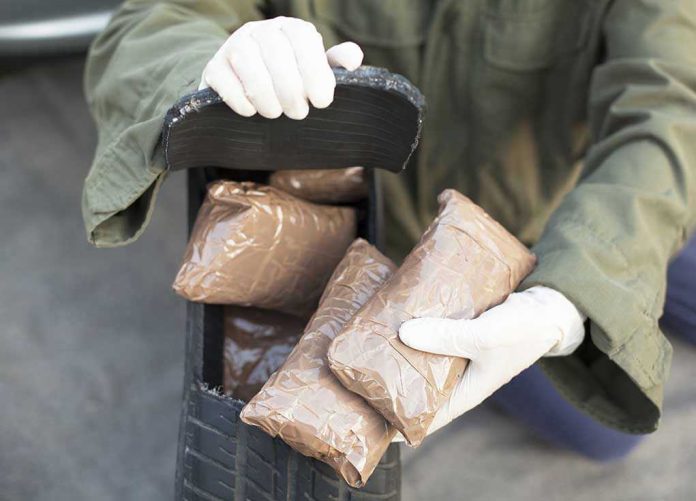
The numbers Carter cites reflect both enforcement success and the staggering scale of the threat. Federal authorities seized 47 million fentanyl-laced pills and 100,000 pounds of powder in the year preceding her UN remarks, totaling 369 million lethal doses intercepted before reaching American streets. These figures demonstrate enhanced border security measures under Trump’s renewed focus on immigration and drug enforcement, building on policies from his first term that critics argue were abandoned during the Biden years. Yet even these historic seizures represent only the drugs authorities caught, raising questions about how much still gets through and whether cartels will adapt by diversifying trafficking methods or revenue streams as pressure intensifies.
Carter’s public statements declare the end of cartels’ free operation in the Western Hemisphere, positioning U.S. alliances and rule of law against criminal networks that exploit regulatory gaps. Her messaging emphasizes that lawful nations possess overwhelming advantages when they coordinate, from intelligence sharing to sanctions on precursor chemical suppliers. The administration’s focus on China is particularly pointed, linking Beijing’s lax export controls to American overdose deaths and demanding accountability. This approach aligns geopolitical competition with domestic security, framing cooperation on fentanyl precursors as a litmus test for China’s willingness to act responsibly on the world stage.
What the Numbers Mean for Families
Behind the seizure statistics and diplomatic rhetoric are 80,000 American families who lost loved ones to overdoses in the past year. Fentanyl’s potency makes it uniquely deadly; users often have no idea their cocaine or prescription pills contain a substance lethal in doses measured in milligrams. Carter’s background as a journalist investigating government failures gives her credibility when she speaks about protecting citizens from threats authorities previously downplayed. Her role requires balancing enforcement statistics that demonstrate progress with the sobering reality that tens of thousands continue dying, demanding both accountability for past policy failures and evidence that current strategies will produce different outcomes.
The long-term implications of Carter’s strategy depend on whether disrupting precursor supplies and enhancing border enforcement truly limits cartel profits or merely forces adaptation. History suggests criminal enterprises innovate under pressure, potentially seeking alternative income sources or smuggling routes if traditional fentanyl trafficking becomes less profitable. Carter’s warning about cartels needing to protect margins implies recognition that enforcement creates economic pressure, though whether that pressure leads to diversification, retreat, or escalation remains uncertain. The administration’s bet is that sustained international cooperation and source-country accountability will make fentanyl trafficking unsustainable, but cartels have proven resilient against previous crackdowns.
The Path Forward
Carter’s tenure as Drug Czar will be measured by whether overdose deaths decline and cartel operations genuinely contract. The tools are in place: weapons of mass destruction designation, record border seizures, international pressure on China, and public messaging that frames fentanyl as a national security threat rather than a public health challenge alone. The Trump administration’s approach reflects conservative principles of border security, law enforcement, and holding adversaries accountable for enabling harm to Americans. Yet the fentanyl crisis emerged from complex global supply chains, addiction vulnerabilities, and profit incentives that won’t disappear through enforcement alone, requiring sustained commitment and willingness to adapt as cartels inevitably respond to pressure.
Sources:
Remarks by Director Carter at the United Nations Commission on Narcotic Drugs
Watch: Sara Carter, Dir. Office of National Drug Control Policy, sits with Alex