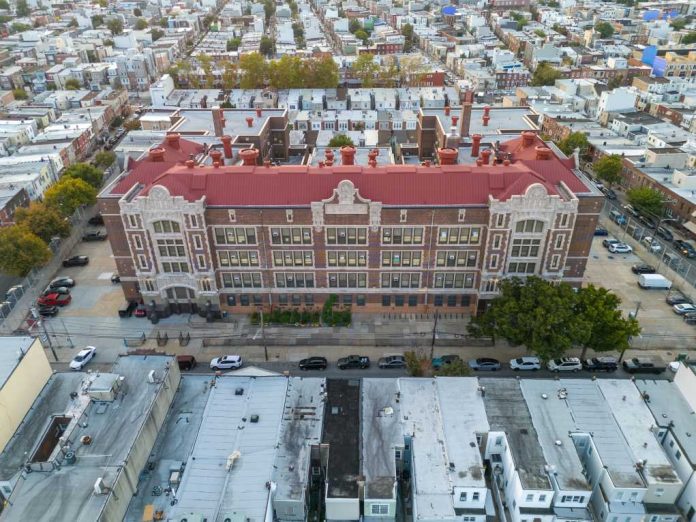
When a small, high‑need school vanishes overnight, what looks like a single local failure is usually the visible edge of a much larger system under financial and moral strain.
Key Points
- Saint Brigid Academy in San Francisco abruptly closed in summer, ending a specialized program for neurodivergent and gifted students just weeks before classes were due to begin.[2][4][7][8]
- The Archdiocese of San Francisco attributes the closure to “lack of funds” after a financial review, amid declining enrollment and an expensive microschool model.[2][8]
- A separate roughly $395–400 million clergy sex‑abuse settlement was announced at the same time, fueling public anger and confusion about whether abuse payouts are squeezing Catholic school budgets.[1][2][4][8][12]
- The case fits a national pattern: Catholic schools have been closing at an accelerated rate for decades, driven by enrollment drops, rising costs, and competition from charters and other options.[12][14][17]
- Families are left with significant educational disruption and emotional fallout, while key financial and governance details remain opaque and largely untested by independent audit.
Saint Brigid Academy: What Closed, and How
Saint Brigid Academy occupied a distinctive niche in San Francisco’s crowded education landscape. Housed in a 138‑year‑old Catholic school campus, it operated as a K‑8 “micro‑Catholic school” with a 4‑to‑1 student–teacher ratio and a mission explicitly focused on neurodivergent and gifted children. Tuition for this highly individualized program was about $20,950 per year, positioning it among the city’s more expensive specialized options. Families who chose Saint Brigid were not simply buying smaller classes; they were betting on a setting tailored for children whose learning profiles often fall between the cracks of conventional classrooms.[1][4][7][8][11]
That bet unraveled with remarkable speed. Parents were informed on a Thursday in late June that the school would not reopen in the fall, weeks before the academic year was due to start. The Archdiocese promised that prepaid tuition would be refunded later in the summer, but there was no transition plan in place for students, no gradual wind‑down, and no clear alternative within the Catholic system designed for similar needs. For families of neurodivergent children—who frequently require stability and long‑planned supports—this kind of sudden closure is not merely inconvenient; it is destabilizing.[2][4][8]
The Financial Story the Archdiocese Tells
Formally, the Archdiocese of San Francisco has framed Saint Brigid’s demise as a financial necessity. In a letter to families, Catholic schools superintendent Chris Fisher wrote that “after a thorough review of the school’s finances and after exhausting every available alternative… the school can no longer sustainably operate.” Reporting by the San Francisco Chronicle indicates that enrollment stood at “just over 40 students” in the past year and was projected to fall into the mid‑20s for the coming year. For a school built around extremely low student–teacher ratios and specialized staff, that kind of enrollment base produces fragile economics even with relatively high tuition.[2]
Two structural decisions appear to have raised the stakes. First, the school’s identity as a micro‑school—essentially a deliberately small, intensely personalized environment—locks in higher per‑student costs. Second, the choice to focus on neurodivergent and gifted learners narrows the potential market; many families who need these services also face financial constraints or choose public‑sector special education and charter options. Without endowment‑level philanthropy or substantial diocesan subsidy, the model becomes highly sensitive to relatively small enrollment swings.[7][11][12]
That sensitivity is not unique to Saint Brigid. National data from the National Catholic Educational Association and independent research show that roughly 150 Catholic schools closed in a single recent summer, about 2% of the sector, a closure rate 50% higher than in prior years. Longer‑term analyses suggest an average of around 100 Catholic schools closing annually over six decades, driven primarily by declining tuition revenue as families struggle with costs and as charters and other alternatives compete successfully for enrollment. Saint Brigid’s closure, in this light, looks like part of a structural trend: a small school caught between an expensive model and a shrinking, financially stretched customer base.[12][14][17]
The Abuse Settlement: Separate Case, Linked Consequences
Complicating the narrative—and intensifying public anger—is timing. As Saint Brigid was being closed, the Archdiocese of San Francisco was also finalizing a settlement in the vicinity of $395–400 million to compensate hundreds of survivors of clergy sexual abuse. According to coverage from the Chronicle and other outlets, the settlement addresses decades of abuse claims and involves more than 500 survivors; it is a legal and moral reckoning unrelated to Saint Brigid’s educational operations.[1][2][4][8]
There is no primary evidence tying the school’s closure to a specific finding of mismanagement or liability in that abuse case. The settlement flows from clergy misconduct and institutional responses at the diocesan level, not from Saint Brigid’s staffing or pedagogy. Still, the coincidence of an elite Catholic school shutting down “for lack of funds” at the very moment the Archdiocese must find hundreds of millions of dollars for settlements invites a straightforward question: are abuse payouts indirectly starving school budgets?[1][2]
Across California and the United States, there is evidence that large abuse settlements have strained diocesan and school finances. Reporting on other districts, such as Sierra Sands Unified in the High Desert, has documented schools closing or deferring basic infrastructure repairs because resources were diverted to decades‑old abuse payouts. In the Catholic system, property sales of former schools and parish buildings have become a familiar strategy for meeting settlement obligations. However, what remains missing in Saint Brigid’s case is a transparent accounting: no public financial audit details how much diocesan subsidy the school received, how its budget evolved after conversion to a microschool, or what direct impact the archdiocesan settlement had on support for high‑cost campuses.[2][4][15][20]
Mismanagement or Structural Failure? Weighing the Evidence
Critics and many families interpret Saint Brigid’s closure and the concurrent settlement as signs of broader institutional failure—arguing that the Archdiocese could have planned better, diversified funding, or at least avoided a last‑minute shutdown that left vulnerable students scrambling. It is not hard to understand that view. Catholic school systems have a long history of closing campuses with little notice, and in other cities parents have reacted with fury when letters arrive announcing that a century‑old school will vanish at the end of the year. The emotional charge is magnified when families have paid premium tuition for specialized programs.[1][4][5][6][15][16][19]
Yet when you weigh the specific evidence, the case for targeted “mismanagement” at Saint Brigid is weakly supported compared with the documented structural pressures. We know the school had very small enrollment, a high‑cost instructional model, and a narrow student base. We also know Catholic schools nationally are closing at rising rates for financial reasons, and that dioceses often cite declining enrollment and budget deficits as primary drivers. What we do not have—at least in public—is an internal audit, budget detail, or whistleblower testimony describing concrete missteps such as misuse of funds, ignored warnings, or reckless expansion.[1][2][3][7][8][12][14][17]
On the other side, the Archdiocese’s explanation is conceptually plausible but only lightly evidenced. The superintendent references a “thorough review of finances,” but the Archdiocese has not released that review or opened its books; there is no independent verification of how “exhausting every alternative” was defined or tested. In the absence of transparent data, families reasonably suspect that strategic choices—like conversion to a microschool in 2024, or failure to aggressively recruit and subsidize new students—may have contributed to the collapse. From a governance perspective, the problem is less that mismanagement has been proven, and more that the institution expects trust without disclosure.[2][7][11]
The Broader Pattern of Catholic School Closures
To understand Saint Brigid’s story fully, it has to be set inside a national arc. Catholic schools once educated millions of American children; today only about 6,000 remain, and many operate on thin margins. Multiple forces converge here. Demographically, fewer children are being born in key urban markets. Economically, tuition has risen faster than incomes, eroding the middle‑class base that historically sustained parish schools. Charter schools—publicly funded but independently run—now offer disciplined, mission‑driven environments without tuition, pulling away families who might once have chosen Catholic education.[12][14][17]
Abuse settlements add another layer, especially in dioceses with large historical liabilities. When hundreds of millions are owed to survivors—as justice demands—those funds often come from selling property, diverting reserves, or cutting subsidies to schools and ministries. In this environment, high‑cost, low‑enrollment experiments like microschools for neurodivergent students become financially precarious unless they are backed by dedicated philanthropy or protected as a strategic priority.[3][4]
Impact on Families and Students
The practical consequences for Saint Brigid’s families are stark. Parents who had secured a specialized setting for children with autism spectrum conditions, ADHD, or gifted profiles now must scramble in midsummer to find placements that can replicate small classes, individualized instruction, and an integrated Catholic environment. Public schools may offer special education services but not the same religious formation; secular private programs may provide tailored learning but at comparable or higher cost, with limited seats available. For neurodivergent children, abrupt school changes are associated with increased anxiety, behavioral challenges, and regression in social and academic skills.[4][7][11][14][21]
The closure also ripples through the broader community. Teachers and staff lose jobs; parish life shifts as a school once central to local Catholic identity disappears; and alumni confront the symbolic loss of an institution that carried their memories and stories. Research on school closures more generally has documented economic loss for parents, erosion of community cohesion, and lasting emotional harms, especially when closures are clustered in already‑stressed neighborhoods.[21]
What Transparency and Reform Would Look Like
Saint Brigid’s story points to two practical reforms that could sharpen accountability without pretending that every closure can be avoided. First, dioceses could commit to releasing independent financial audits for any school they close, including enrollment trends, subsidy levels, and the options considered before shutdown. Side‑B style proposals in the research—requests for internal audits, enrollment analyses, and administrator testimony—describe exactly the kind of documentation that would move debate from suspicion to evidence.[2][12][17]
Second, Catholic education leaders could revisit the balance between innovation and sustainability. Microschools for neurodivergent and gifted students meet real needs and can embody the Church’s stated commitment to the dignity of every child. But they require patient capital and explicit protection from short‑term budget shocks, whether driven by enrollment dips or abuse settlements. Without that, families are left to absorb the risk of institutional experimentation.[17]
Where This Leaves Parents Considering Catholic Schools
For parents weighing Catholic schools today, Saint Brigid Academy offers a sobering, but clarifying, case. The sector still provides strong academic outcomes and values‑driven communities in many places, yet its financial foundations are uneven, and its governance structures often handle bad news poorly. Asking hard questions—about enrollment, reserves, diocesan support, and contingency plans—is not cynicism; it is due diligence in a system facing long‑running demographic and financial headwinds.[12][14][17]
In the end, what closed in San Francisco was not only an old building and a microschool experiment, but one more piece of an educational ecosystem struggling to reconcile justice for abuse survivors, economic realities, and the promise of specialized care for children who need it most.
Sources:
[1] Web – Top California private school suddenly shuts down — as shameful $400M …
[2] Web – The Archdiocese of New York is shutting down the St. Brigid School …
[3] Web – St. Brigid School in East Village Put on Block by Archdiocese
[4] Web – Three Brooklyn Diocese Schools Slated to Close, Two Will Merge
[5] Web – A Catholic school with a 138-year history in San Francisco has shut …
[6] Web – Closure of St. Brigid's School brings sadness, memories
[7] Web – Parents Furious At Plans To Close East Village Catholic School
[8] Web – Top California private school suddenly shuts down – Yahoo
[11] Web – Archdiocese celebrates opening of Saint Brigid Academy
[12] Web – More | Saint Brigid Academy
[14] Web – Number of Catholic Schools Closing Climbs 50 Percent from Recent …
[15] YouTube – Five Catholic schools forced to close their doors by end of school …
[16] Web – The Closure Of Catholic Schools Is ‘Devastating,’ Advocates Say : NPR
[17] Web – S.F. Archdiocese abruptly closes 138-year-old school weeks before …
[19] Web – Catholic educators call for reform to buck trend of parish school …
[20] Web – Catholic Elementary School Closure Ahead of Winter Storm
[21] Web – Manhattan students ‘devastated’ about closing Catholic school