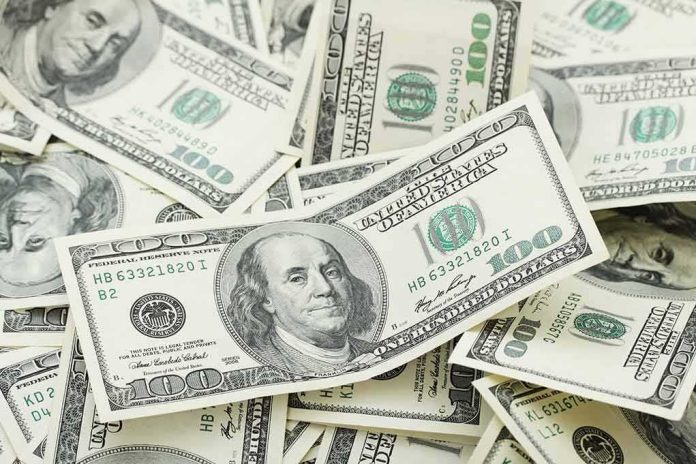
When a sitting president’s signature appears on American currency for the first time in the republic’s 250-year history, the act is simultaneously a design decision, a legal maneuver, and a statement of political identity — and understanding what actually changed, and what didn’t, requires separating the genuinely unprecedented from the merely provocative.
Key Points
- The U.S. Treasury officially announced in March 2026 that President Trump’s signature will appear on new paper currency, marking the first time in history a sitting president’s autograph has been placed on American banknotes.
- The change ends a 165-year tradition of carrying only the Treasury Secretary’s and U.S. Treasurer’s signatures, replacing the Treasurer’s with Trump’s.
- The redesign does not place Trump’s portrait on the bill — a legally important distinction, since federal law (31 U.S.C. § 5114) prohibits depicting a living person on U.S. currency.
- Printing began in June 2026, timed to America’s Semiquincentennial; all new notes printed through mid-2027 are expected to carry the new signature arrangement.
- No significant counter-evidence disputes the core facts; the controversy centers on precedent, legal authority, and the broader political context of the 250th anniversary celebrations.
What the Treasury Actually Announced — and What It Didn’t
On March 26, 2026, the U.S. Department of the Treasury issued Press Release SB0425, confirming that President Donald J. Trump’s signature would appear on future U.S. paper currency alongside that of Treasury Secretary Scott Bessent. The announcement framed the change as a commemorative gesture marking the 250th anniversary of American independence — the Semiquincentennial — and described it as historically appropriate given what the Treasury called Trump’s role as “the architect of America’s Golden Age economic revival.” The language was unambiguous: this was a policy decision, not a proposal.
What the announcement carefully did not do was place Trump’s portrait on the bill. That distinction carries legal weight. Federal statute 31 U.S.C. § 5114 explicitly prohibits the likeness of any living person from appearing on U.S. currency — a prohibition with roots going back to post-Civil War legislation enacted in 1866, partly in reaction to Treasury Secretary Salmon Chase’s habit of putting his own face on government paper. A signature, the Treasury argued, is categorically different from a portrait. Whether that legal interpretation will face a formal challenge remains an open question, but no court challenge had materialized as of the time of printing.
165 Years of Two Signatures — and Why That Tradition Existed
To appreciate the magnitude of the change, it helps to understand the system it displaced. Since 1861, every Federal Reserve note has carried exactly two signatures: that of the Secretary of the Treasury and that of the Treasurer of the United States. The pairing was deliberate — the Secretary representing the political leadership of the department, the Treasurer representing the operational custodian of the nation’s money. Neither role was the presidency. The arrangement kept the executive’s personal identity at arm’s length from the physical currency, a separation that reinforced the idea that money belongs to the republic, not to whoever currently governs it.
The new design replaces the Treasurer’s signature with the president’s, retaining Bessent’s as Treasury Secretary. Treasurer Brandon Beach, appointed by Trump, is effectively removed from the bill’s face — an irony worth noting, given that the Treasurer’s signature has been the more continuous presence on American paper money across administrations of both parties. The Treasury offered no statutory citation explaining the authority to make this substitution unilaterally, and no Congressional act has been cited in the public record to authorize the change. That gap in the public justification is a genuine ambiguity, even if it has not yet produced a legal confrontation.
The Legal Seam: Signature vs. Portrait
The administration’s legal logic rests on a narrow but defensible reading of existing statute. The prohibition on living persons appearing on currency has historically been interpreted to mean portraits — photographic or artistic likenesses. A facsimile signature is a different category of representation; it identifies without depicting. The Treasury’s position is that adding a signature no more violates the living-person prohibition than the existing practice of printing the Treasury Secretary’s name, which has always been that of a living official.
Critics have noted that the Treasury press release does not specify whether the signature is a true facsimile of Trump’s handwriting or a stylized printed reproduction, leaving the production method somewhat ambiguous. In practice, currency signatures have always been printed facsimiles rather than hand-applied autographs — the volume of notes produced makes anything else logistically impossible — but the release’s silence on the point fed early confusion, including social media speculation that Trump had literally signed individual bills. He had not. What Trump shared on Truth Social on July 3, 2026, was a photographic image of the redesigned note’s face, showing the new signature arrangement — the first public visual of the bill, though not an officially released government specimen image.
The Semiquincentennial Context — and Its Complications
The Treasury’s stated rationale — honoring the 250th anniversary of American independence — is the same justification animating the broader Freedom 250 celebration apparatus, and that context introduces legitimate complications. Freedom 250 LLC, a private entity operating under the National Park Foundation with oversight from Interior Secretary Doug Burgum, has attracted scrutiny from ethics watchdogs and House Democrats who allege that roughly $100 million originally appropriated for the bipartisan America 250 Semiquincentennial Commission was redirected to the Trump-branded Freedom 250 initiative. Over 80 corporate partners — including ExxonMobil, United Airlines, Lockheed Martin, and Oracle, many of which hold federal contracts or have active regulatory interests — paid millions for sponsorship packages offering VIP access and speaking roles alongside Trump.
None of that controversy directly invalidates the currency redesign, which rests on a separate Treasury announcement with its own legal basis. But it does establish the political atmosphere in which the bill change is occurring: a Semiquincentennial framework that critics argue has been systematically converted from a national commemoration into a vehicle for presidential branding. The $100 bill signature is the most durable artifact of that effort — literally printed into the money supply — which is precisely why it draws more scrutiny than a July 4th stage backdrop bearing the same name.
President Donald Trump unveiled the design for a redesigned $100 bill featuring his signature alongside Treasury Secretary Scott Bessent's, marking the first time in U.S. history a sitting president's signature is featured on paper currency.
— Leinona Aoki (@LeinonaA69) July 5, 2026
What Remains Genuinely Unknown
Several consequential details are missing from the public record. The Treasury confirmed that printing began in June 2026 but provided no distribution schedule — no date by which the new notes would enter general Federal Reserve circulation, reach commercial banks, or appear in ordinary transactions. The $100 bill has the longest estimated circulation life of any U.S. paper note, roughly 15 years, which means notes bearing the current Benjamin Franklin design will remain in use alongside any Trump-signature notes for well over a decade. The transition will be gradual and largely invisible to most Americans until the new notes become common enough to encounter routinely.
There is also no public accounting of what happens to the signature if the administration changes before the mid-2027 printing window closes. Currency series designations are tied to the signatures they carry; a new administration would presumably introduce new signatures on subsequent series, but the notes already printed would remain legal tender indefinitely. The practical effect is that Trump’s signature on American money is not a temporary display — it is a permanent feature of every note printed during this window, circulating for years or decades after the political moment that produced it has passed.
A Genuine First, in a Long History of Contested Firsts
American currency history is populated with moments that seemed unprecedented until examined closely. Living persons have appeared on currency before — Spencer Clark, a Treasury official, put his own face on fractional currency notes in 1866, which so outraged Congress that it passed the prohibition still on the books today. The 2021 series introduced two women’s signatures on Federal Reserve notes simultaneously for the first time, with Treasury Secretary Janet Yellen and Treasurer Lynn Malerba. Each of these moments was described as historic; each genuinely was.
The Trump signature change belongs in that lineage — a real departure from established practice, justified by a combination of commemorative framing and executive discretion over currency design, executed within the letter (if not the spirit) of existing law. Whether it is remembered as a dignified Semiquincentennial gesture or as an early example of presidential self-inscription into national symbols will depend less on the bill’s design than on the broader historical judgment of the administration that produced it. What is not in dispute is the fact itself: for the first time since the republic began printing paper money, the name of a sitting president appears on an American banknote.
Sources:
facebook.com, people.com, reuters.com, x.com, washingtonpost.com, instagram.com, texasfirst.bank