
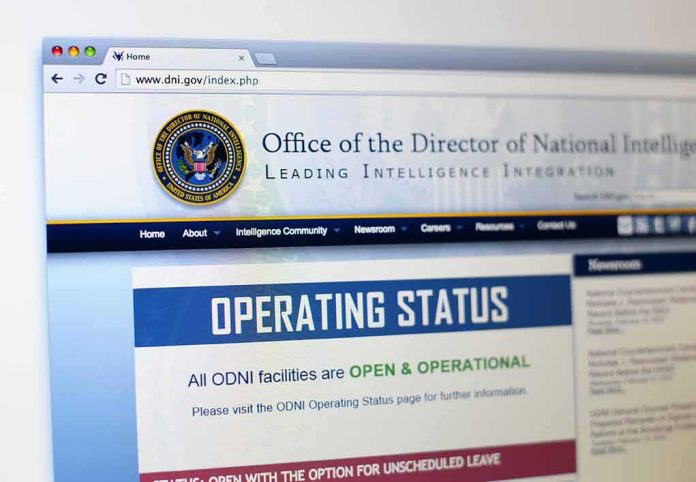
The fight over renewing Section 702 is not a binary choice between turning off foreign intelligence collection and accepting unchecked surveillance; the real task is preserving a uniquely productive source while locking in enforceable limits on how Americans’ data can be touched.
The Short Version
- Section 702 continues under existing court certifications even after statutory sunset; urgency is about avoiding operational gaps in the next cycle, not an instant blackout.
- Independent oversight has forced and verified meaningful compliance reforms at the FBI, particularly for U.S.-person queries, which a federal court has recognized.
- Intelligence leaders argue 702-derived collection heavily informs presidential briefings and disrupts threats, but some of those claims remain asserted rather than publicly documented.
- The core policy dispute is targeted: should the government need a warrant to search 702 databases for Americans’ information, and can Congress pair that rule with uninterrupted foreign collection.
What Section 702 Does—and Why the Renewal Clock Creates Confusion
Section 702 authorizes warrantless acquisition of foreign intelligence from non-U.S. persons reasonably believed to be abroad, primarily through compelled assistance to service providers. By design, it is broad at the point of collection and narrow at the point of use: agencies must follow targeting rules, minimization procedures, and post-collection querying standards when they encounter Americans’ communications “incidentally” captured. The sunset schedule has always served as leverage for Congress to revisit those guardrails. Here is the wrinkle fueling today’s rhetoric: when the statute sunsets, previously approved Foreign Intelligence Surveillance Court (FISC) certifications do not vanish. Transition provisions allow surveillance to continue under those certifications until their stated expiration dates; Congress has repeatedly relied on that continuity to avoid immediate disruption during debates over reforms.
That means two timelines run in parallel. Legally, existing certifications keep the lights on. Operationally, agencies need months to renew certifications, update procedures, and issue new directives to providers. Intelligence officials warn that waiting until the last statutory minute risks a gap in coverage as those steps cascade; ODNI has conveyed that lead times matter if Congress wants continuous collection into and beyond the next certification year. The upshot: the “now or never” frame is overstated in law, but the “start early or risk slippage” point is real in practice.
What Has Actually Changed Since the Last Round of Reforms
The most consequential shift since the last reauthorization is procedural, not political. After a run of documented compliance failures, the Department of Justice and FBI overhauled querying standards, audit trails, and training for U.S.-person searches of Section 702 holdings. The Justice Department’s Inspector General—hardly a cheerleader—reported that the FBI implemented the Reforming Intelligence and Securing America Act (RISAA) querying reforms and that the FISC approved the Department’s revised procedures in September 2024. In April 2024, the FISC itself found that the revised FBI procedures improved compliance with the legal query standard and required that agents articulate a written factual basis before running U.S.-person queries—a concrete, enforceable change designed to tighten discipline and create accountability artifacts.
These findings do not settle every argument. They do, however, move the debate off caricatures of an unregulated program and into the particulars: how high the warrant bar should be for accessing Americans’ information, how exceptions should be scoped, and how audits, notices, and after-the-fact accountability should work when classified equities constrain transparency.
Claims About Impact: What We Know, What We Don’t
Proponents cite Section 702 as a backbone of modern intelligence, including cybersecurity, counterterrorism, and counterintelligence. Intelligence leaders have told lawmakers that a significant share of the President’s Daily Brief relies on 702-derived reporting and that it has been central to disrupting plots, including one abroad at a major concert venue. Those claims communicate scale and salience but, as presented publicly, rest on institutional assertions rather than declassified source chains, methodology, or denominators. Without the underlying materials—how “derivation” is defined across finished intelligence or how multiple collection streams are weighted—those statistics should be treated as directional, not dispositive, in calibrating deadlines.
What is documented is the structural continuity of the authority between sunsets. The Congressional Research Service, congressional records, and agency releases confirm that certifications issued in March 2026 remain effective through March 2027, even if Congress allows the underlying statutory text to lapse in the interim. Providers can still be compelled to assist under those certifications, and agencies can keep operating within their scope. That is the legal backbone underlying the current “there is time to add safeguards” argument.
Strauss Director @adam_i_klein & Sen. John Cornyn jointly penned “A Vital National Security Tool Shouldn’t Go Dark” for @WSJ.
Klein & Cornyn highlight the need to prioritize FISA Section 702 reauthorization within this congressional session.
Read here: https://t.co/mvformIAFy pic.twitter.com/grgCrwaMYj
— Strauss Center (@StraussCenter) November 13, 2026
Where the Real Disagreement Lies: U.S.-Person Queries
The crux of contention is no longer whether to collect foreign intelligence from foreigners overseas. It is what standard should govern searches for Americans’ information inside those lawfully collected datasets. Privacy advocates and some legislators press for a warrant requirement—either a criminal warrant or a Title I FISA order—before accessing the content of Americans’ communications in 702 repositories, with narrow exceptions for, say, imminent threats or consent. That position reframes “backdoor searches” as a domestic use of foreign-facing powers and seeks to transplant familiar constitutional process to that moment of access.
Executive-branch lawyers and many in the intelligence community counter that existing statutory reforms, the FISC’s approval of revised procedures, and tighter documentation requirements already address the misuse risk, and that a blanket warrant rule could impede time-sensitive threat response or create perverse incentives to seek information from less-regulated sources. The strongest version of the continuity case emphasizes calibrated exceptions and rigorous auditing over categorical preclearance. Both views can coexist with uninterrupted foreign collection; the legislative craft problem is drawing lines that are clear enough for agents, flexible enough for emergencies, and reviewable by courts and inspectors.
Deadlines Without Drama: How to Legislate for Continuity and Restraint
Because certifications bridge statutory sunsets, Congress has room to legislate with care. The productive path pairs uninterrupted collection with a defined package of access controls and oversight mechanics. Four elements are ripe for consensus:
First, codify the written factual-basis requirement for U.S.-person queries and make it uniform across agencies holding 702 data; the FISC experience shows it is practical and raises the floor. Second, decide the warrant rule with specificity—identify which query types trigger judicial review, which exigencies bypass it temporarily, what minimization applies, and how to handle non-content metadata. Third, harden auditing: require immutable logs, periodic IG sampling, and anonymized public statistics that distinguish emergency exceptions from routine practice; DOJ OIG’s work provides a model for independent verification. Fourth, clarify transition mechanics by directing ODNI and DOJ to furnish a declassified, dated impact assessment of delayed renewal—identifying certifications, provider directives, and intelligence products at risk on one-, three-, and six-month horizons. This avoids theatrical countdowns while giving appropriators and authorizers a shared operational picture.
What to Watch Next
If Congress starts early, it can sustain the collection that agencies credibly view as vital while closing the remaining policy gap over Americans’ data. The legal architecture already prevents an instant cliff, and recent court-blessed reforms show that compliance levers work when they are specific, auditable, and enforced. The measure of a responsible reauthorization is not how loudly it insists on urgency, but how precisely it aligns foreign intelligence needs with constitutional process at the point of domestic impact.
Sources:
reclaimthenet.org, intelligence.gov, oig.justice.gov, adams.house.gov, noticias.foxnews.com, judiciary.senate.gov, congress.gov, politico.com, brennancenter.org