
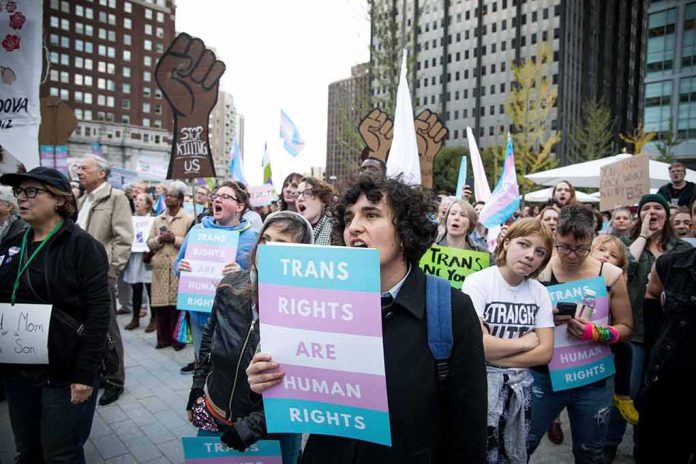
When a coalition frays, it rarely snaps all at once; it narrows. The Log Cabin Republicans’ decision to define themselves as an LGB advocacy group and step away from transgender issues is not a one-off rupture but a calculated retrenchment under a shifting partisan climate in which Republican support for even long-settled gay rights has eroded.
The Short Version
- Log Cabin Republicans’ board voted to end national advocacy on transgender issues and reframe the organization as LGB-focused.
- Leaders tied the move to member sentiment and to conflicts over youth medical care, school policy, and sports participation.
- The shift aligns with a documented drop in Republican support for same-sex marriage and broader LGBTQ acceptance.
- Critics argue the group reversed years of stated LGBT inclusion, abandoning trans people while claiming continuity.
What Changed: From LGBT Coalition Work to LGB-Only Advocacy
Log Cabin Republicans (LCR), founded to give gay conservatives a foothold inside the GOP, formally removed transgender rights from its national advocacy brief and now describes itself as an LGB organization. The board-framed change, presented by president Ross Hemminger as a “refined” focus on sexual orientation and conservative values, ended a decade-plus period in which the group’s national platform included transgender rights alongside gay and lesbian priorities. Public explanations emphasized internal membership discussions and disagreements with trans-policy priorities around youth medical care, K–12 policies, and women’s sports.
The group insists the decision is not anti-trans and that transgender individuals remain welcome as members, even as national advocacy stops at LGB. That formulation—membership inclusion paired with mission exclusion—attempts to reconcile a coalition identity with a narrower program. It also inverts LCR’s prior national posture, which had affirmed equality claims for transgender Americans within a broader LGBT frame.
The Political Backdrop: GOP Opinion Has Moved Rightward
To understand why a veteran coalition actor would narrow its aperture, follow the incentives. Republican support for same-sex marriage and for LGBTQ acceptance has declined markedly from its early-2020s peak. Multiple national series that track attitudes over time show GOP backing for legal recognition of same-sex marriage falling into the 30s by mid-decade, a reversal from slim-majority support just a few years earlier. The drop is sharpest among Republicans; Democrats and independents have largely held steady or softened only slightly.
These are not marginal movements; they reshape the risk calculus for any Republican-aligned advocacy group. Within this climate, transgender issues have become an organizing node for social conservatives, with moral acceptability among Republicans testing in the single digits. That dynamic creates a gravitational pull: groups that want to keep influence inside the party face mounting pressure to focus on goals with the greatest defensibility among Republican officeholders and donors, and to jettison those viewed as toxic in primary politics.
The Mechanism of Retrenchment: How Coalitions Contract
Coalition politics runs on alignment costs. When a subset’s priorities become costly for core audiences, umbrella groups either invest political capital to carry them—or they re-scope. LCR chose the latter. Leaders framed the transgender portfolio as threatening “hard-earned conservative support” for gains such as marriage equality, asserting that public fights over girls’ and women’s sports, school policy, and youth medical care are reshaping Republican attitudes and jeopardizing space for gay conservatives. In practice, that argument posits a trade: protect some LGB goals by severing the more polarizing T-specific claims.
This is not unprecedented in LGBTQ movement history. Earlier periods saw similar fissures when gay and lesbian groups judged transgender inclusion as politically costly, then later re-expanded as public attitudes warmed. The pattern is cyclical: expansion in more permissive moments, contraction when partisan weather turns against it. What is different now is the timing—retrenchment while national public support for same-sex marriage remains a broad majority overall, but with a pronounced, party-line dip inside the GOP that most directly shapes LCR’s operating environment.
Points of Dispute: Continuity Claims vs. Reversal Evidence
Critics contend that LCR’s move is not a tidy “refocus” but a reversal of its own stated coalition commitments. They point to earlier language in LCR materials endorsing transgender Americans’ basic equality claims and to outreach that presented the organization as representing LGBT conservatives and allies. Media and advocacy commentary have characterized the change as abandoning trans people and “pulling the ladder” up behind the coalition’s most vulnerable members. Those critiques land squarely because they reference the group’s own prior positioning, not a straw man of external expectations.
LCR’s rejoinder—that the decision is not anti-trans but a pragmatic delimitation of mission—places it on complicated terrain. Mission scopes are an organization’s prerogative, but coalition credibility rests on predictability: allies base strategy on your commitments. When those commitments narrow, you will be judged against the promises you made when you benefited from a larger tent.
The Log Cabin Republicans, the largest GOP organization for lesbian, gay, and bisexual conservatives, has voted to stop advocating for transgender issues and rebrand as an “LGB organization.”
President Ross Hemminger explained that the group added the “T” in 2015 based on adult… pic.twitter.com/UBO2Lr7KF1
— Olly 🇬🇧 (@OllyParramore) August 23, 2026
Implications for Policy, Party Strategy, and the Broader Movement
Inside the GOP, LCR’s new posture likely buys the group more immediate access. It removes a high-salience wedge—transgender policy—from its lobbying portfolio, aligning the group with issues Republican officeholders can still countenance: religious-liberty carve-outs, parental-rights framing, and defense of same-sex marriage as settled law for now. Whether that access converts into durable wins for LGB priorities is less certain if the underlying opinion trend among Republicans continues to drift rightward. If you think of political space as a shrinking aperture, dropping the most contested issue may slow the squeeze but won’t reverse it on its own.
For the national LGBTQ coalition, the signal is more sobering. The American public remains broadly supportive of same-sex marriage at the aggregate level, but a widening partisan gap increases legislative risk in red and purple jurisdictions and complicates federal protections if party control shifts. As trans issues remain a lightning rod, organizations that sustain inclusive advocacy will shoulder heavier lifts in Republican-run states and may become more reliant on litigation, corporate policy, and local non-discrimination frameworks. Conversely, single-issue LGB strategies could see short-term acceptance but at a coalition cost: fewer unified defenses when lawmakers collapse distinctions and target LGBTQ protections as a class.
How to Read This Moment a Year On
The most durable lesson here is not about one group’s bylaws; it is about how partisan realignments force advocacy triage. LCR’s move fits a well-worn political logic: narrow to survive, argue pragmatism, keep a seat at the table. That logic can be tactically sound and strategically corrosive at once. If Republican opinion stabilizes at lower support levels for gay rights, LCR’s access may matter less than it once did; there is less to salvage. If opinion rebounds, the coalition damage may outlast the weather. Either way, this is a case study in what happens when culture-war salience outruns a coalition’s capacity to carry all of its parts together.