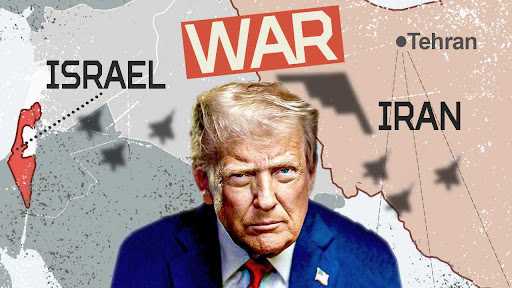
Donald Trump’s claim that he is “number one on Iran’s kill list” at the NATO summit sits inside a much larger strategy: portraying Iran as both an existential menace and a defeated adversary in order to justify expansive U.S. military action and his own political posture.
Key Points
- At the NATO summit in Turkey, Trump publicly asserted he is Iran’s top assassination target and framed that risk as part of the presidency’s inherent danger.
- In the same press appearances, he claimed Iran’s military and nuclear capabilities have been “essentially demolished,” including vivid but unverified descriptions of destroyed fleets and collapsed underground facilities.
- Independent U.S. intelligence assessments and fact-checking show Iran’s nuclear program and broader military posture were damaged but not “annihilated”; strikes delayed capabilities rather than eliminating them.
- Trump’s rhetoric about Iran and NATO follows a recurring pattern of political warfare: inflating threats, declaring total victory, and castigating allies to bolster his own authority at home.
Trump’s NATO Summit Claim: “I’m Number One on Iran’s Kill List”
At a NATO summit news conference in Turkey, Trump responded to questions about his travel and security by saying he is Iran’s “number one target” and “number one on the kill list,” framing it as an unavoidable risk of holding the office and leading a war against Tehran.[FOX/Fox 9 clip; 11] That phrase was repeated across multiple broadcast and social clips as the headline takeaway from his remarks, and it was clearly deliberate: he used it as a kind of punch line to underscore the personal stakes of his confrontation with Iran.
There is, notably, no accompanying public corroboration from U.S. intelligence or Pentagon briefings in the available reporting; the “kill list” language appears as Trump’s characterization of Iranian intent rather than a formally released threat assessment. But in the context of an ongoing U.S.–Israel campaign of airstrikes in Iran, his claim aligns with a reasonable assumption: senior political leaders responsible for the strikes are plausible targets for retaliatory plots, whether or not “number one” status is meaningfully defined in Iranian planning.
The Broader Narrative: Iran as Both Crippled and Dangerous
Trump’s kill-list line did not stand alone. At the same summit, and in related addresses on Iran, he constructed a sweeping narrative: Iran’s nuclear program and broader military capabilities have been permanently crippled, its navy “completely destroyed,” with “159 ships… at the bottom of the sea,” and underground nuclear facilities crushed beneath collapsing mountains. In an earlier formal address announcing “major combat operations” in Iran, he promised the United States would “dismantle their missile capabilities and obliterate their missile production facilities,” and “guarantee that Iran never secures a nuclear weapon,” calling this “a straightforward message: they will never possess a nuclear weapon.”
This is classic total-victory language; it does not speak in the incremental, conditional terms of professional intelligence assessments. Yet in other venues, including at NATO and in interviews, Trump still emphasized Iran as an imminent nuclear and missile threat to the U.S., arguing the regime was close to fielding intercontinental missiles and nuclear weapons capable of striking American territory. In practical terms, his rhetoric asks the listener to hold two ideas at once: Iran has already been decisively defeated, and Iran is still such a severe danger that the president himself is at the top of a kill list.
What Intelligence and Fact-Checking Actually Say
The most authoritative public counterpoint comes from U.S. intelligence assessments of the strikes on Iran’s nuclear infrastructure. A preliminary report, disclosed by major outlets and summarized by CNBC, found that joint U.S.–Israeli bombings of three nuclear sites—including Fordo, Natanz, and Isfahan—did not “fully eliminate” those installations. Instead, the assessment concluded the attacks likely delayed Iran’s nuclear ambitions by months, not years; they degraded, but did not annihilate, Iran’s capacity to enrich uranium and pursue weapons.
This directly contradicts Trump’s assertion that facilities like Fordo were “annihilated, completely annihilated” and rendered permanently inoperable. It also undercuts his broader “total obliteration” narrative, which he repeated at NATO while explicitly dismissing the intelligence community’s caution as “very inconclusive” and insisting, based on his own judgment, that the program had been wiped out. Fact-checking organizations have highlighted this divergence, situating his claims about Iran’s nuclear status in a long pattern of overstatement and mischaracterization of technical threat assessments.
Similarly, his vivid figures about “159 ships at the bottom of the sea” and the complete destruction of Iran’s navy appear only in his own speeches and summit press conferences; they are not echoed in Pentagon briefings or allied military reports available to the public. The actual war record—ongoing Iranian missile and drone launches, continued maritime harassment, and claims from Iranian officials that hundreds of U.S. soldiers have been killed—points to a still-functioning military apparatus rather than a navy erased from existence.
Rhetoric, Strategy, and Political Warfare
To understand why Trump speaks this way, it helps to put his NATO remarks in the longer arc of his Iran messaging. From the first announcement of “major combat operations in Iran,” he framed the campaign not just as a military necessity but as an ideological struggle against a “ruthless” regime that kills protesters, backs terrorism, and lies about negotiations. He has repeatedly urged Iranians to “take over your government,” explicitly tying U.S. strikes to regime-change ambitions.
Military and strategic scholarship describes this combination—a mix of information operations, propaganda, and coercive messaging—as political warfare: the use of all tools short of war (and, in modern practice, including war) to shape perceptions and political outcomes. In that frame, exaggerated claims of total enemy degradation play a role: they signal strength to domestic audiences, promise decisive results, and make continued or escalated operations sound like finishing off a defeated foe rather than entering an open-ended conflict.
Trump’s NATO behavior fits this pattern. He alternated between demeaning Iran’s leaders as “scum” and “sick people” and describing them as still dangerous agents of repression with staggering protester death tolls and triple-digit inflation, simultaneously bolstering the moral case for war and the appearance of military success.[FOX/USA TODAY summaries] He also used the Iran war as leverage in his longstanding critique of NATO, arguing that U.S. forces had effectively “defeated them in just the first week” without alliance help and portraying allies’ reluctance to join operations in Iran or secure the Strait of Hormuz as a “foolish mistake” and an unfair burden on the United States.
NATO, Allies, and the Iran War Context
When Trump made his kill-list remark, he did so against a backdrop of tension with NATO partners. European members were wary of joining direct combat operations against Iran, with several viewing the campaign’s legal basis as questionable or politically untenable at home. Trump, in turn, cast their refusal to send ships or troops as both ungrateful—given decades of U.S. support for European security—and strategically shortsighted.
At summits and in Oval Office meetings, he insisted the U.S. “needs nothing from NATO” in the Iran war but nonetheless declared that allies “should’ve been there” to help, especially in mine-clearing and convoy protection in the Strait of Hormuz. This twin message—absolute independence paired with grievance at lack of support—is part of the same political warfare posture: it allows him to claim unilateral military success while preserving a narrative that NATO has failed him and, by extension, failed the American public.
Meanwhile, NATO leadership has tried to emphasize a different picture: significant increases in defense spending, large procurement commitments for U.S. equipment, and a focus on the alliance’s core mission of deterring Russia rather than joining every U.S.-led campaign.[CNN/NBC summit coverage] Trump has nonetheless kept up public pressure, using viral lines from the podium—about Iran, his own security risks, and “wasted causes” like Spain—to hammer home his view that the alliance owes more, even when he insists he does not need it.
🚨 Iran Conflict Update – Day 130
⚠️ Ceasefire Collapses
🇺🇸 The U.S. has launched a second consecutive night of strikes on Iran after attacks on commercial vessels in the Strait of Hormuz.
President Trump declared the ceasefire “over”, saying the U.S. would continue strikes if…— Emmanuel – Big Tech & AI Investor (@EmmanuelInvest) July 8, 2026
Personal Risk, Public Messaging, and What We Can Reliably Know
Is Trump personally at heightened risk from Iran because of his role in ordering strikes and publicly calling for regime change? That is almost certainly true in a broad sense; Iranian officials have threatened retaliation against U.S. and Israeli leaders, and the history of state-sponsored plots against political figures is not hypothetical. In that context, his comment about being “number one on the kill list” functions as a dramatized version of a real danger embedded in wartime leadership.
But the more specific parts of his NATO narrative—the permanent annihilation of nuclear capabilities, the destruction of Iran’s navy, the total obliteration of military capacity—do not stand up against the best available evidence. Intelligence and reporting support a more restrained conclusion: U.S.–Israeli strikes have inflicted serious damage and likely set back elements of Iran’s program, but they have not ended it. Iran remains capable of launching missiles and drones, projecting power in its region, and rebuilding damaged infrastructure.
For citizens trying to make sense of Trump’s claims, the key is separating two layers. At one level, his language about kill lists, “scum” leaders, and total victory is part of a deliberate political warfare strategy to rally support, intimidate adversaries, and pressure allies. At another level, the technical realities of Iran’s nuclear capacity and military posture are documented in cautious, often self-critical intelligence assessments that rarely match the absolutes of campaign-style rhetoric. Trust the latter for describing capabilities; treat the former as revealing how a president wants you to feel about the war, and about him.
Sources:
youtube.com, pbs.org, nbcnews.com, abcnews.com, en.wikipedia.org, news.sky.com, abc7news.com, instagram.com, cnn.com