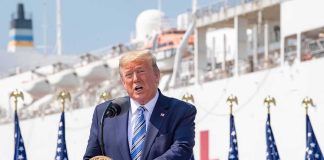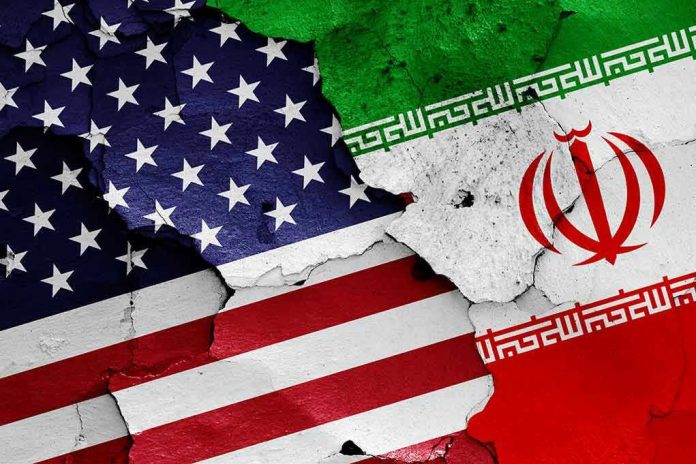
President Trump ordered the U.S. Navy to “shoot and kill” Iranian boats deploying mines in the Strait of Hormuz, reigniting concerns over escalating Middle East tensions and the risk of armed conflict that could disrupt global oil supplies.
Story Snapshot
- Trump authorized lethal force against Iranian vessels laying mines in critical shipping lanes
- Order aims to protect Strait of Hormuz, through which significant global oil trade flows
- Directive follows escalating U.S.-Iran tensions over regional naval activities and ceasefire negotiations
- Critics warn the aggressive posture could trigger broader military confrontation in the Persian Gulf
Trump’s Shoot-to-Kill Authorization
President Trump issued a direct military order authorizing U.S. Navy forces to “shoot and kill” any Iranian fast boats caught deploying mines in the Strait of Hormuz. The directive represents a sharp escalation in rules of engagement, empowering naval commanders to use lethal force without further authorization when Iranian vessels are detected mining the strategic waterway. This narrow strait serves as a chokepoint for roughly one-fifth of global oil traffic, making any disruption a potential trigger for energy market chaos and economic ripple effects worldwide.
Strategic Context and Regional Tensions
The authorization emerged amid heightened U.S.-Iran confrontations over control of Gulf shipping lanes and proxy conflicts involving Israel and Lebanon. Iranian forces have historically threatened to close or disrupt Strait of Hormuz navigation during periods of regional tension, using fast attack boats and mining tactics to challenge American naval dominance. Trump’s order followed intelligence indicating potential Iranian mining operations designed to intimidate commercial shipping and assert territorial claims. The timing coincided with ceasefire extension negotiations between Israel and Lebanon, suggesting the administration views credible military deterrence as leverage in broader diplomatic efforts across the Middle East theater.
Implications for American Interests
Supporters of the directive argue it reinforces American resolve to protect vital economic arteries against hostile state actors. By establishing clear consequences for Iranian aggression, the administration aims to deter actions that could spike oil prices and harm American consumers already burdened by inflation. However, critics on both left and right express alarm over unilateral military escalation without congressional debate. Many Americans, regardless of party affiliation, question whether elite decision-makers in Washington are rushing toward conflicts that serve defense contractors and foreign policy establishment interests rather than ordinary citizens struggling with cost-of-living pressures. The lack of transparent public discussion around such consequential military orders fuels distrust in government institutions.
US Defense Secretary Pete Hegseth says President Donald Trump has ordered the US Navy “to shoot and kill” Iranian fast boats that attempt to put mines in Strait of Hormuz. pic.twitter.com/B9xeAD4aee
— Al Arabiya English (@AlArabiya_Eng) April 24, 2026
The shoot-to-kill order exemplifies a recurring pattern where executive branch officials exercise sweeping military authority with minimal accountability to voters. Whether viewed as necessary strength or reckless brinkmanship, the directive underscores how foreign policy decisions made behind closed doors can drag the nation toward conflicts with unpredictable human and economic costs. As tensions simmer in the Persian Gulf, Americans are left to wonder if their leaders are prioritizing genuine national security or advancing agendas that benefit powerful interests at the expense of peace and prosperity for working families.