When the most powerful man in the free world flies to Beijing and comes home calling Xi Jinping a “central casting” strongman who stands tall above his own people, you have to ask whether that is dealmaking genius or something more unsettling.
Story Snapshot
- Trump described Xi Jinping as “very tall” and out of “central casting,” noting that people in China “tend to be a little bit shorter.”
- The remarks came during a Fox News interview with Sean Hannity following Trump’s high-stakes Beijing summit.
- China agreed to purchase 200 Boeing jets, which Trump cited as a major win from the meeting.
- Xi warned Trump privately that Taiwan could trigger “clashes and even conflicts” between the two superpowers.
Trump Arrives in Beijing With Leverage and Leaves With Lavish Praise for Xi
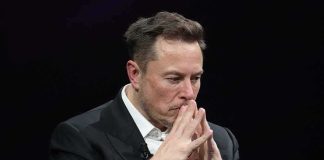
Trump landed in Beijing carrying genuine economic leverage. Months of tariff pressure had rattled Chinese markets, and Xi needed a reset as badly as American manufacturers needed export orders. China rolled out full state-banquet pageantry, and Trump responded in kind with a delegation of corporate heavyweights including Apple’s Tim Cook and Elon Musk, signaling that American business still sees China as a necessary partner regardless of the geopolitical friction. [3] The optics on both sides were carefully managed from the first handshake.
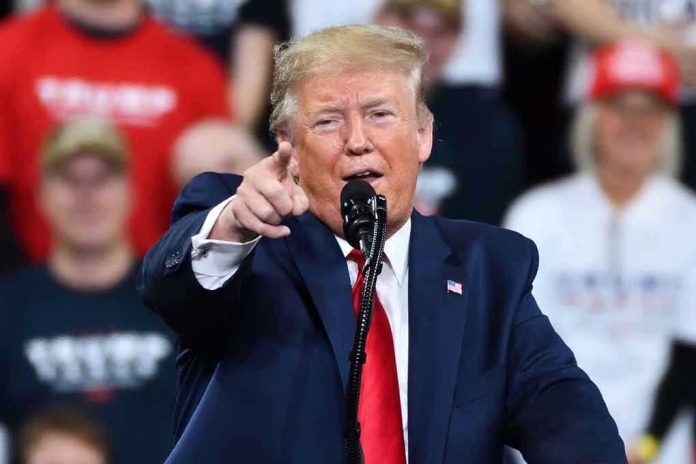
What nobody fully managed was what Trump said afterward. In his sit-down with Sean Hannity on Fox News, Trump described Xi as “very tall” and out of “central casting,” adding the observation that people in China “tend to be a little bit shorter.” [1] The comment was vintage Trump: image-driven, cinematic, and completely detached from any policy framework. Whether it was a deliberate compliment designed to keep Xi warm or simply an unfiltered first impression delivered on live television is genuinely unclear, but the effect was the same either way.
The “Central Casting” Comment Is Doing More Work Than It Appears
Calling a foreign leader “central casting” is not a neutral observation. It is the language of admiration for a certain kind of strongman presence, the idea that a leader looks and feels like power before he has said a single word. Trump uses this phrase selectively, and when he deploys it for an authoritarian head of state who runs a one-party surveillance state, it carries weight beyond the compliment itself. It signals to Xi, to Beijing’s propaganda apparatus, and to every American ally watching that the U.S. president finds the aesthetic of concentrated, unchecked authority genuinely impressive. [1]
Sky News host Andrew Bolt characterized Trump’s posture toward Xi as having “crawled” to the Chinese president and praised him “to the skies.” [2] That framing is pointed, but it is not entirely unfair given the public record. The question conservatives should honestly wrestle with is whether flattering an authoritarian in the room to extract concessions is shrewd transactional diplomacy or whether it normalizes a style of governance that stands in direct opposition to everything the American founding represented. The two possibilities are not mutually exclusive, and that is precisely what makes this so complicated.
Behind the Smiles, Xi Delivered a Blunt Warning About Taiwan
Whatever warmth defined the public-facing moments of the summit, Xi used private channels to deliver a message that should not get lost in the “central casting” coverage. Xi warned Trump directly that Taiwan could trigger “clashes and even conflicts” between the United States and China. [9] That is not diplomatic boilerplate. That is a superpower explicitly telling an American president that the world’s most dangerous potential flashpoint remains exactly that, and that China’s patience on the matter has a visible edge. The state banquet smiles did not soften that warning.
🚨 CHINA AGREES TO BUY 200 BOEING JETS.
Donald Trump says China will buy 200 Boeing jets after talks with President Xi Jinping.
He shared the news during a Fox News interview while visiting Beijing.
The deal would be China’s first major purchase of U.S. commercial aircraft in… pic.twitter.com/2QVMUgPAKm
— The Content Factory (@tcf_updates) May 15, 2026
Trump, for his part, told Hannity there are “no games” with President Xi, and he disclosed that Xi had pledged China would not supply military equipment to Iran, a significant claim if it holds. [10] He also revealed that Xi agreed to order 200 Boeing jets, a concrete economic deliverable that gives American manufacturing workers in multiple states a tangible reason to view the summit favorably. [12] These are real outcomes. But real outcomes and real risks can exist simultaneously, and voters deserve a press corps willing to track both rather than fixating exclusively on the “very tall” quote.
Dealmaking Theater or Genuine Diplomacy: The Answer May Be Both
Trump’s approach to Xi follows a consistent internal logic: build personal rapport through public praise, extract economic and strategic concessions in the room, and declare victory on the way home. The Boeing deal and the Iran pledge, if verified, represent exactly the kind of tangible wins that justify the trip on its merits. [8] The danger is that Xi is playing a longer game than any single summit, and a leader who responds to flattery about his height and his cinematic presence may be giving Xi exactly the psychological read he was looking for heading into the next round of negotiations over Taiwan, trade, and the Iranian nuclear file. [9] Admiring your opponent’s posture is fine. Letting him see that you do is a different matter entirely.
Sources:
[1] Web – Trump says Xi is ‘very tall’ and out of ‘central… – inkl
[2] YouTube – Donald Trump ‘crawled’ to Xi Jinping and praised him ‘to the skies’
[3] Web – China rolls out red carpet for Trump as Xi meeting tests … – Fox …
[8] Web – Trump heads to China with the upper hand — and Xi knows it
[9] Web – Behind summit smiles, Xi gives blunt warning to Trump of ‘ …
[10] Web – There are ‘no games’ with President Xi, President Trump says
[12] Web – President Trump reveals Chinese President Xi Jinping is …